 Official government website of the Government of the Kingdom of Saudi Arabia




7
Low-carbon innovation support

- About Goal Seven
- Energy-efficient renovation and building
- Upgrading buildings for higher energy efficiency
- Carbon reduction and emission mitigation
- Energy Consumption Reduction Plan
- Identify energy waste
- Divestment policy
- Engaging the Local Community for Energy Efficiency
- Commitment to 100% Renewable Energy
- Energy efficiency services for the industrial sector
- Developing Policies for Clean Energy Technologies
- Low-carbon innovation support
Related Content
Assistance to low-carbon innovation
Qassim University supports start-ups and innovation that foster a low-carbon economy: business incubators, accelerators and joint innovation laboratories in renewable energy with King Abdullah City for Atomic and Renewable Energy (K.A.CARE), the Innovation Incubator programme, student clean-energy projects such as “Green Loop” and “VoltStep”, hackathons on wind energy, and its business accelerator.
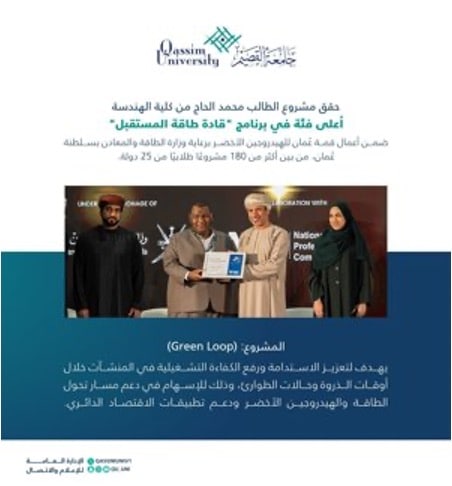
“Green Loop” project by an Engineering student wins the top category in the “Future Energy Leaders” programme
The “Green Loop” project by Engineering student Mohammed Al-Hajj, which improves the sustainability and operational efficiency of facilities and supports the transition to green energy and hydrogen, achieved the top category in the “Future Energy Leaders” programme at the Oman Green Hydrogen Summit 2025, ahead of more than 180 projects from 25 countries. The achievement shows the University’s support for students developing low-carbon solutions that can grow into future ventures. The University announced the achievement on 12 December 2025.
K.A.CARE agreement to support start-ups and business incubators
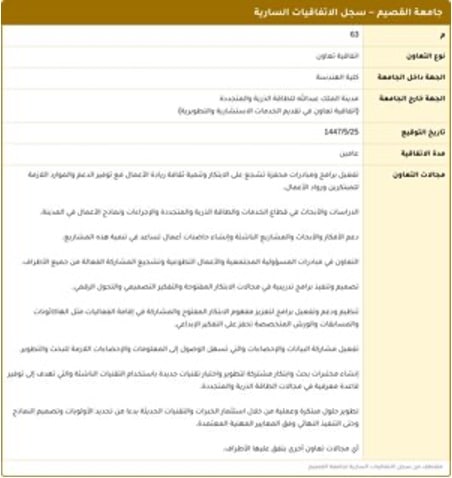
A cooperation agreement signed with King Abdullah City for Atomic and Renewable Energy on 16 November 2025 commits the two parties to activate programmes and initiatives that encourage innovation and entrepreneurship; carry out studies and research in the services sector and in atomic and renewable energy; support emerging ideas, research and start-up projects and establish business incubators; design and deliver training programmes in open innovation, design thinking and digital transformation; organise hackathons, competitions and specialised workshops; share data and statistics for research and development; establish joint research and innovation laboratories to develop and test new technologies in atomic and renewable energy; develop practical, innovative solutions from setting priorities and designing prototypes to final implementation; and cooperate in social-responsibility and volunteer initiatives.
K.A.CARE MoU: business accelerators and technology incubators
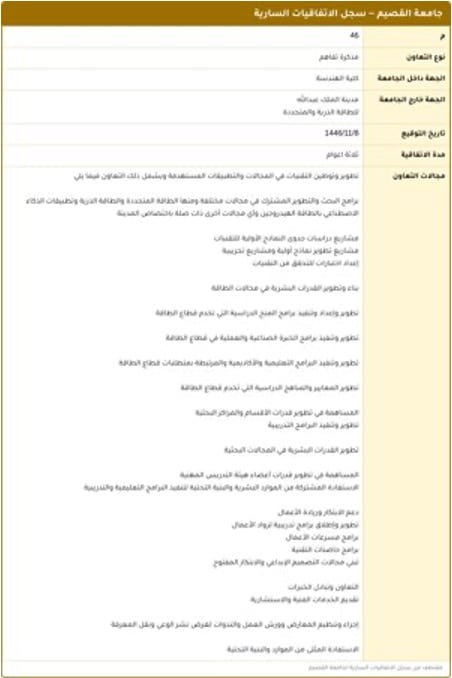
The MoU signed with King Abdullah City for Atomic and Renewable Energy on 6 May 2025 includes support for innovation and entrepreneurship in energy fields: developing and launching training programmes for entrepreneurs, business-accelerator programmes and technology-incubator programmes, adopting creative design and open innovation, and developing prototypes and pilot projects in renewable energy and hydrogen.
University Accelerator graduates 20 university startups in cooperation with Monsha'at
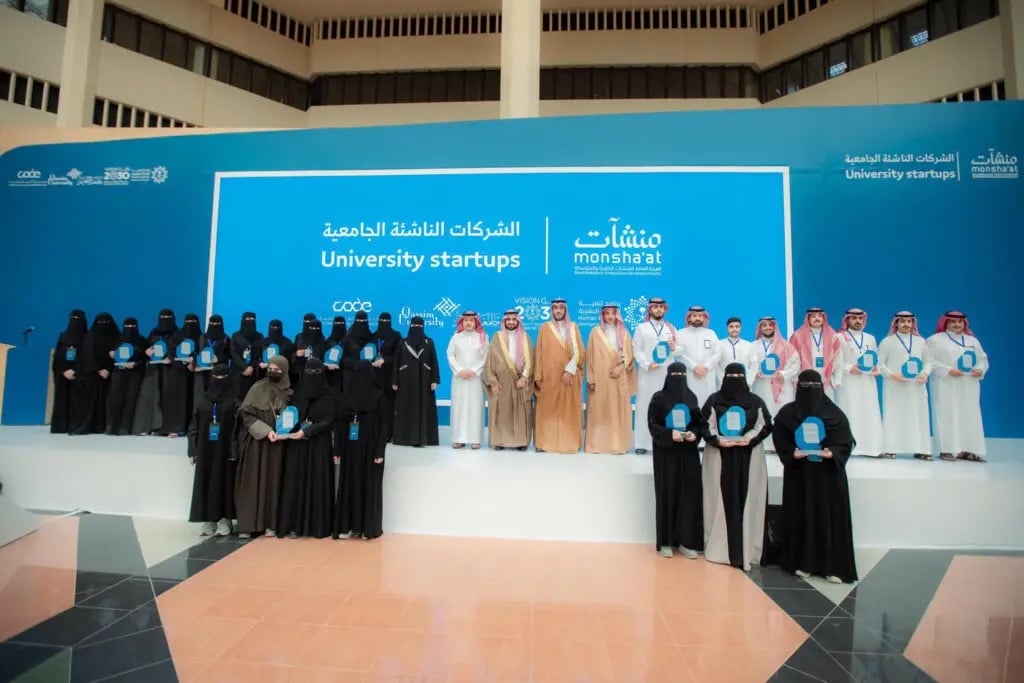
The university, in collaboration with the Small and Medium Enterprises General Authority (Monsha’at), celebrated the graduation of 20 university startups from the Qassim University accelerator on Wednesday morning. The event was attended by His Excellency the President of the University, Professor Dr. Mohammed bin Fahd Al-Sharikh, His Excellency the Governor of the Small and Medium Enterprises General Authority (Monsha’at), Mr. Sami bin Ibrahim Al-Husseini, and a number of experts and specialists in the field of entrepreneurship.
The university startup accelerator program aims to support entrepreneurial projects by university faculty, students, and recent graduates, developing their capabilities, enhancing their market growth, and improving their attractiveness for attracting investment capital. Additionally, it aims to improve their organizational structure and competitiveness, enabling them to become successful startups that attract investment opportunities, and are capable of growth and expansion.
The closing ceremony of the university startup accelerator, held in the main hall of the university city, witnessed the startups presenting their projects in the presence and participation of a group of investors, funding entities, and development service providers for the participating projects. The projects varied across several sectors, including technology, e-commerce, entertainment, tourism, and manufacturing, in addition to fintech and advanced technology.
Throughout their 6-month journey, accelerator participants benefited from a range of programs and services tailored for emerging startups. These were designed to support and develop them into successful, economically viable companies. In addition to financial grants, workshops and mentoring sessions were provided, along with various financial solutions. Participants also gained opportunities to connect with investors and funding entities, and engage in enriching meetings with successful entrepreneurs.
Solar Energy Horizons conference discusses ways to utilize solar energy for desalination and electricity generation
The scientific sessions of the international conference «Solar Energy Horizons in the Kingdom of Saudi Arabia: Applications and Challenges,» organized by the university, represented by the College of Engineering, discussed a number of themes, research, and scientific studies on its first day, Wednesday, 24/4/1442 AH, with the participation of many academics and researchers in solar energy applications and industry experts in the Kingdom of Saudi Arabia and worldwide remotely.
The first scientific sessions of the conference were held under the title “Generating Electric Power from Solar Energy.” Dr. Emad Shams presented a research paper titled “Solving the Maximum Power Point Tracking Problem Using Swarm Intelligence Inspired Algorithms,” in which he discussed methods for tracking the maximum power point of solar energy to ensure the photovoltaic system operates optimally, considering costs. Afterward, Dr. Ahmed Eid spoke about his paper titled “The Impact of Distributed Solar Power Generation on Power Loss and Voltage Stability of Distribution Grids,” where he discussed integrating distributed solar power generators with distribution grids to reduce active power loss and enhance voltage stability.
Next, Dr. Hamid Mohammed presented a paper titled “Evaluation of the Operating Conditions of Crystalline Silicon Photovoltaic Cells for Frequency Distribution in Riyadh City.” He emphasized that the performance of photovoltaic cells varies under outdoor field conditions and can be better analyzed using frequency distribution under different operating conditions. The purpose of this study was to find the most common operating conditions for photovoltaic cells that can be used for planning, designing, and sizing photovoltaic power plants. Dr. Rubmati Mena also spoke about his paper, “Degradation of Crystalline Silicon Photovoltaic Cells Under Hot Climate Conditions.” He revealed that crystalline silicon photovoltaic cells are prone to defects and degradation under hot climate conditions, such as in desert areas that suffer from multiple environmental stresses, high temperatures, and UV radiation, in addition to changes in temperature and humidity with gas ingress. These stress factors can lead to structural, thermomechanical, and chemical changes within the photovoltaic cell that affect its electrical performance.
Then, Dr. Manahil Mohammed spoke with a paper titled “Solar Energy as an Alternative to Electrical Energy in the Vision of the Kingdom of Saudi Arabia 2030.” She discussed the opinions of the Saudi people on using solar energy as an alternative to electrical energy in homes. Researchers applied a questionnaire containing 216 samples from different segments of society. The questionnaire consists of four parts. When the sample was asked about the necessity of using renewable energy sources to generate electricity instead of generating it from oil derivatives, 88.8% of the sample agreed. When asked about the most suitable source among renewable energy sources for investment in the Kingdom of Saudi Arabia, 93% recommended solar energy. Of the sample, 19% currently use solar energy at home, and 88.9% strongly agree that government contributions in supporting the costs of solar energy technologies will encourage citizens to adopt solar energy.
At the end of the session, Dr. Hisham Othman spoke about his paper titled “Thermal Characteristics of Parabolic Trough Collectors (A Comparative Study).” He emphasized that parabolic troughs have been commercially proven to be the most advanced among concentrated solar power technologies, as operating temperatures can reach between 350-550 degrees Celsius in parabolic troughs. Solar power plants using parabolic troughs can also produce between 5 and 280 megawatts.
The scientific sessions of the conference continued through a session entitled “Desalination using solar energy”, where Dr. Qazi Bari spoke about his research entitled “Porous column type solar desalination unit”, in which he addressed the sources of high-quality potable water that are rapidly diminishing in many urban and rural areas of the world, especially in the Middle East, Africa and Asia for many reasons, and the removal of salinity and impurities in raw water by any traditional method is still expensive, so the researcher and decision makers tried all possible cost-effective alternatives, and one low-cost method to produce.
Dr. Zakaria Amara then discussed his study titled “Solar Distillation with a Rotating Wheel for Water Desalination: A Comparative Study.” He explained that the back wall of the distiller is unutilized and that significant heat loss occurs through it. Therefore, a metal disc was installed on a horizontal shaft driven by an electric motor. The rotating disc is located in the middle of the back wall, increasing the evaporation area and the area exposed to solar radiation. As the disc rotates, it becomes covered with a thin film of water, which helps speed up evaporation. Dr. Abdullah Naguib then presented his research titled “Solar Water Desalination Using Multi-Effect Membrane Distillation: Laboratory Results.” This work addressed the performance of a solar-powered water desalination system using the membrane distillation process. The system consists of photovoltaic solar panels, solar thermal collectors, and a membrane distillation unit. The latter relies on multi-effect membrane distillation, where thermal energy is recycled and reused in the system during condensation cooling.
Dr. Abdul Qadir Abdullah, in turn, presented a research titled “The Effect of Adding Trays on the Performance of Solar Distillation, An Experimental Approach.” The productivity of solar desalination units is proportional to the water depth and the wetted surface area within the unit. The unit’s productivity can be increased by increasing the surface area of the basin. To maintain the minimum possible water depth within the unit, we used trays. Two desalination units were designed and manufactured: the first unit is of a traditional type, and the second is a modified unit with trays. Research experiments were designed, manufactured, and conducted for the modified desalination unit with the aim of improving productivity. Additionally, it was designed according to safety standards. The goal of this work is to increase freshwater productivity through some changes in the unit’s design, where we obtained an increase in the productivity of the tray desalination unit by approximately 45% compared to the traditional unit. The daily efficiency was 47% and 34% for the tray desalination unit and the traditional unit, respectively.
The first day of the conference concluded with a scientific session titled “Materials Used in Solar Energy Applications.” The session featured Dr. Nazek Al-Ataab presenting a paper titled “Highly Flexible, Stretchable, Lightweight, and High-Efficiency Silicon Solar Cells for Unmanned Aerial Vehicles.” The study emphasized the significant and growing demand for unmanned aerial vehicles due to their wide range of applications, including, but not limited to, agricultural inspection, firefighting, and border security. While current electric-powered drones are common, equipping them with solar energy technology could enable them to undertake longer flights and carry heavier payloads. However, most currently available solar cells are either too heavy, too rigid, too expensive, or not efficient enough for drone platforms. This necessitates the development of lightweight, highly flexible, and stretchable solar cells with high efficiency, which can perfectly conform to the curved and foldable surfaces of drones without affecting flight aerodynamics.
Dr. Rupmati Meena, presenting his paper titled “Investigation of different types of defects in newly manufactured crystalline silicon photovoltaic modules”, said that solar photovoltaic cells have recently become a promising renewable energy technology, and solar energy is being utilized all over the world. However, photovoltaic cells face many manufacturing stage defects even before actual use, and these defects not only affect the performance of the cells, but are likely to cause severe performance degradation within a few years of field operation After that, Dr. Sadek spoke about a research paper entitled “Design, fabrication and testing of low-cost flat panel collectors under the climate of central Qassim”, during which he emphasized that energy is the main basis for economic, technical and social development, and with the increasing global awareness of energy challenges, solar energy has been given great attention as a promising solution to energy issues, and in this research a small-sized, naturally circulating, low-cost solar collector with a solar receiving aperture of 0. 75 square meters was designed and fabricated in this research.The solar collector was tested to heat 20 liters of water during the day in the city of Unaiza from October 18 to November 4. 75 square meters at the College of Engineering in Unaiza, Qassim University, and the collector was tested to heat 20 liters of water during the day.
At the conclusion of the session, Dr. Mohamed Moussa presented his paper titled “Inorganic Metal Halide Perovskites AMX3 as Promising Candidate Materials for Future Photovoltaic Solar Cell Technologies,” in which he emphasized that since the first appearance of photovoltaic solar cells in 1976, many scientists have made enormous efforts to improve the performance and increase the efficiency of traditional photovoltaic solar cells. A range of inorganic semiconductors have been used to manufacture photovoltaic solar cells, such as amorphous silicon, monocrystalline and polycrystalline silicon, and crystalline thin films. For his part, Dr. Mohammed bin Rabaha spoke about his paper titled “Silicon Nanowires for Photovoltaic Applications,” pointing out that chemical etching based on silver nanoparticles is a very modern and advanced method used to form nanowires (nanoscale) on the surface of monocrystalline silicon wafers.
Research team converts palm waste into bio-oils and plans hydrogen production
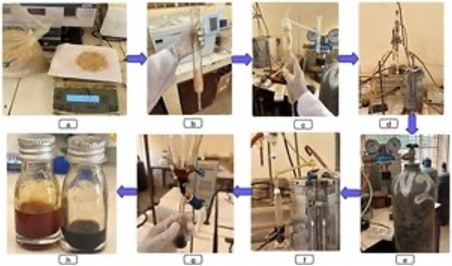
The research team of Dr. Sulaiman Al-Hajji produced four types of bio-oils and activated carbon from palm waste, with plans to produce hydrogen.
Patent: water desalination system powered by solar energy only
Qassim University obtained a patent from the Saudi Authority for Intellectual Property for a “system and method for water desalination using a halophyte plant”. The closed biological system, developed by a team led by Dr. Abdulaziz Al-Harbi, turns highly saline water into fresh distilled water naturally, using solar energy only and without any other energy source, and can work for long periods without intervention. The fully transparent design lets sunlight into an environment of salt-loving plants floating on the water, and the salt-free water produced is collected, offering an environmentally friendly, low-cost desalination method. The patent came through the University’s patent-registration project of the Innovation and Intellectual Property Center.
Stimulating Digital Entrepreneurship Launching the "University Code Lab" in the presence of the Governor of the Communications, Space and Technology Authority and the President of the University
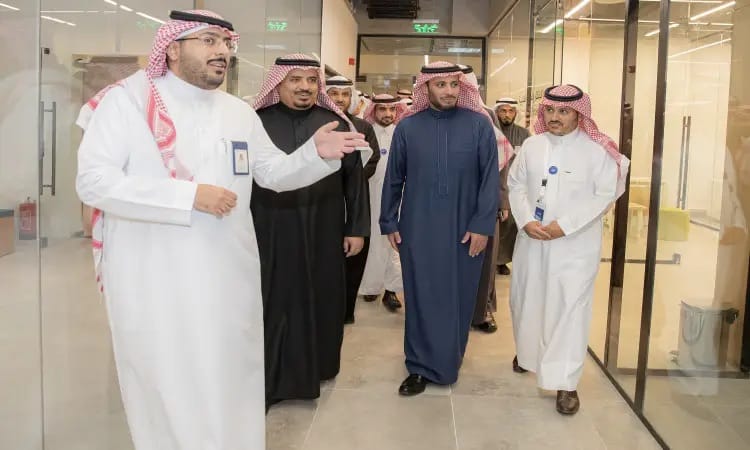
With the support of the Ministry of Communications and Information Technology and as an incentive for digital entrepreneurship in the Kingdom, the CODE Lab was launched at the University in the presence of His Excellency the Governor of the Communications, Space & Technology Commission, Dr. Muhammad bin Saud Al-Tamimi, and His Excellency the President of the University, Prof. Dr. Abdulrahman bin Hamad Al-Dawood, yesterday, Sunday, December 25, 2022. This is the third CODE Lab for digital entrepreneurship and one of the six branches of the Digital Entrepreneurship Center, which the university established on its campus as a contribution to its operational phase. This step aims to stimulate entrepreneurship and improve the digital entrepreneurship ecosystem, with the goal of creating an integrated environment that ensures the incubation of digital entrepreneurial ideas and projects.
The Qassim University Code Lab aims to embrace digital projects, empower tech startups and increase investments, in addition to stimulating the culture of entrepreneurship in digital innovation through workshops and events, increasing the contributions of startups to the domestic product, as well as improving the contribution of GDP to the digital economy, and raising the adoption rate of emerging technologies.
This lab contributes to the connection between experts and faculty members on one hand, and beneficiaries and entrepreneurs on the other, by providing access to various technological equipment and devices, enabling them to manufacture and create their business models, and participate in technical meetings and courses for those wishing to develop their skills, through providing technological equipment and tools, and shared workspaces to incubate the best university projects and emerging tech companies in the region.
During the visit, Their Excellencies and Honors reviewed the contents of the laboratory, the laboratory facilities, as well as university students’ innovative projects at an exhibition, through a number of booths that showcased the university students’ projects in the main foyer of the university city.
News related to the goal

Qassim University, represented by the Innovation and Intellectual Property Center, held the second training camp for the Inovate 5 Incubator program, in cooperation with the King Abdullah City for Atomic and Renewable Energy. The camp took place at the city's headquarters in Riyadh from July 12-16, 2026, as part of the strategic partnership between the two parties in the fifth edition of the incubator. The camp targets 70 participants from teams qualified for the second stage, […]
2026-07-12

From a familiar daily scene within the university campus, where pedestrians“ footsteps clank on the stairs and vehicles move densely on the roads, an innovative idea was born that seeks to transform this continuous movement into a source of clean and sustainable energy through the ”VoltStep“ project developed by a group of female students from Al-Qassim University participating in the ”Innovation Incubator” at Al-Qassim University. The project was developed by a team of female students: Hala Al-Khatery, […]
2026-05-16

The university signed a memorandum of understanding with Shell Global Solutions Ltd. to enhance cooperation in the fields of engineering innovation, sustainability, and clean energy, and to enable students to participate in international programs and competitions related to engineering solutions, clean energy, and sustainability. This was attended by the Vice President for Academic Affairs, Dr. Fahd bin Suleiman Al-Ahmad. The memorandum was signed on behalf of the university by the Dean of the College of Engineering, Dr. Fahd bin Nasser […]
2026-05-10

The eighth engineering scientific conference at the university witnessed the holding of a discussion session titled “Life Quality Engineering,” moderated by Dr. Abdullah Al-Ghaifes, associate professor in the mechanical engineering department at the College of Engineering. During the session, a number of experts in the field of engineering spoke, where the session director emphasized that quality of life is not built from a single perspective, nor is it achieved by chance, but it is an ongoing design process that involves all parties involved […]
2026-05-08
Tweets related to the goal
Files related to the objective
- About Goal Seven
- Energy-efficient renovation and building
- Upgrading buildings for higher energy efficiency
- Carbon reduction and emission mitigation
- Energy Consumption Reduction Plan
- Identify energy waste
- Divestment policy
- Engaging the Local Community for Energy Efficiency
- Commitment to 100% Renewable Energy
- Energy efficiency services for the industrial sector
- Developing Policies for Clean Energy Technologies
- Low-carbon innovation support