 Official government website of the Government of the Kingdom of Saudi Arabia




7
Carbon reduction and emission reduction process

- About SDG 7
- Energy-efficient renovation and building
- Upgrade buildings to higher energy efficiency
- Carbon reduction and emission reduction process
- Plan to reduce energy consumption
- Energy wastage identification
- Divestment policy
- Local community outreach for energy efficiency
- 100% renewable energy pledge
- Energy efficiency services for industry
- Policy development for clean energy technology
- Assistance to low-carbon innovation
Related Content
Carbon reduction and emission reduction process
Qassim University manages its carbon footprint by measuring emissions by scope (vehicle fleet, purchased electricity, and commuting of students and staff) and reducing them through rooftop solar energy, an energy-efficiency retrofit of its buildings, electric carts and shuttle buses, assembly points for female-student transport, controlled fuel use for university vehicles, bicycle and electric-scooter parking, and research on clean fuels from palm waste.
Tarshid solar project: about 4,000 tonnes of emissions avoided per year
The 5,137 kW rooftop solar project with Tarshid, launched on 4 March 2025, is expected to avoid about 4,000 tonnes of carbon emissions and save more than 13,000 barrels of oil equivalent every year by generating about 8.6 million kWh of clean electricity on university buildings. It targets emissions from purchased electricity (Scope 2), the largest part of the University’s carbon footprint.
Campus sustainability report: carbon footprint by scope
The University’s campus sustainability report measures its carbon footprint by scope: Scope 1 (vehicle fleet) 109 t, Scope 2 (purchased electricity) 77,747 t, Scope 3 (commuting of students and staff) 44 t, and a tree-planting offset of −149 t, for a total of about 77,750 t CO2e. Average electricity consumption is 97,183,620 kWh per year. Measuring emissions by scope is the basis of the University’s carbon-management process, showing that electricity is the main source to target through solar energy and energy-efficiency projects.
Campus greenhouse-gas emission reduction programme
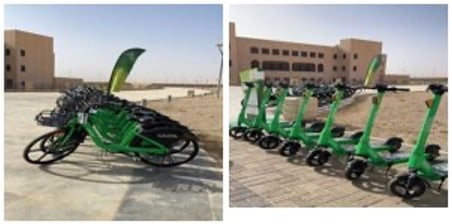
The University’s programme to reduce greenhouse-gas emissions on campus includes using renewable energy on campus; reducing energy consumption through several techniques; providing bicycle and electric-scooter parking; increasing the frequency of free shuttle buses for students; encouraging car-pooling; facilitating access to public transport; and tree-planting initiatives on campus. The programme addresses emissions from energy use and from commuting, and the tree planting offsets part of the remaining emissions.
Female-student transport assembly points: 25% carbon-emission reduction target
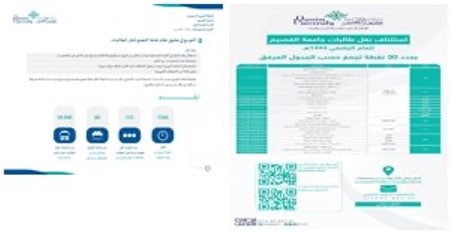
The General Administration of Transport expanded assembly points for female-student transport instead of picking students up from their homes, with a target of reducing carbon emissions by 25%. The system has 86 assembly points covering 235 locations (governorates, centres and villages), with 38,500 shuttle trips during the year, and saves each student 1,260 minutes a month. Grouping students at shared points shortens bus routes and fuel use, reducing transport emissions.
Electric carts and campus shuttle service
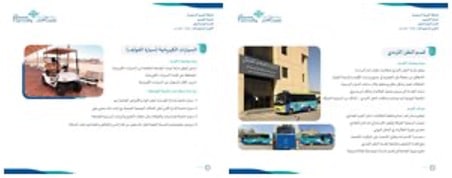
The General Administration of Transport provides electric carts to university units, including services, security and events, with two carts at the Medical City to transport elderly people and people with disabilities. It also runs regular shuttle buses for female students from the Qassim transport station to the college gates. Electric carts replace fuel vehicles for movement on campus, and the shuttle service reduces reliance on private vehicles, lowering campus transport emissions.
Fuel framework agreement: controlling fuel use of university vehicles
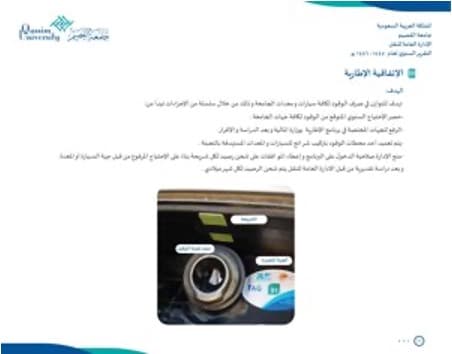
Under the fuel framework agreement, the annual fuel needs of all university units are determined in advance, and vehicles and equipment are refuelled using electronic cards with fixed monthly balances based on an estimate by the General Administration of Transport. Controlling and recording the fuel used by the university fleet supports the management and reduction of its direct (Scope 1) emissions.
Palm-waste conversion research: potential reduction of 8,000 tonnes of CO2 per year
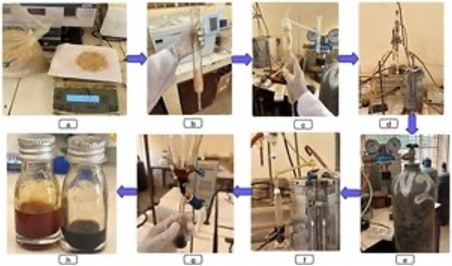
University research on converting palm waste, an abundant agricultural residue in the Qassim region, into fuel has the potential to reduce about 8,000 tonnes of CO2 emissions per year, by turning waste into a cleaner energy source.
A research team at Qassim University has succeeded in converting palm waste into clean biofuel and hydrogen energy.
A research team at Qassim University has succeeded in converting palm waste into clean biofuel and renewable hydrogen energy.
- About SDG 7
- Energy-efficient renovation and building
- Upgrade buildings to higher energy efficiency
- Carbon reduction and emission reduction process
- Plan to reduce energy consumption
- Energy wastage identification
- Divestment policy
- Local community outreach for energy efficiency
- 100% renewable energy pledge
- Energy efficiency services for industry
- Policy development for clean energy technology
- Assistance to low-carbon innovation