 Official government website of the Government of the Kingdom of Saudi Arabia




7
Developing Policies for Clean Energy Technologies

- About Goal Seven
- Energy-efficient renovation and building
- Upgrading buildings for higher energy efficiency
- Carbon reduction and emission mitigation
- Energy Consumption Reduction Plan
- Identify energy waste
- Divestment policy
- Engaging the Local Community for Energy Efficiency
- Commitment to 100% Renewable Energy
- Energy efficiency services for the industrial sector
- Developing Policies for Clean Energy Technologies
- Low-carbon innovation support
Related Content
Policy development for clean energy technology
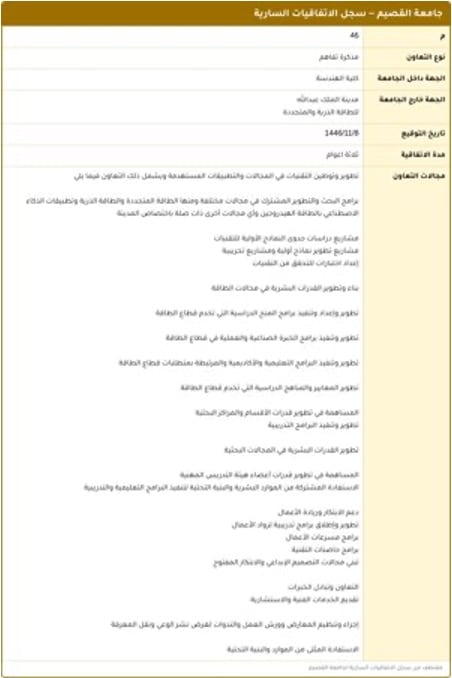
Qassim University supports national clean-energy policy through its MoU with King Abdullah City for Atomic and Renewable Energy (K.A.CARE), which covers joint research, feasibility studies, prototypes, technology testing and the development of standards and curricula serving the energy sector, and through the scientific recommendations issued by its international solar energy conferences.
MoU with King Abdullah City for Atomic and Renewable Energy (K.A.CARE)
On 6 May 2025 the College of Engineering signed a three-year MoU with King Abdullah City for Atomic and Renewable Energy, the national body for renewable and atomic energy, to develop and localise technologies in its target fields. The MoU covers joint research and development programmes in renewable energy, atomic energy, artificial-intelligence applications in energy and hydrogen; feasibility studies for technology prototypes; prototype development and pilot projects; tests to verify technologies; scholarship, industrial-experience and academic programmes serving the energy sector; developing standards and curricula that serve the energy sector; building the capabilities of departments, research centres and faculty members; supporting innovation and entrepreneurship through training programmes for entrepreneurs, business accelerators and technology incubators; providing technical and consulting services; and organising exhibitions, workshops and seminars to raise awareness and transfer knowledge. Through it, the University’s expertise feeds into the national development of clean-energy technologies and the standards that govern them.
Solar Energy Horizons Conference concludes with 12 scientific recommendations
The conference “Solar Energy Prospects in Saudi Arabia: Applications and Challenges” concluded its work the day before yesterday, Thursday, April 26, 1442 AH, after holding 10 scientific sessions over two days with the participation of a number of academics and researchers in solar energy applications and industry experts from within and outside Saudi Arabia.
The conference outcomes resulted in the issuance of 12 scientific recommendations that covered many aspects and axes of the discussions regarding solar energy, in line with the directions and plans of the Kingdom’s Vision 2030 to diversify energy sources and become an exporter of sustainable energy, especially solar energy.
Dr. Meshal Al-Mushaiqeh, Dean of the College of Engineering and Head of the Scientific Committee of the Conference, explained that the recommendations from the conference covered all the themes discussed by the participants. These recommendations included establishing vocational and university training programs in solar energy at all universities and incorporating solar energy into the curricula of colleges of Architecture, Science, Agriculture, and others. Additionally, the recommendations called for integrating solar energy concepts and technologies into the university engineering college curricula and teaching them in middle and high schools.
Al Mishaiqih added that the conference recommended enacting legislation (systems, regulations, and instructions) and incentives, as well as investment maps for renewable energy in the Kingdom of Saudi Arabia. It also recommended raising awareness of the social, economic, and technological aspects of the new and renewable energy field within the local community, in addition to focusing on local manufacturing of solar energy technology equipment. Furthermore, it recommended exchanging expertise with Arab countries in the field of renewable energy by periodically working to unify testing standards and methods for solar energy systems in Arab countries. This includes focusing on solar thermal and electric applications for cooling and air conditioning, and preparing Saudi standards for solar thermal collectors and systems.
The head of the conference’s scientific committee also explained that the recommendations included urging detailed studies on the impact of dust accumulation on solar/photovoltaic power complexes, recommending the use of geographic information systems and multivariate analysis to select the best locations for building solar desalination plants, in addition to improving the production of desalinated water through solar distillation. It is preferable to use a type of porous column to store a larger amount of moisture and utilize a rotating wheel in solar distillers to enhance the production of desalinated water. It is worth noting that the efficiency of solar distillers that used rotating wheels improved compared to conventional distillers. He prayed to Almighty God that these recommendations would benefit those working in and interested in the field of solar and renewable energy.
The university organizes an international conference to maximize the use of solar energy and its applications Under the patronage of His Highness the Emir of Qassim
The university, represented by the College of Engineering, held an international conference titled «Solar Energy Prospects in the Kingdom of Saudi Arabia: Applications and Challenges,» today, Wednesday, corresponding to 24/4/1442 AH, and it will continue for two days. The conference is under the patronage and attendance of His Royal Highness Prince Dr. Faisal bin Mishal bin Saud bin Abdulaziz, Governor of Al-Qassim Region, and with the participation of a number of academics and researchers in solar energy applications and industry experts from inside and outside the Kingdom of Saudi Arabia.
Following the opening of the conference activities, His Highness the Governor of Qassim honored the scientific and organizational committees that participated in preparing for this international conference. His Highness also watched a presentation by the Student Club of some graduation projects by engineering students specializing in solar energy, in addition to a video about the importance, goals, and themes of this conference, which seeks to exchange expertise in the field of solar energy, address the most prominent challenges facing this field, and reach results and solutions to confront and overcome these challenges.
In his opening remarks at the conference, His Excellency Professor Dr. Abdulrahman bin Hamad Al-Dawood, President of Qassim University, welcomed His Highness the Governor of the region, thanking him for his presence and patronage of this important scientific occasion. He also welcomed the participants in this international conference and all attendees, noting the great interest of the government of the Custodian of the Two Holy Mosques and His Highness the Crown Prince – may God protect them both – in supporting the national economy within Saudi Vision 2030, reducing reliance on oil, supporting the shift towards sustainable clean energy sources, and raising awareness of the importance of solar energy as it represents an abundant source of renewable energy in Saudi Arabia.
The university president explained that the idea of organizing this conference stemmed from this noble principle, and from the university’s vision and mission to serve society and scientific research, and to achieve sustainable development. This will be done by hosting a number of senior academics, researchers, industry experts, and investors in the field of renewable energy and solar energy applications, both inside and outside the Kingdom, in order to exchange expertise in this field. He pointed out that research into enhancing ways to benefit from solar energy and develop its technologies contributes to achieving the goals of our Kingdom’s vision of diversifying the economy currently based on oil, transforming the Kingdom from a leading oil exporting country to a country that exports sustainable energy, of which solar energy is one of its most prominent and important sources.
At the end of his speech, His Excellency the President of the University thanked all participants and attendees, foremost among them His Highness the Emir of the region. He also thanked the organizing committees, the strategic partner of the conference, King Abdullah City for Atomic and Renewable Energy, and the sponsors. He prayed to God Almighty to guide the conference participants towards what is good for our generous homeland, and to preserve our country and our leaders, and to bestow upon us lasting health, safety, and stability.
Dr. Meshal Al-Mushaiqeh, Chairman of the Scientific Committee of the conference and Dean of the College of Engineering, emphasized in his speech that this conference stems from the university’s vision and mission, and from the awareness of its affiliates of the importance of holding such conferences in line with the Kingdom’s Vision 2030. The aim is to support the national economy, reduce dependence on oil, and create awareness of the importance of solar energy as an abundant source of renewable energy in the Kingdom of Saudi Arabia. He pointed out that the conference covers all aspects of the current situation and developments in solar energy technologies and applications, and focuses on the use of solar energy engineering in various applications within academic, governmental, and industrial circles in the Kingdom.
He added that the conference also aims to contribute to transforming the Kingdom from a leading oil exporting country to a sustainable energy exporting country. Over two days, it will discuss and analyze 41 scientific papers in 10 scientific sessions, during which participants and researchers will present the latest advancements in modern science in the field of solar energy according to the conference’s seven themes. He clarified that the conference will be accompanied by a virtual exhibition where 16 researchers will showcase the results of their scientific research, and an exhibition on the College of Engineering and its capabilities in the field of sustainable energy.
The Dean of the College of Engineering pointed out that the esteemed President of the University has issued a decision to form the scientific committee for the conference with the participation of a group of faculty members in the field of renewable energy at the College of Engineering. This committee has held more than 21 meetings, and 198 research abstracts have been received from 16 different countries. He noted that the university, based on its role as a beacon of knowledge and in fulfillment of its vision and mission to serve researchers, academics, and the community, has decided to hold the conference virtually to comply with precautionary and preventive measures. The university has established a virtual platform that simulates Qassim University and its buildings to enable academics and researchers to attend and participate in the conference activities as if they were physically present at the university’s main building, the university theater, and the venues for scientific paper presentations. Virtual halls have also been created to allow attendees to communicate and exchange scientific experiences with experts and researchers from several countries.
News related to the goal
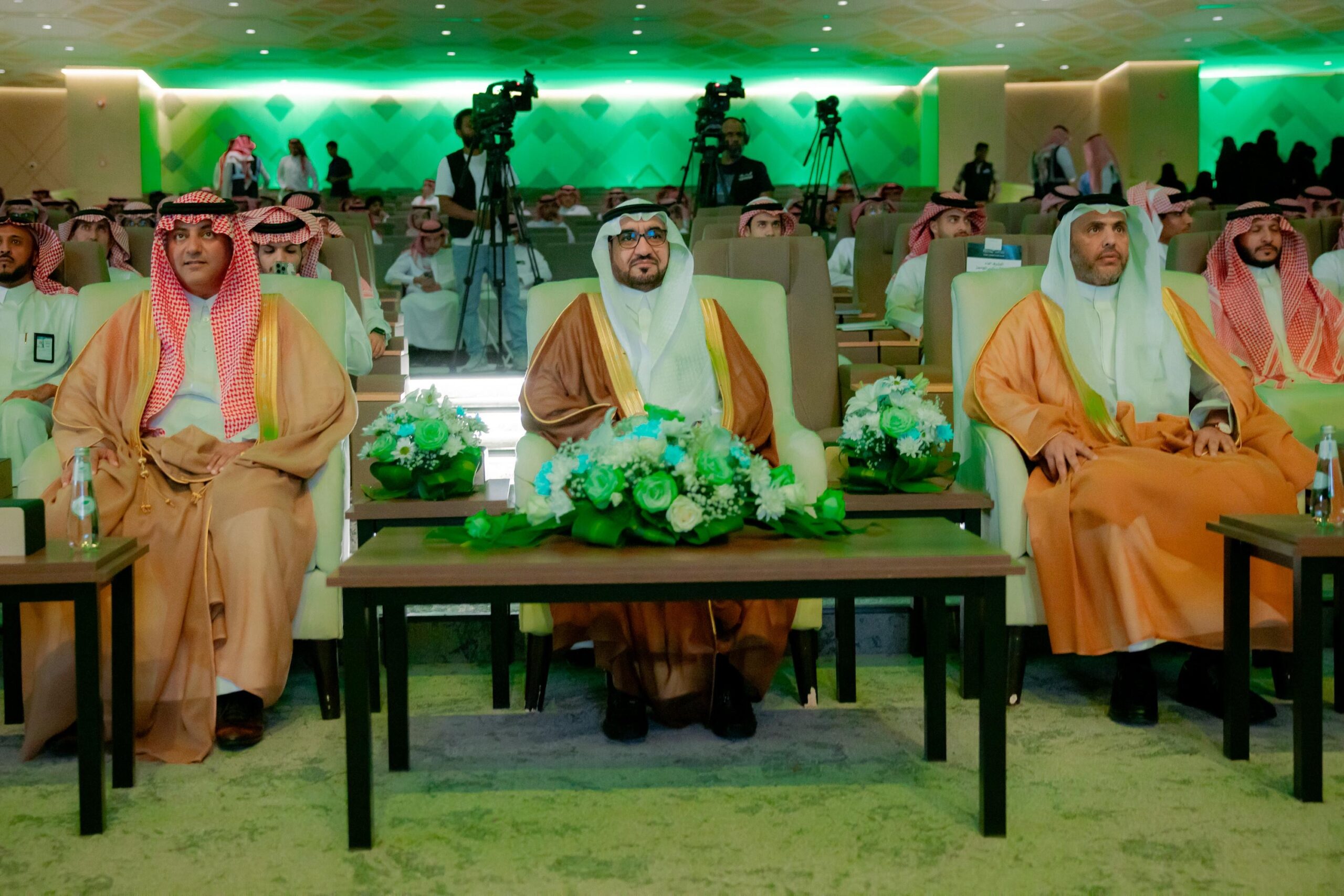
His Excellency the President of the University, Professor Dr. Muhammad bin Fahd Al-Sharikh, sponsored today, Wednesday, October 1, 2025, the «Geographical Conference on Saudi Environment and Protected Areas: Towards Sustainable Development,» organized by the University, represented by the College of Languages and Humanities, in partnership with the Royal Commission for the Development of Imam Turki bin Abdullah Reserve and with the participation of several entities, in the presence of His Excellency the CEO of the Commission, Eng. Muhammad bin Abdulrahman Al-Shalan, and His Excellency [...]
2025-10-01

As part of strengthening scientific and research partnerships, Qassim University signed a Memorandum of Understanding (MOU) with King Abdullah University of Science and Technology (KAUST) yesterday, Monday, at the KAUST campus. The MOU was signed by His Excellency Professor Dr. Mohammed bin Fahad Al-Sharikh, President of Qassim University, and Professor Edward Robert Bernard, President of KAUST. This MOU aims to develop the research environment, support innovation and entrepreneurship […]
2025-05-20

This morning, Tuesday, October 19, 1444 AH, His Excellency Professor Dr. Abdulrahman bin Hamad Al-Dawood, President of the University, launched the initiative of His Royal Highness Prince Dr. Faisal bin Mishal bin Saud bin Abdulaziz, Governor of the Qassim Region, “The Land of Qassim is Green,” in its eleventh phase, and the initiative “Let's Make It Green,” at the university city campus, in cooperation with the branch of the Ministry of Environment, Water and Agriculture […]
2023-05-09

The “Solar Energy Prospects in Saudi Arabia: Applications and Challenges” conference concluded on Thursday, April 26, 1442 AH, after holding 10 scientific sessions over two days with the participation of a number of academics and researchers in solar energy applications and industry experts from within and outside the Kingdom of Saudi Arabia. The conference results led to the issuance of 12 scientific recommendations that covered many aspects and themes [...]
2020-12-13

The university, represented by the College of Engineering, held an international conference titled «Solar Energy Prospects in the Kingdom of Saudi Arabia: Applications and Challenges,» today, Wednesday, corresponding to 24/4/1442 AH, and it will continue for two days, under the patronage and attendance of His Royal Highness Prince Dr. Faisal bin Mishal bin Saud bin Abdulaziz, Governor of Al-Qassim Region, with the participation of a number of academics and researchers in solar energy applications and industry experts from […]
2020-12-09
Tweets related to the goal
Files related to the objective
- About Goal Seven
- Energy-efficient renovation and building
- Upgrading buildings for higher energy efficiency
- Carbon reduction and emission mitigation
- Energy Consumption Reduction Plan
- Identify energy waste
- Divestment policy
- Engaging the Local Community for Energy Efficiency
- Commitment to 100% Renewable Energy
- Energy efficiency services for the industrial sector
- Developing Policies for Clean Energy Technologies
- Low-carbon innovation support