 Official government website of the Government of the Kingdom of Saudi Arabia




7
Plan to reduce energy consumption

- About SDG 7
- Energy-efficient renovation and building
- Upgrade buildings to higher energy efficiency
- Carbon reduction and emission reduction process
- Plan to reduce energy consumption
- Energy wastage identification
- Divestment policy
- Local community outreach for energy efficiency
- 100% renewable energy pledge
- Energy efficiency services for industry
- Policy development for clean energy technology
- Assistance to low-carbon innovation
Related Content
Plan to reduce energy consumption
Qassim University has a plan to reduce its overall energy consumption. A Standing Committee for Energy Management prepares, implements and evaluates an action plan in line with the guideline of the Saudi Energy Efficiency Center; the University achieved 100% compliance in energy rationalization for 2025; its Energy-Efficient Renovation and Building Policy targets a 30–40% reduction in campus energy consumption; and the Tarshid projects aim to cut annual consumption from about 186 to about 178 million kWh and save 22% of energy in 29 buildings.
Qassim University achieves 100% compliance in energy rationalization for 2025
Qassim University achieved 100% compliance with energy-consumption rationalization for 2025, according to the evaluation of the Saudi Energy Efficiency Center. The result reflects the implementation of the energy-rationalization requirements in the University’s buildings and facilities during 2025, under the action plan of its Standing Committee for Energy Management.
Re-forming the Standing Committee for Energy Management to prepare the action plan
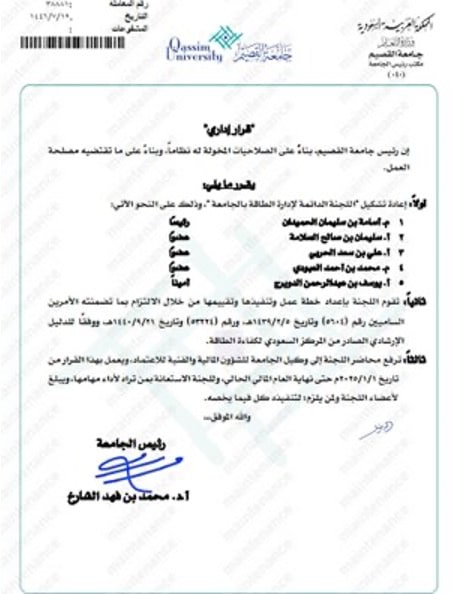
By a decision of the University President on 19 January 2025, the Standing Committee for Energy Management was re-formed with a chair and four members. The committee prepares, implements and evaluates an action plan to comply with Royal Decrees 5604 and 53224 on rationalizing energy consumption, in line with the guideline of the Saudi Energy Efficiency Center, effective from 1 January 2025. The committee’s plan is the University’s framework for reducing its overall energy consumption and following up its results.
Reducing annual consumption from 186 to 178 million kWh through the Tarshid project
The 5,137 kW solar project with Tarshid, launched on 4 March 2025, aims to reduce the University’s annual electricity consumption from the grid from about 186 million kWh to about 178 million kWh, a saving of 8.6 million kWh per year. It is also expected to save more than 13,000 barrels of oil equivalent and avoid about 4,000 tonnes of emissions every year.
30–40% consumption-reduction target in the energy-efficiency policy
Clause 4.1 of the Energy-Efficient Renovation and Building Policy sets a target of reducing campus energy consumption by 30–40% through LED lighting, improved air-conditioning, thermal insulation and the integration of renewable energy. The policy applies to all new buildings and renovations and was reviewed in October 2025.
Plan to reduce energy consumption: interventions by scope
Qassim University strives to be a role model in sustainable practices and the promotion of a culture of respect and care for the environment. Qassim University is committed to implementing concrete policies and actions that reduce our environmental footprint and foster sustainability in all areas of our institutional activity. Qassim University is firmly committed to addressing the challenge of climate change and contributing to the transition towards a low-carbon economy. As a leading institution in higher education, Qassim University recognize its responsibility in reducing greenhouse gas emissions and promoting sustainable practices in its operations.
Qassim University Interventions for lowering carbon emissions:
Scope 1:
- Transition fleet vehicles to electric or hybrid alternatives.
- Regular maintenance and fuel optimization.
Scope 2:
- Install renewable energy solutions (solar panels).
- Real-time energy monitoring systems.
- Awareness campaigns for reducing electricity consumption.
Scope 3:
- Promote carpooling and use of public transportation.
- Increase campus transportation services.


Qassim University Campus Sustainability Report
An official document that quantifies electricity use and carbon footprint for several years, showing the definition of limits and systematic measurement.
Sustainability and Climate Policy
The official policy explicitly mandates “Incorporating sustainability and climate change topics into curricula” as a foundational element of the university’s commitment to address global climate and sustainability issues.
Tarshid retrofit of 29 buildings: expected saving of 22%
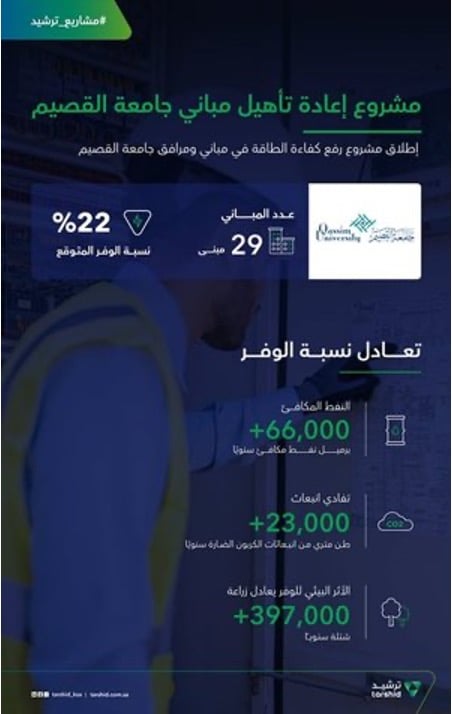
The energy-efficiency retrofit carried out by Tarshid sets a quantified consumption-reduction target: a 22% energy saving across 29 university buildings, equal to more than 66,000 barrels of oil equivalent per year and the avoidance of more than 23,000 tonnes of CO2 per year.
Energy-efficiency programme in the General Administration of Transport
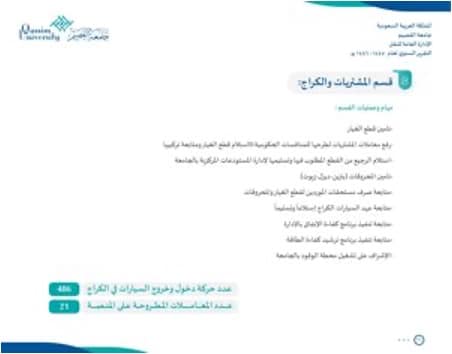
Energy efficiency is also part of the University’s transport operations: among the tasks of the Procurement and Garage Section of the General Administration of Transport are following up the implementation of the energy-efficiency programme and supervising the university fuel station.
Goal-related news
Goal-related files
2025-11-06
2025-10-26
- About SDG 7
- Energy-efficient renovation and building
- Upgrade buildings to higher energy efficiency
- Carbon reduction and emission reduction process
- Plan to reduce energy consumption
- Energy wastage identification
- Divestment policy
- Local community outreach for energy efficiency
- 100% renewable energy pledge
- Energy efficiency services for industry
- Policy development for clean energy technology
- Assistance to low-carbon innovation