 Official government website of the Government of the Kingdom of Saudi Arabia




17
International collaboration data gathering for SDG

Related Content
International collaboration data gathering for SDG
Qassim University engages in international collaboration for SDG data gathering by actively participating in global academic and research networks, a key element of SDG 17. The university’s Center for Sustainable Development (SDC) seeks to strengthen international partnerships with institutions, centers, and houses of expertise, often leading to joint research initiatives. These collaborations enable Qassim University to access and contribute to global research datasets and benchmarking results on sustainability indicators. Furthermore, the university participates in global university rankings and platforms like the UI Green Metric, which requires detailed data submission and facilitates comparative analysis of sustainability practices worldwide. Through its faculty's international research cooperation, such as in renewable energy systems, the university shares locally generated data and incorporates international best practices and advanced statistical methodologies. This cross-border exchange is vital for improving the accuracy of SDG monitoring and ensuring the local data contributes meaningfully to the broader global assessment of sustainability progress.
Times Higher Education (THE) Impact Rankings Data Submission
The university formally submits institutional data (including research, stewardship, and outreach) to be assessed against the THE's SDG-based methodology for global benchmarking.
UI GreenMetric World University Rankings Data Submission
Requires the submission of quantitative data on campus sustainability metrics (e.g., water use, energy efficiency, waste recycling) for international comparison.
QS World University Rankings Internationalization Data
Submission of data on International Students and International Faculty numbers, which are core indicators of cross-border academic partnership and knowledge exchange.
Supporting Collaboration with QS Top 200 Universities
Incentivizing faculty to partner with researchers from elite global institutions, ensuring joint research output meets high international standards and data integrity.
International Peer-Reviewed Publication on Sustainability (WoS/Scopus)
Providing financial support to faculty who publish sustainability-focused research in globally indexed scientific databases, thereby contributing Qassim-based sustainability data to the international knowledge pool.
Open Data Policy for International Researchers
Committing to make university data freely available for reuse by international researchers and institutions, fostering transparency and global scientific collaboration.
Strengthening International Partnerships in sustainability (SDC Mission)
The SDC's mission explicitly mandates active engagement with international entities to integrate and strengthen local sustainable development efforts globally.
Greening Courses Project & UN Global Action Programme
Aligning the curriculum and the collection of educational outcome data with the principles of the UN's Global Action Programme on Education for Sustainable Development.
Research on Water Management Shared on ResearchGate
Publishing local, successful water resource management data and case studies on an international academic platform to share best practices globally.
Preparation of Periodic Sustainable Development Reports
Compiling structured, comprehensive reports that can be utilized for both national policy review and submission to international SDG monitoring bodies.
Sustainable Development Research Grant Data Generation
Providing internal funding to generate novel research data directly applicable to solving local and global challenges defined by the SDG framework
Collaboration with International Non-Academic Institutions
Supporting joint projects with global industry, hospitals, and companies to gather applied, real-world data on innovation, health, and economic growth
Membership in IREG International Observatory
Membership ensures the university's internal data collection and evaluation processes align with global standards for institutional excellence and quality assurance.
Environmental Impact Assessment (EIA) Studies Data
Producing standardized environmental data (e.g., pollutant levels, resource consumption) that can be used for international environmental reporting and modeling.
Promoting Sustainability Partnership and Knowledge Exchange
A broad strategic goal to foster relationships for mutual learning and data sharing with global counterparts on development best practices.
Structuring the Sustainable Development Database
Creating a centralized, modern database that acts as the single source of truth for SDG data, streamlining data accessibility for international partners
Aligning Research with National SDG Indicators
Focusing research on national development priorities which are themselves aligned with global SDG targets, making local data internationally relevant.
Benchmarking for International Sustainability Distinction.
Undertaking formal benchmarking activities against global university peers to identify gaps and improve data for competitive international evaluation.
Research on Food Security and Water in Agriculture
The specialized colleges produce research data on sustainable practices (e.g., water-efficient farming) essential for global agricultural and food security models.
International Sustainability Accreditation and Quality Assurance Data
Achieving and maintaining international accreditation (e.g., CHEA membership) requires submitting program-level data that confirms quality and standards against global benchmarks.
GASTAT Signs Memorandum of Cooperation with Qassim University
An agreement was signed with the General Authority for Statistics (GASTAT) that includes cooperation in developing and supporting specialized academic programs in statistics and the use of data to track progress towards achieving the Sustainable Development Goals (SDGs).
Goal-related news
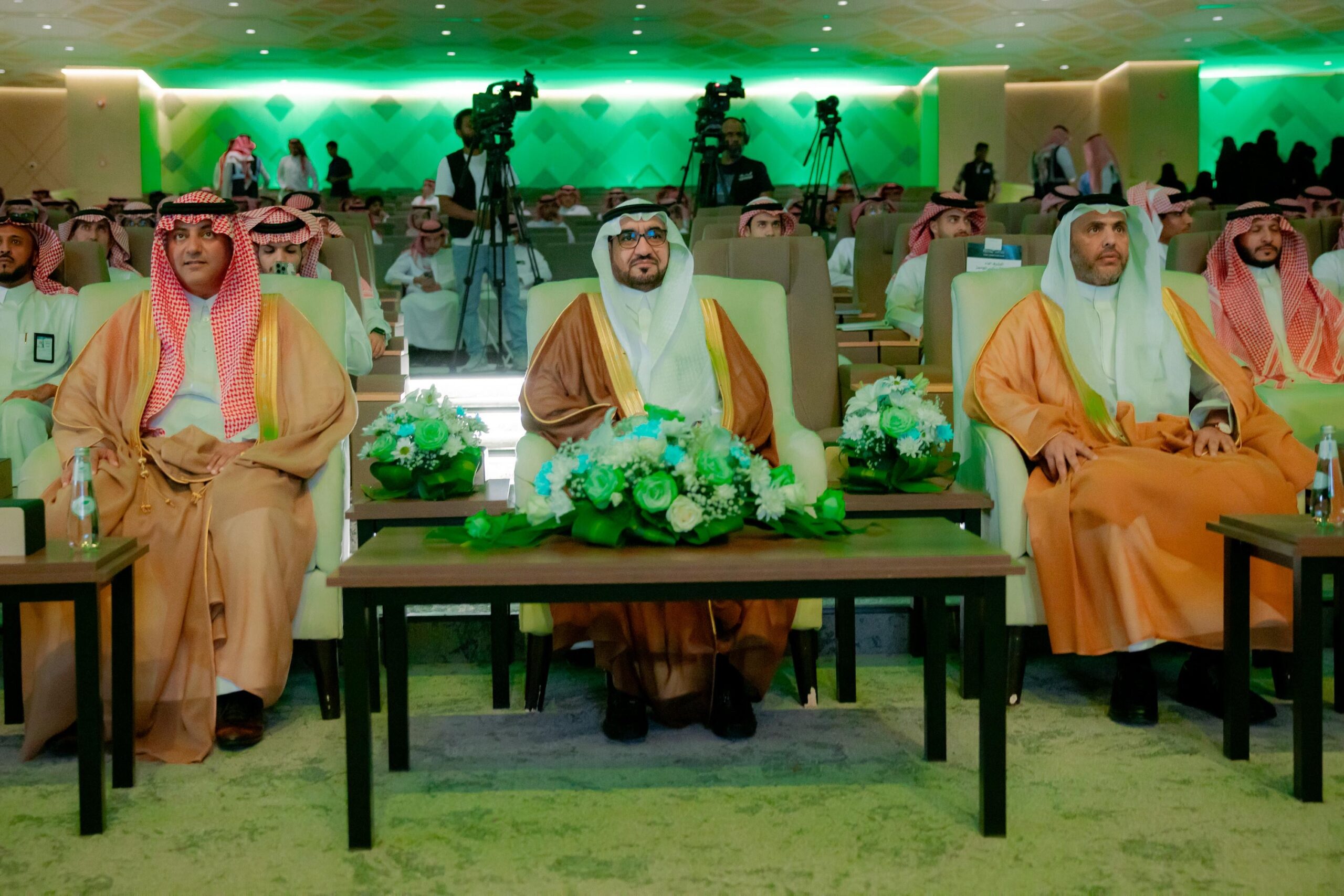
His Excellency the President of the University, Professor Dr. Muhammad bin Fahd Al-Sharikh, sponsored today, Wednesday, October 1, 2025, the «Geographical Conference on Saudi Environment and Protected Areas: Towards Sustainable Development,» organized by the University, represented by the College of Languages and Humanities, in partnership with the Royal Commission for the Development of Imam Turki bin Abdullah Reserve and with the participation of several entities, in the presence of His Excellency the CEO of the Commission, Eng. Muhammad bin Abdulrahman Al-Shalan, and His Excellency [...]
2025-10-01
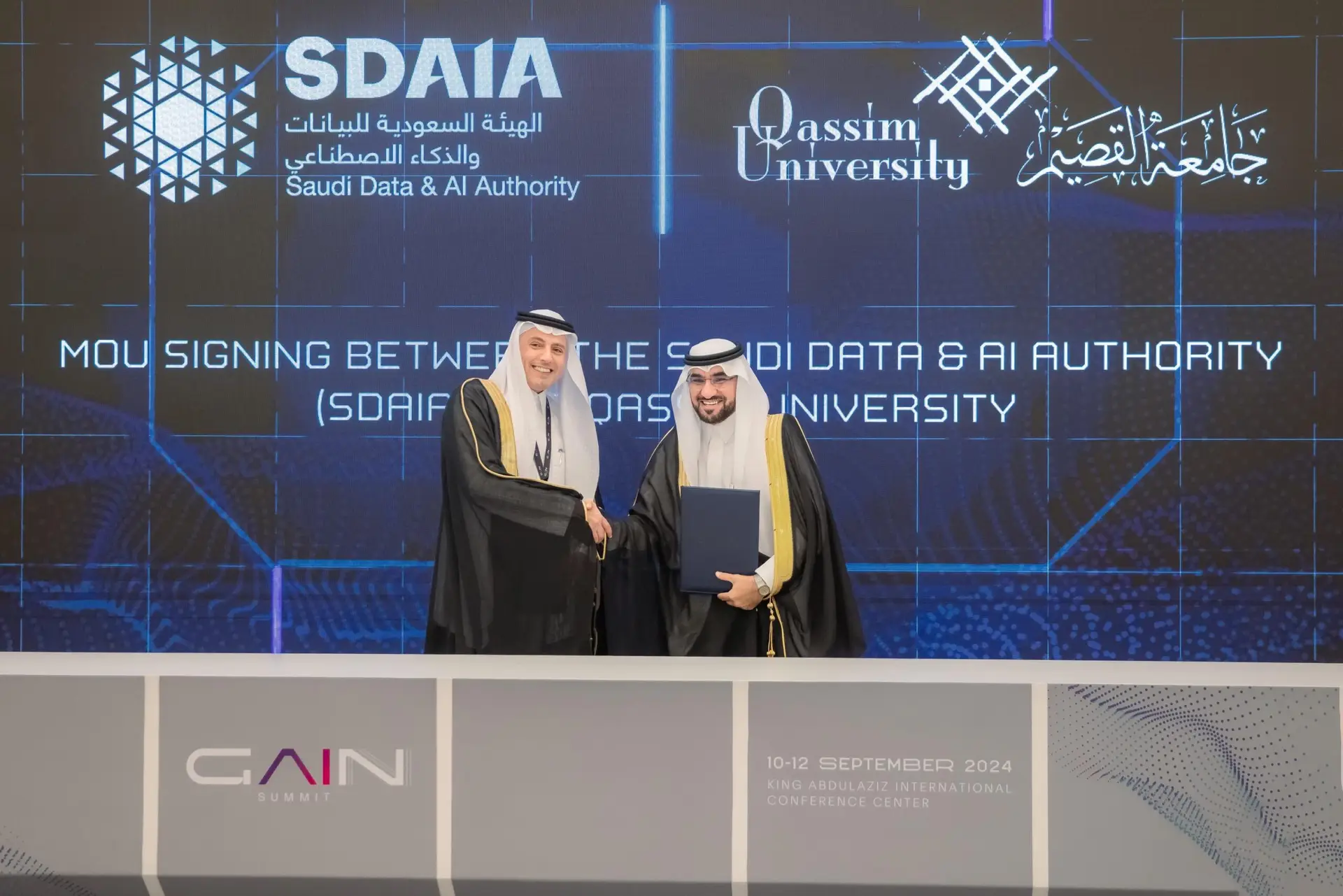
The University and the Saudi Data and Artificial Intelligence Authority (SDAIA) signed a Memorandum of Understanding on Tuesday, September 10, 2024, to cooperate in the field of education through training and developing national cadres, enhancing awareness in the field of data, artificial intelligence, and modern technologies, as well as organizing career development programs for university graduates and job seekers in this field, and exploring avenues for cooperation in research and innovation...
2024-09-10
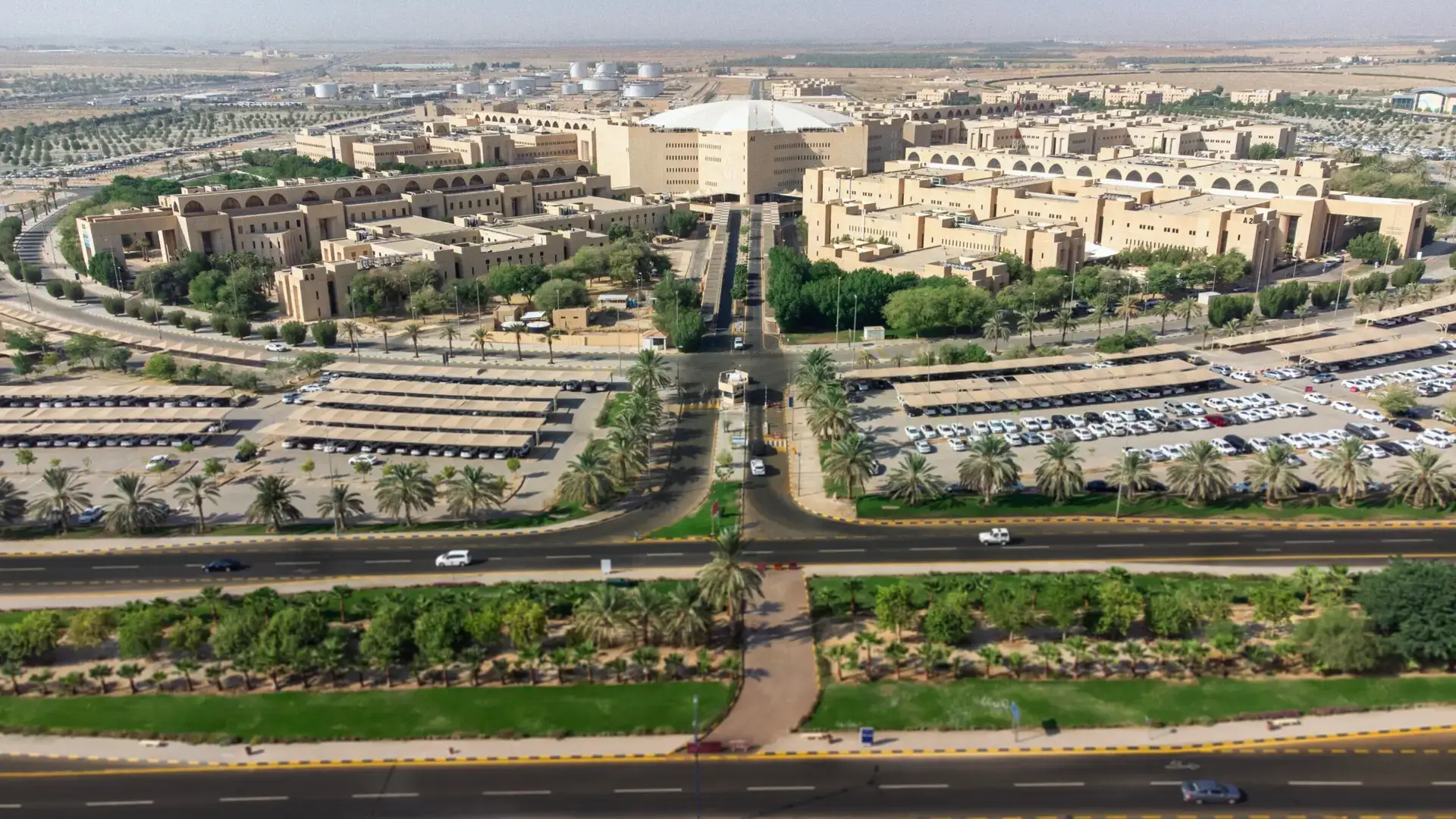
The university, represented by the College of Veterinary Medicine, intends to hold the Second International Scientific Camel Forum under the slogan «Camels 2024: Sustaining Heritage.» This event will be held under the patronage of His Royal Highness Prince Dr. Faisal bin Mishal bin Saud bin Abdulaziz, Governor of the Qassim Region, from November 5-7, 2024, corresponding to Jumada al-Awwal 3-5, 1446 AH. The forum is organized in partnership with the Emirate of the Qassim Region and the Ministry of Environment branch [...]
2024-08-22
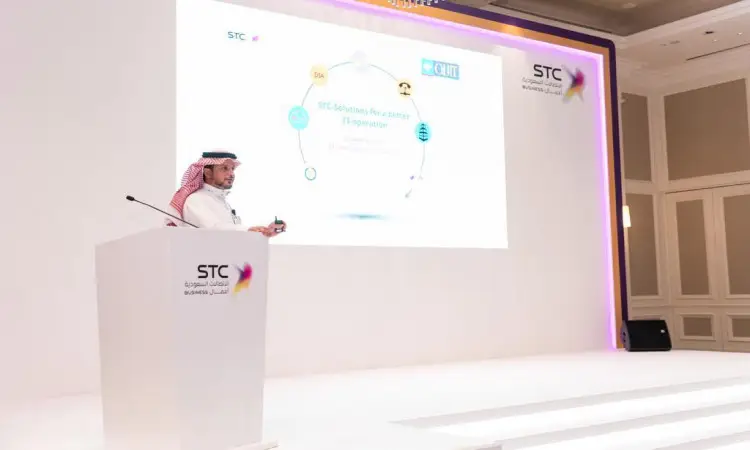
The Deanship of Information Technology at the university presented the success story of projects undertaken in partnership with STC during the ICT workshop organized by STC in Dubai, United Arab Emirates. The presentation was delivered in the presence of senior IT executives from the region. The meeting focused on the university's experience with Saudi Telecom Company (STC), with the participation of the Dean of Information Technology, Dr. Adel Al-Arini [...]
2018-12-20