 Official government website of the Government of the Kingdom of Saudi Arabia



Greening the Curriculum Project
The Green Curriculum Initiative was officially launched in 2021 as one of the strategic projects in Qassim University's 2021-2025 plan. The project aims to: Affirm Qassim University's commitment to its mission, which makes sustainability a cornerstone of its educational programs. Strive for the university to achieve national leadership in integrating sustainability concepts into educational programs, thereby positioning it to join the ranks of distinguished international universities in the field of sustainability education. The project also seeks to develop and enhance students' capabilities in sustainable development applications and to foster their skills towards the wise management of resources, making this a competitive asset for university students in the job market and meeting local and national development needs.
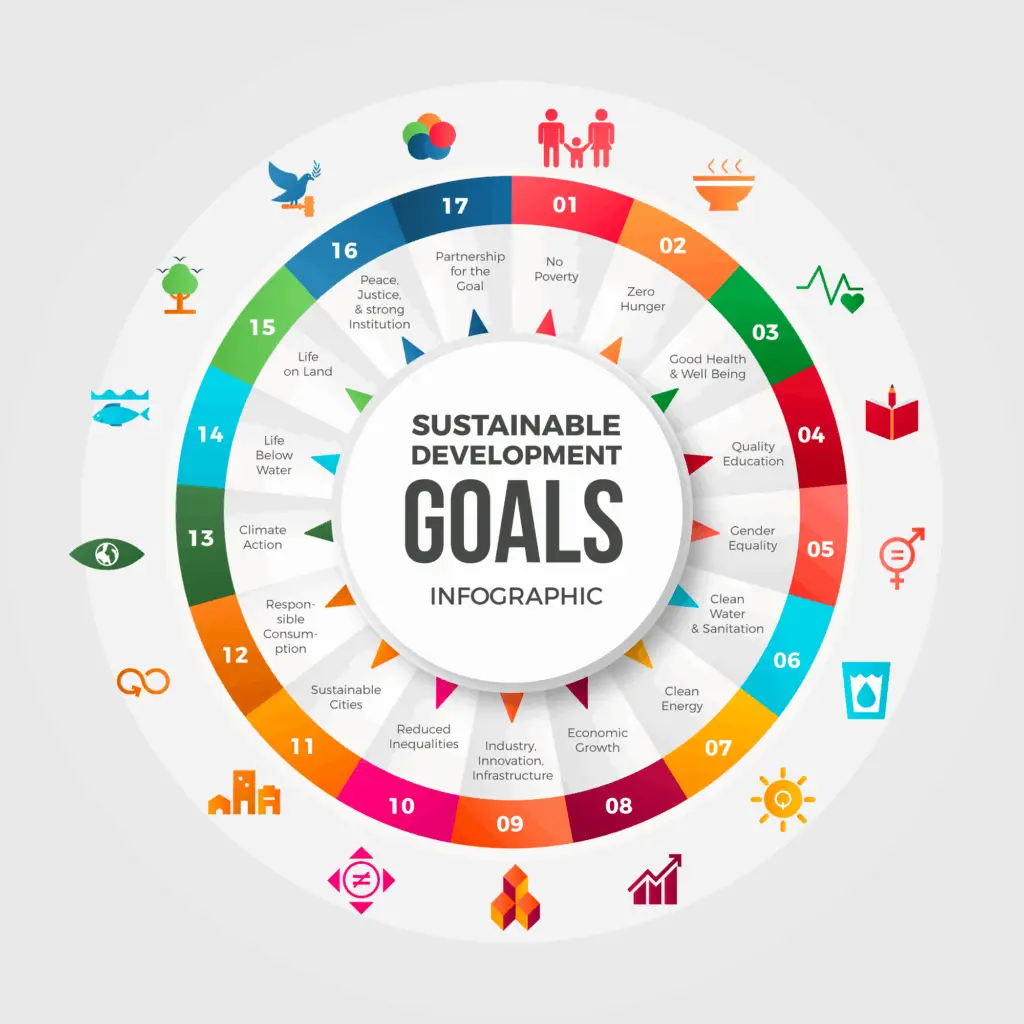
Goal 4 of the UN Sustainable Development Goals, "Ensure inclusive and equitable quality education and promote lifelong learning opportunities for all," is considered one of the most important direct goals related to curriculum modernization. Education enables upward social and economic mobility and is an important means of understanding all dimensions of the remaining seventeen goals. It empowers individuals with a scientific foundation that qualifies them to find effective solutions for achieving these goals and crystallizes the means and ways to lead humanity to safety.
Over the past decade, significant progress has been made toward facilitating access to education and school enrollment rates at all levels, especially for girls. However, approximately 260 million children were still out of school in 2018, representing nearly one-fifth of the world's population in this age group. Furthermore, more than half of children and adolescents globally do not meet minimum proficiency standards in reading and mathematics.
The provision of education for all has always been an integral part of the sustainable development agenda. The 2002 World Summit on Sustainable Development adopted the Johannesburg Programme of Implementation, which, in Chapter X, reaffirmed Millennium Development Goal 2 of achieving universal primary education by 2015, and the Education for All Fast-Track Initiative goal of eliminating gender disparities in primary and secondary education by 2005 and in all levels of education by 2015. The Johannesburg Programme of Implementation addressed the need to integrate sustainable development into formal education at all levels, as well as through non-formal and informal education opportunities.
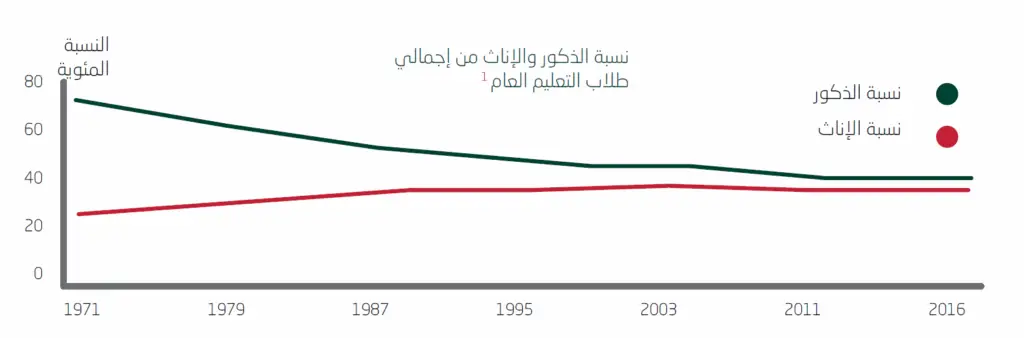
There is growing international recognition of the importance of education for sustainable development as a key component of quality education and a major driver of sustainable development. Both the Muscat Agreement, adopted at the Global Education for All Meeting in 2014, and the proposed Sustainable Development Goals by the United Nations General Assembly Open Working Group on Sustainable Development Goals include education for sustainable development among the proposed goals for the post-2015 agenda. Proposed SDG 4 states ”Ensure inclusive and equitable quality education and promote lifelong learning opportunities for all“ and includes a set of related targets.
Education for Sustainable Development is closely linked to international discussions on sustainable development, which have increased in scope and importance since the 1987 publication of ”Our Common Future,“ which provided the first broad definition of sustainable development as ”development that meets the needs of the present without compromising the ability of future generations to meet their own needs.”.
As the crucial role of education in achieving sustainable development was duly pointed out in the United Nations Conference on Environment and Development, held in Rio de Janeiro in 1992, through Chapter 36 of its final document – Agenda 21.
In 2005, UNESCO launched the UN Decade of Education for Sustainable Development (DESD), which reaffirmed the key role of education in shaping values supportive of sustainable development and in consolidating sustainable societies. The final report of the UN DESD, ”Shaping the Future We Want,“ was released at the UNESCO World Conference on Education for Sustainable Development in November 2014 in Nagoya, Japan.
This plan has identified five priority areas for advancing the Education for Sustainable Development agenda: policy support, whole institution approaches, educators, youth, and local communities. As one of its main mechanisms for implementing the Global Action Programme, UNESCO has established five partner networks, each corresponding to one of the five priority areas. The partner networks will create synergies for their members' activities and stimulate action by other stakeholders.
In the period leading up to the United Nations Conference on Sustainable Development, Rio+20, the Higher Education Initiative for Sustainability was established as a partnership between several UN sponsoring entities (UNESCO, UN Department of Economic and Social Affairs, UNEP, UN Global Compact, and UN University) with the aim of rallying commitments from higher education institutions to teach and promote research related to sustainable development, green their campuses, and support local sustainability efforts. The initiative, which includes approximately 300 universities worldwide, represents more than a third of all voluntary commitments from the Rio+20 conference, providing higher education institutions with a unique interface between policymaking and academia.
In 2015, the Higher Education Sustainability Initiative partnership officially became a member of Priority Area 2 of the Global Action Programme (GAP) Network: ”Transforming learning and education settings.“.
The initiative, through its connection to the Global Action Programme, aims to help institutions develop sustainability plans in partnership with the broader community, and to assist universities in integrating sustainability into their management, governance, policies, and administration. Source: Click this link
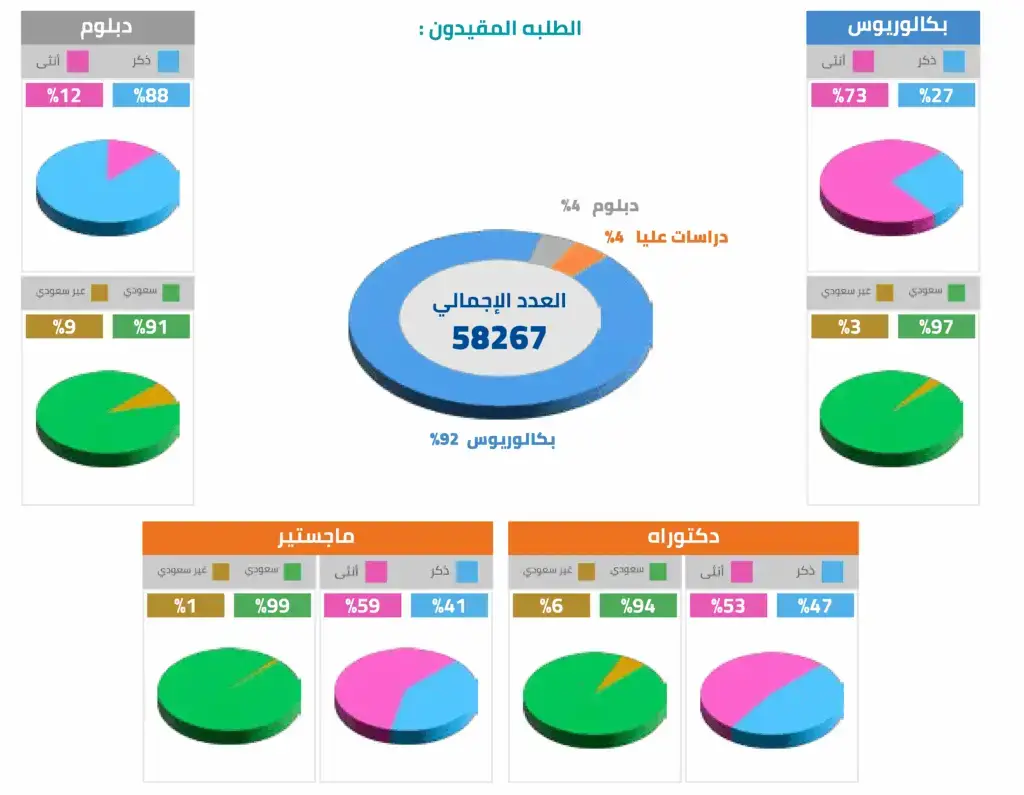
بلغت نسبة الالتحاق بالتعليم الابتدائي في البلدان النامية 91%، لكن 57 مليون طفل في سن التعليم الابتدائي لم يزلوا غير ملتحقين بالمدارس. يعيش أكثر من نصف الأطفال الذين لم يلتحقوا بالمدارس في منطقة أفريقيا جنوب الصحراء الكبرى. يعيش حوالي 50% من الأطفال (ممن هم في سن الدراسة الابتدائية) غير الملتحقين بالمدراس في المناطق المتضررة من النزاعات يفتقر 617 مليون شاب حول العالم إلى مهارات الحساب والقراءة والكتابة الأساسية، يوضح الشكل التالي نسب الطلبة المقيدون بجامعة القصيم حسب الجنس والمرحلة الجامعية (للمزيد انظر التقرير السنوي للجامعة)
Ensure that all girls and boys complete free, equitable and quality primary and secondary education leading to relevant and effective learning outcomes by 2030. Ensure that all girls and boys have access to quality early childhood development and pre-primary education, so that they are ready for primary education by 2030.
By 2030, ensure that all women and men have equal access to quality and affordable vocational, technical, and tertiary education, including university education.
A significant increase in the number of youth and adults with the necessary skills, including technical and vocational skills, to work and hold decent jobs and start their own businesses by 2030
To eliminate gender disparities in education and ensure equal opportunities for access to all levels of education and vocational training for vulnerable groups, including persons with disabilities, indigenous peoples, and children living in precarious situations, by 2030
Ensure that a large proportion of all young people, men and women alike, are literate and numerate by 2030.
Ensure that all learners acquire the knowledge and skills needed to support sustainable development, including, among other means, education for sustainable development and sustainable lifestyles, human rights, gender equality, promotion of a culture of peace and non-violence, global citizenship, and respect for cultural diversity and the contribution of culture to sustainable development, by 2030.
Building educational facilities that accommodate gender differences, disabilities, and children, upgrading existing educational facilities, and creating an effective, safe, and violence-free learning environment for all.
A significant increase in scholarships available for developing countries globally, particularly for least developed countries, small island developing states, and African countries, for access to higher education, including scholarships for vocational training, information and communication technology, and technical, engineering, and scientific programs in developed countries and other developing countries, by 2020
A significant increase in the number of qualified teachers, including through international cooperation for teacher training in developing countries, particularly in LDCs and SIDS, by 2030
- Enrichment relationships
- United Nations Educational, Scientific and Cultural Organization
- United Nations Children's Fund (UNICEF)
- United Nations Development Programme
- Education First Global Initiative
There are at least eight broad knowledge domains at Qassim University colleges from which sustainability integration can be applied to their educational programs:
- Colleges of Sharia and Islamic Sciences
- Colleges of Economics and Management
- Medical and Health Colleges
- Medical and Health Colleges
- College of Agriculture and Veterinary Medicine
- College of Engineering Sciences
- Applied Colleges
- Colleges of Science and Arts
- Geography Department
And we can set some general frameworks in those knowledge areas, to be an initial platform for preparing a detailed guiding model for implementation, as follows:
- Colleges of Sharia, Islamic, and Educational Sciences (including the College of Sharia, the College of Arabic Language, and the College of Education)
- Sustainable Development from an Islamic Perspective
- Sustainable Development in the Noble Prophetic Applications
- Environmental justice in Islam (Balanced exploitation of resources and rational consumption for sustainable development)
- Environmental Ethics and Environmental Education in Islam
- Environmental legislation for sustainability protection from an Islamic perspective
- Human security linked to environmental and social security
- Intellectual terrorism, extremism, and crime and their relationship to sustainable social development
- Resource competition conflict management
- Philanthropy and charitable work supporting sustainability
- Water Management and the Right to Drink in Islam
- Rationalization and avoiding extravagance
- The concept of sustainable development in curricula (Faculty of Education)
- Education that Stimulates Cognitive and Digital Transformations (Faculty of Education)
- Education that Stimulates Educational Trends and Practices (College of Education)
- Environmental Awareness and Education (College of Education)
- Developing the concept of diversity and preserving the rights of generations
Greenhouse Research Project
The Green Campus project was officially launched in 2021 as one of the strategic projects in Qassim University's 2021-2025 plan. The project aims to:
Confirming Qassim University's commitment to its mission which makes sustainability a fundamental pillar in priorities and research activities, and the university's pursuit of national leadership in integrating sustainability concepts into research events, which will qualify it to join the club of distinguished international universities in the field of sustainability research. The project also aims to develop and enhance the capabilities of faculty and students in this field, in light of the research and development plan, with a focus on the developmental needs of the Qassim region.
The Green Research project officially launched in 2021 as one of Qassim University's strategic projects. The project aims to achieve a number of results and indicators by the end of 2025, most notably the following:
- Current Situation Assessment Document.
- Benchmarking Results Document.
- An integrated guiding framework for embedding sustainability concepts and applications within research priorities and activities.
- Integrating sustainability concepts and their applications into research activities.
- Tools for assessing the effectiveness of integrating sustainability concepts and their applications in research activities.
- A authored book on the integration of sustainability concepts and their applications in research activities, covering theoretical and practical aspects.
- Documentation report on the university's experience in integrating sustainability concepts into research activities and including development proposals.
which will contribute to achieving all the UN Sustainable Development Goals directly and indirectly, and the direct objective of the results of this project will be:
11
Sustainable Cities and Local Communities
16
Peace, justice, and strong institutions
17
Forming partnerships to achieve goals
Sustainable Development Research Grant for Faculty Members, which aims to stimulate and encourage researchers in fields and specializations related to sustainable development and the research and development system in the Kingdom according to specific conditions.
Corporate Greening Project
The Institutional Greening project officially launched in 2021 as one of the strategic projects in Qassim University's 2021-2025 plan. The project aims to:
Confirming the commitment of Qassim University to its mission, which makes sustainability a fundamental pillar in its strategy and institutional structure, and striving for the university to achieve national leadership in integrating sustainability concepts into strategic and institutional dimensions, making it prepared to join the ranks of distinguished international universities in this field. The project also aims to develop and enhance capabilities and skills in greening awareness inside and outside the university, while benefiting from distinguished experiences.
The Institutional Greening Project officially launched in 2021 as one of the strategic projects within Qassim University's plan. The project aims to achieve a number of results and indicators by the end of 2025, most notably:
- University Reality Study and Benchmarking Results Document.
- A comprehensive guiding framework for integrating sustainability concepts and applications within strategic and institutional dimensions.
- Integration of sustainability concepts and their applications in at least twenty policies/regulations/executive orders.
- Tools for assessing the effectiveness of integrating sustainability concepts and their applications into strategic and institutional dimensions.
- A book authored on integrating sustainability concepts and their applications into strategic and institutional dimensions, covering both theoretical and practical aspects.
- Annual report on integrating sustainability concepts into strategic and institutional dimensions, including development proposals.
This will contribute to achieving a number of UN Sustainable Development Goals, most importantly:
16
Peace, justice, and strong institutions
17
Forming partnerships to achieve goals
Greening Headquarters Project
The Green Curriculum Initiative was officially launched in 2021 as one of the strategic projects in Qassim University's 2021-2025 plan. The project aims to: Affirm Qassim University's commitment to its mission, which makes sustainability a cornerstone of its educational programs. Strive for the university to achieve national leadership in integrating sustainability concepts into educational programs, thereby positioning it to join the ranks of distinguished international universities in the field of sustainability education. The project also seeks to develop and enhance students' capabilities in sustainable development applications and to foster their skills towards the wise management of resources, making this a competitive asset for university students in the job market and meeting local and national development needs.
The "Greening Campuses" project officially launched in 2021 as one of the strategic projects in the Qassim University plan. The project aims to achieve a number of results and indicators by the end of 2025, the most prominent of which are the following:
- An integrated guiding framework for incorporating sustainability concepts and applications into infrastructure and utilities.
- Integrating sustainability concepts and their applications into the construction processes of buildings and facilities.
- Evaluation tools for the effectiveness of integrating sustainability concepts and their applications in infrastructure and utilities.
- A book authored on the integration of sustainability concepts and their applications in infrastructure and utilities, covering theoretical and practical aspects.
- Annual Report on the University's Experience in Integrating Sustainability Concepts into Infrastructure and Facilities, Including Development Proposals.
- Green office ratio.
- Annual report on office greening.
- This will contribute to achieving a number of UN Sustainable Development Goals, most importantly:
This will contribute to achieving a number of UN Sustainable Development Goals, most importantly:
6
Clean Water and Sanitation
7
Affordable and Clean Energy
11
Sustainable Cities and Communities
12
Responsible Consumption and Production
17
Forming partnerships to achieve goals