 Official government website of the Government of the Kingdom of Saudi Arabia




17
Relationships with regional NGOs and government for SDG policy.

Related Content
Relationships with regional NGOs and government for SDG policy
Qassim University actively uses its Center for Sustainable Development (SDC) to cultivate crucial relationships with regional government agencies and relevant Non-Governmental Organizations (NGOs). These partnerships are strategically vital because they ensure the university’s local SDG initiatives are aligned with national development plans like Saudi Vision 2030 and address the specific needs of the Qassim region. The university serves as an essential knowledge partner, leveraging its academic expertise to provide government bodies (such as GASTAT and the Ministry of Energy) with data, research findings, and technical consultation. This input is critical for informing and shaping evidence-based regional policy related to sustainable energy, public health, and quality education. Simultaneously, the SDC works with NGOs to facilitate community engagement and awareness campaigns, helping to translate global sustainability targets into actionable, on-the-ground programs. This collabo
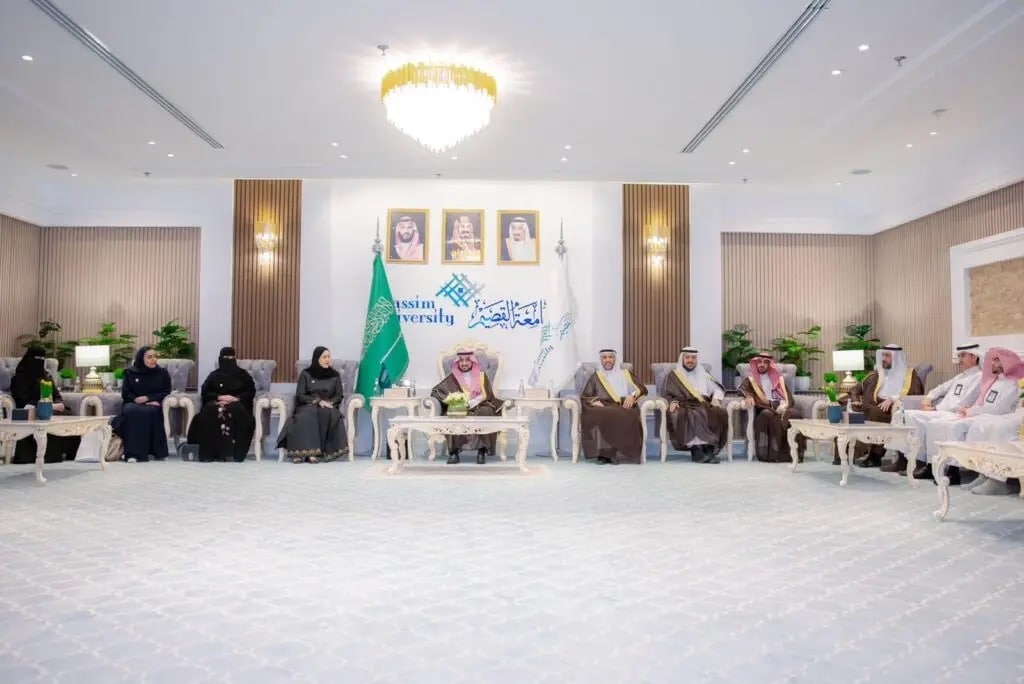
Qassim University Signs MoU with the Family Affairs Council to Enhance Family and Community Cooperation
Qassim University presents strong commitment to establishing direct Relationships with regional NGOs and government for SDG policy. By partnering with the Family Affairs Council (a key governmental body) the university aligns its academic and institutional framework with national strategies to support family welfare, social stability, and community-level sustainable development goals. The collaboration focuses on joint planning, sharing strategic insights, and executing developmental studies to address societal challenges and foster long-term social sustainability.
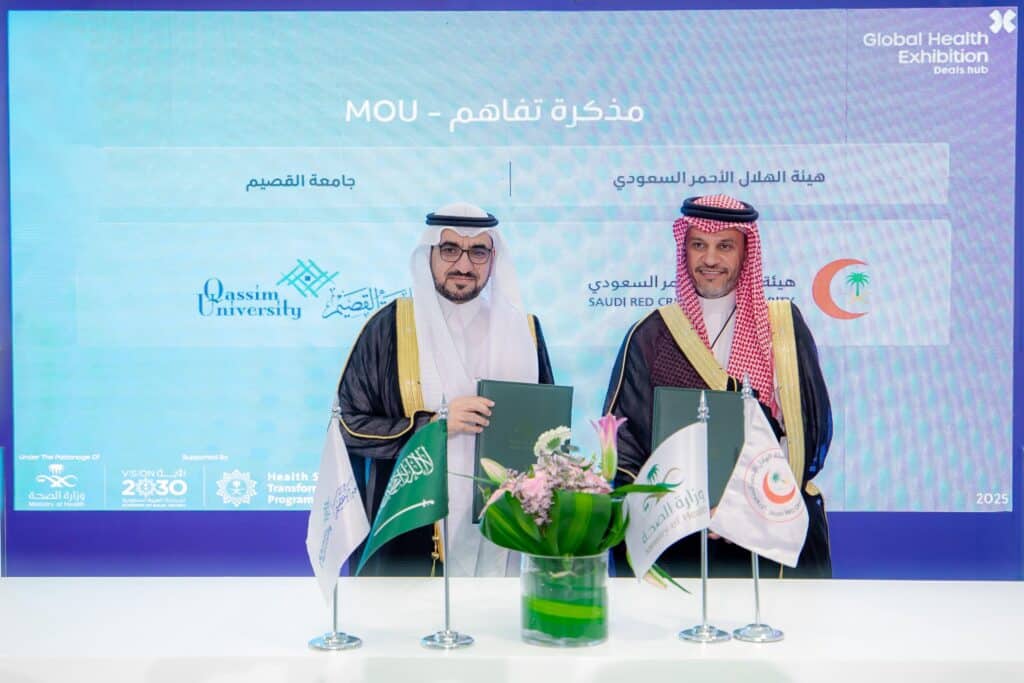
Qassim University and the Saudi Red Crescent Authority Sign Cooperation Agreement to Support Scientific Research and Train Health Personnel
Qassim University supports active Relationships with regional NGOs and government for SDG policy by forging a strategic partnership with a key national humanitarian and health organization. The collaboration focuses on joint planning, advancing scientific research, and training healthcare personnel to tackle health-related challenges, improve emergency medical frameworks, and align local interventions with sustainable development and public health goals.
Qassim University: Research-Driven SDG Policy
Qassim University’s Deanship of Postgraduate Studies and Scientific Research strengthens its policy relationship by providing “Sustainable Development Research Grants” to faculty. These grants ensure that academic output directly aligns with national priorities and regional development needs identified by stakeholders. The funded research generates specialized data and analysis which is systematically used as a direct source of evidence-based input into policy recommendations for government and regional NGOs, effectively connecting scholarship with strategic SDG policymaking
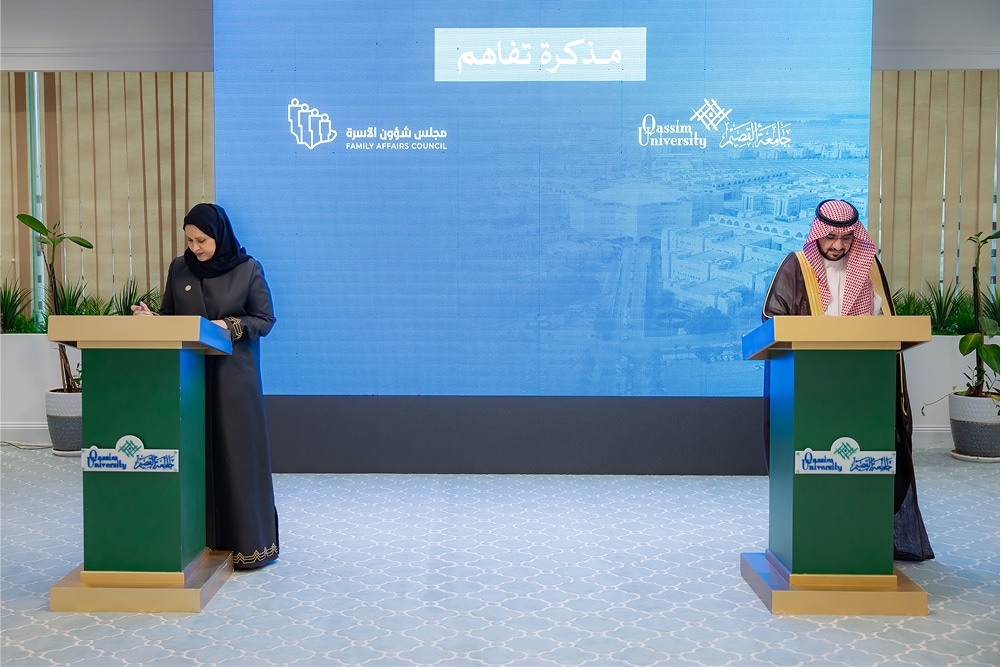
MoU Mandating Joint Policy Research on National Family Affairs
Qassim University reinforces its policy relationship by signing an MoU with the Family Affairs Council, a key government-linked body. This formal agreement explicitly mandates joint research and collaboration focusing on national family priorities. This direct partnership ensures that the university’s academic and research expertise is leveraged to achieve Vision 2030’s family development goals, which align with social SDGs, providing a structured channel for policy-relevant output.
National Compliance and Policy Input via Digital Transformation Milestones
Achieving the “Innovation Stage” in the 2024 Digital Transformation Index and securing a 2023 Enterprise Architecture Certificate demonstrates compliance with high-level national governance. These milestones confirm the university’s ability to provide strategic input into digital infrastructure and policy development.
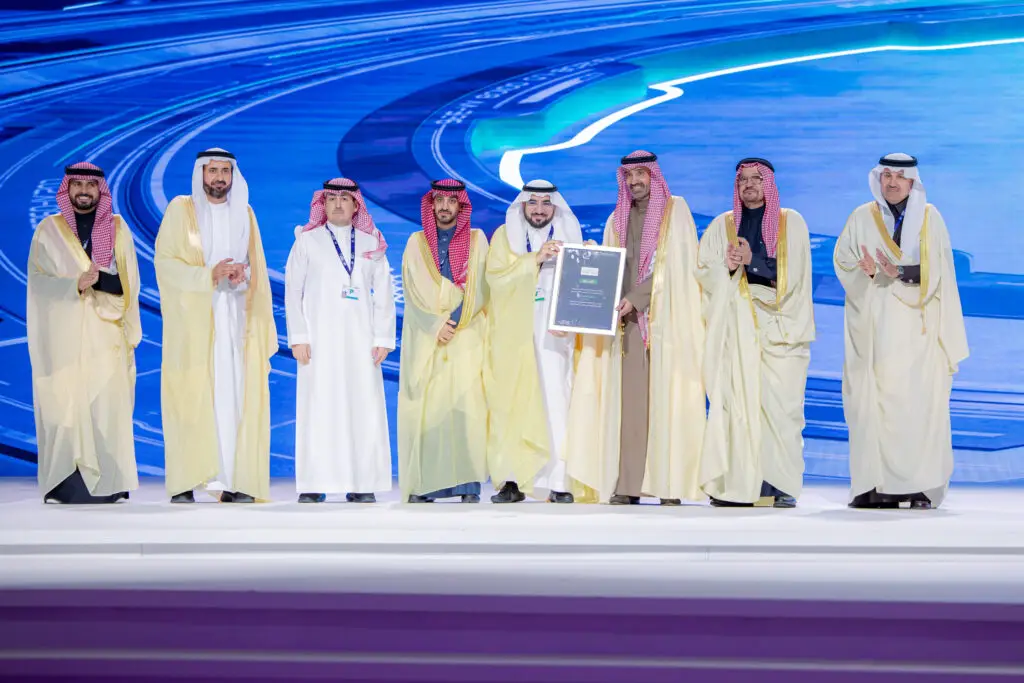
Qassim University Earns NORA 2023 Accreditation for NEA Excellence.
Qassim University obtained the accreditation certificate for the National Enterprise Architecture (NORA) 2023, recognizing its excellence in applying the National Enterprise Architecture (NEA) framework
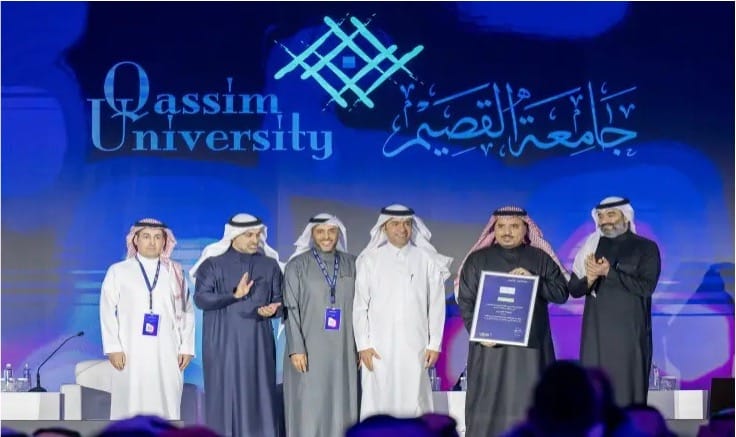
Qassim University & GASTAT: Statistical Partnership for Sustainable Development
This cooperation advances academic programs and provides students with specialized statistical training, cultivating the expertise needed to ensure the national economy’s long-term sustainability.
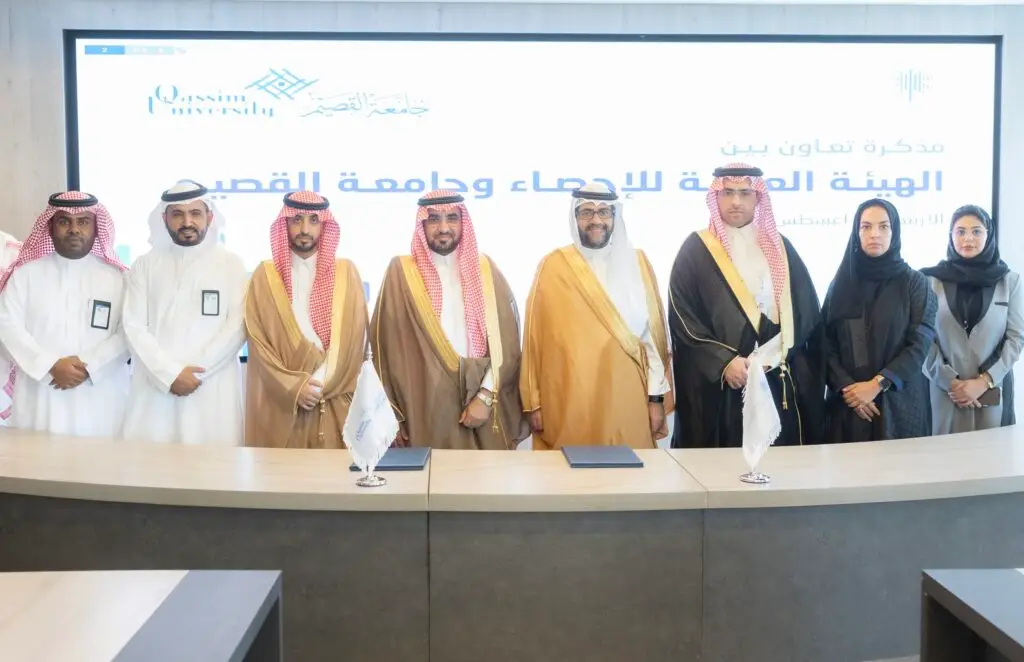
Qassim University & SDAIA AI Talent Development for Sustainable Future
The university’s memorandum of understanding with SDAIA was signed during the third Global AI Summit to establish a focused partnership, training and developing personnel specifically to build national expertise in the critical and rapidly evolving field of artificial intelligence, a key enabler for sustainability and future economic growth.
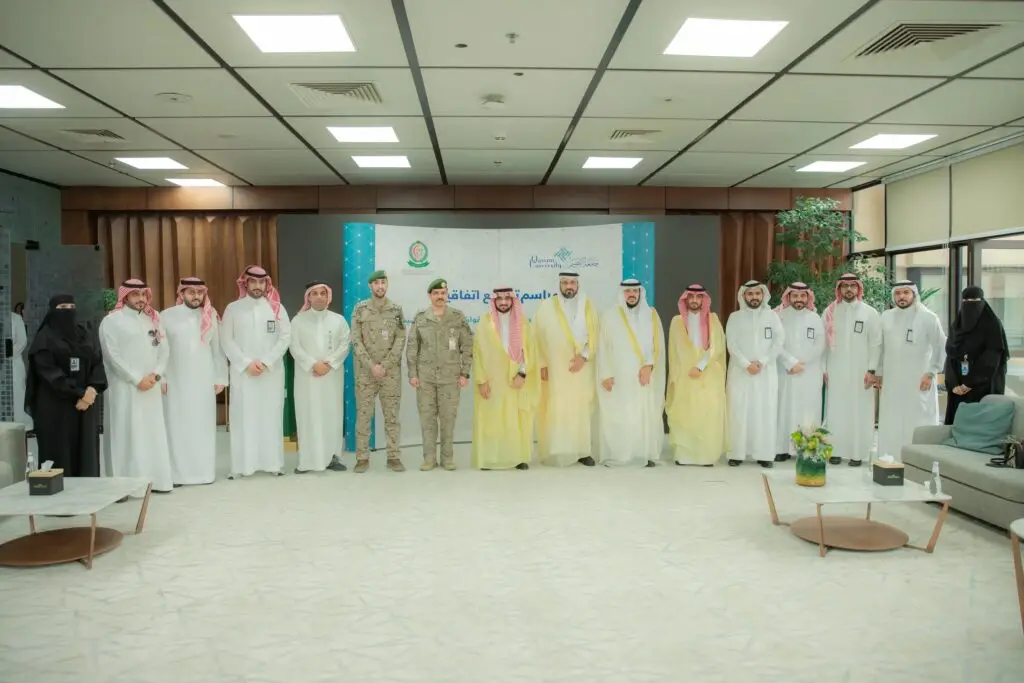
QU-Armed Forces Hospital Partnership for Sustainable Healthcare Training
The University and the Armed Forces Hospital in Qassim signed a cooperation agreement to advance scientific research and training, establishing a robust partnership essential for the sustainability of high-quality healthcare services in the region. This collaboration will ensure the continuous development of medical personnel, securing the long-term sustainability of expertise within the hospital’s operations.
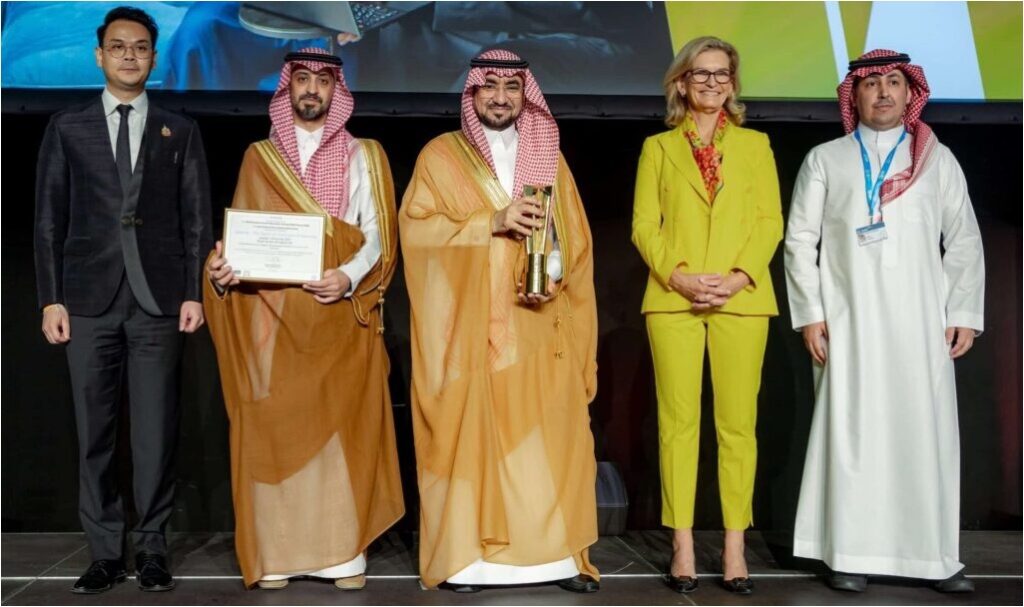
Program Accreditation for Academic Sustainability
The university signed contracts with the Education and Training Evaluation Commission to implement evaluation studies for accrediting 17 academic programs, ensuring the long-term academic sustainability and quality of its educational offerings. This rigorous process guarantees continuous improvement and compliance with national standards, which is vital for the sustainability of institutional excellence and graduate competence.
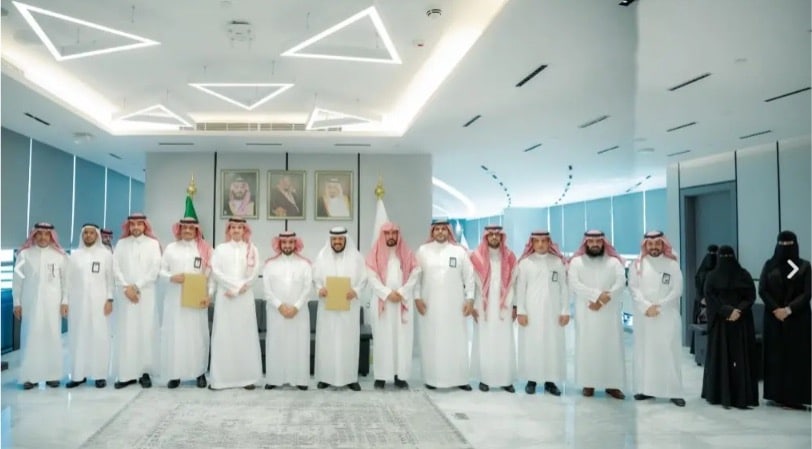
QU & Saudi Logistics Academy Partnership for Logistical Sustainability
The University’s memorandum of cooperation with the Saudi Logistics Academy is dedicated to advancing training and knowledge exchange, which is critical for ensuring the sustainability and efficiency of national supply chains and logistical operations. This partnership will also help develop specialized national cadres, thereby guaranteeing the long-term sustainability of expertise within the Kingdom’s vital logistics sector.
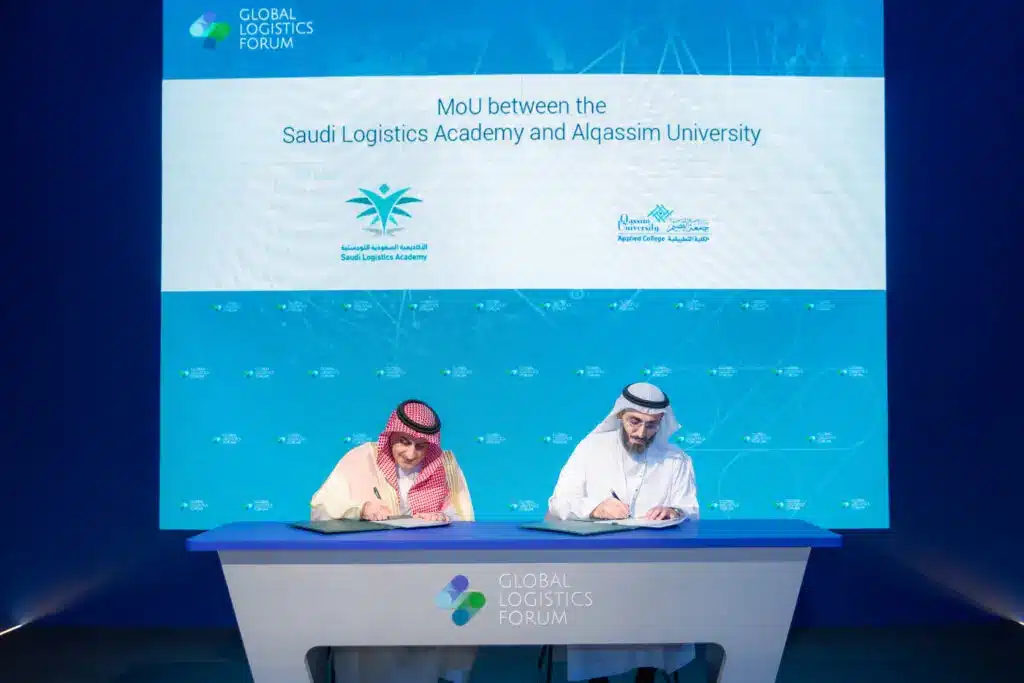
Qassim University & Weqaya Health Pact for Community Sustainability
The Emir of Qassim sponsored the MoU between the University and the National Center for Prevention (Weqaya) to launch critical joint projects in health, research, and training, ensuring the long-term sustainability of public health preparedness and disease control capabilities in the region. This strategic cooperation is vital for protecting the community and enhancing the general well-being, which underpins social and economic sustainability.
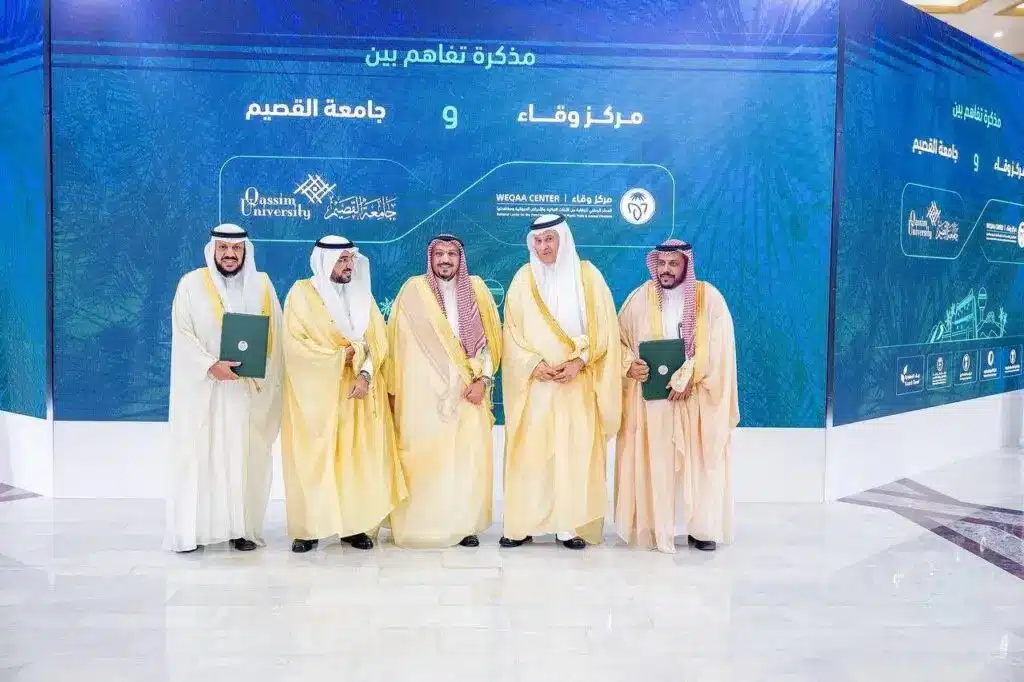
QU-Ministry of Commerce Pact for Trade and Translation Sustainability
Qassim University’s cooperation with the Ministry of Commerce in translation and training is crucial for developing the specialized talent necessary to ensure the operational sustainability of the Kingdom’s growing international trade sector. This partnership directly addresses the long-term needs of the Ministry by fostering continuous professional growth, which guarantees the sustainability of high-quality governmental services
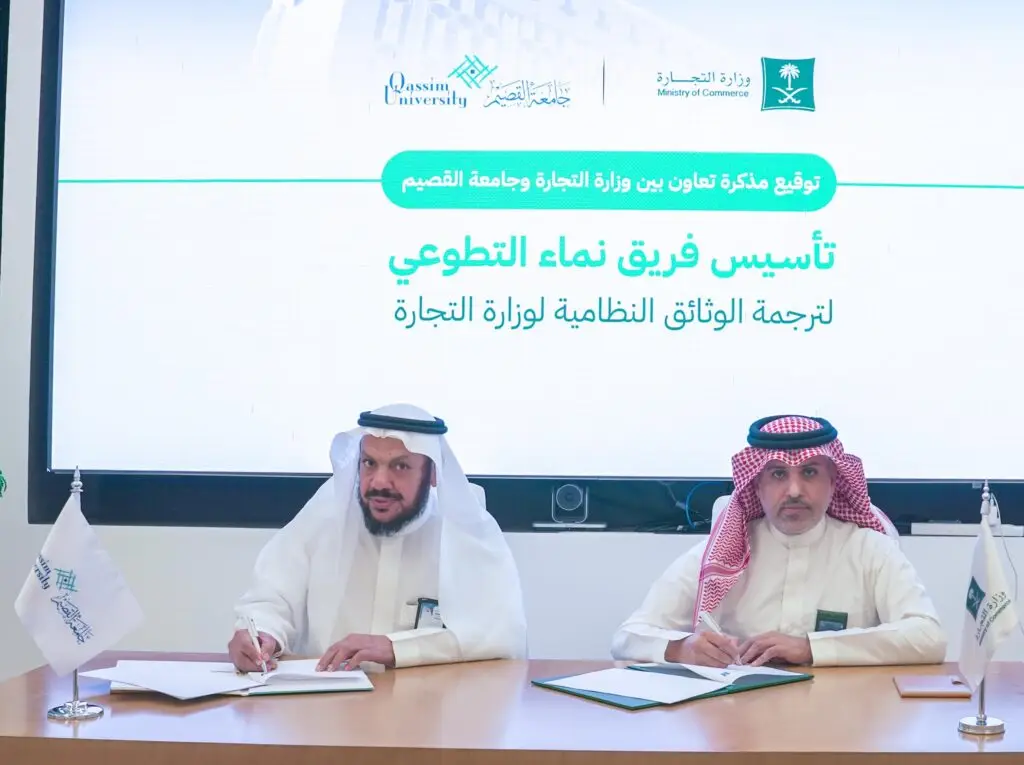
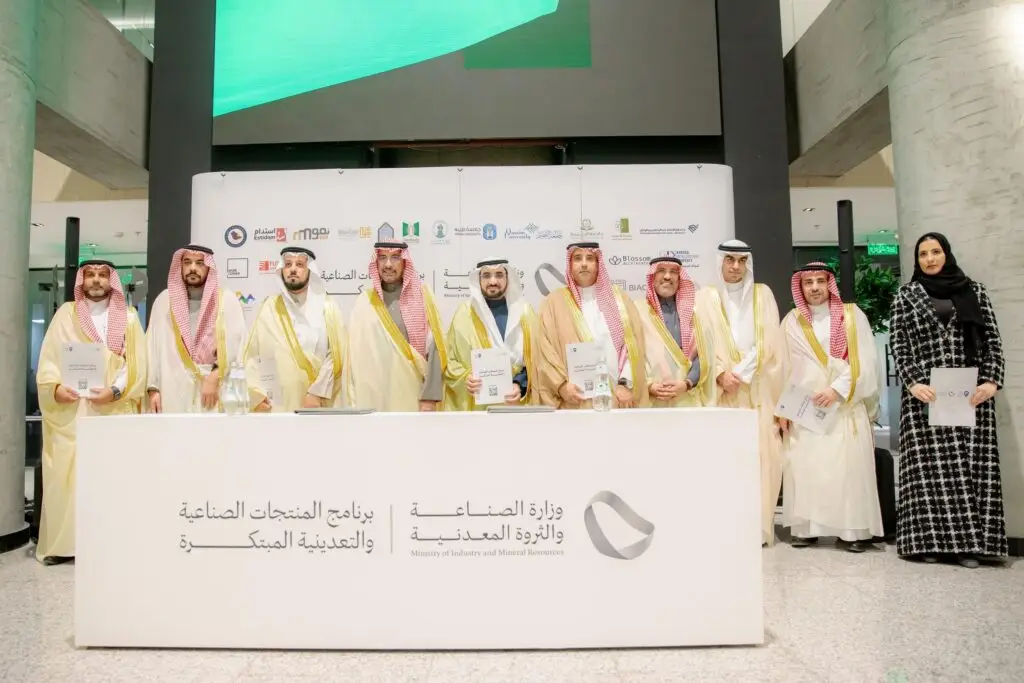
QU-MIM Pact to Back Industrial Innovation for Sustainability
Under the Minister’s patronage, the University signed an agreement with the Ministry of Industry and Mineral Resources to support innovators, cultivating a knowledge-driven economy essential for the long-term sustainability and diversification of the industrial and mining sectors. This collaboration ensures continuous innovation and talent development, securing the environmental and economic sustainability of national resource utilization.
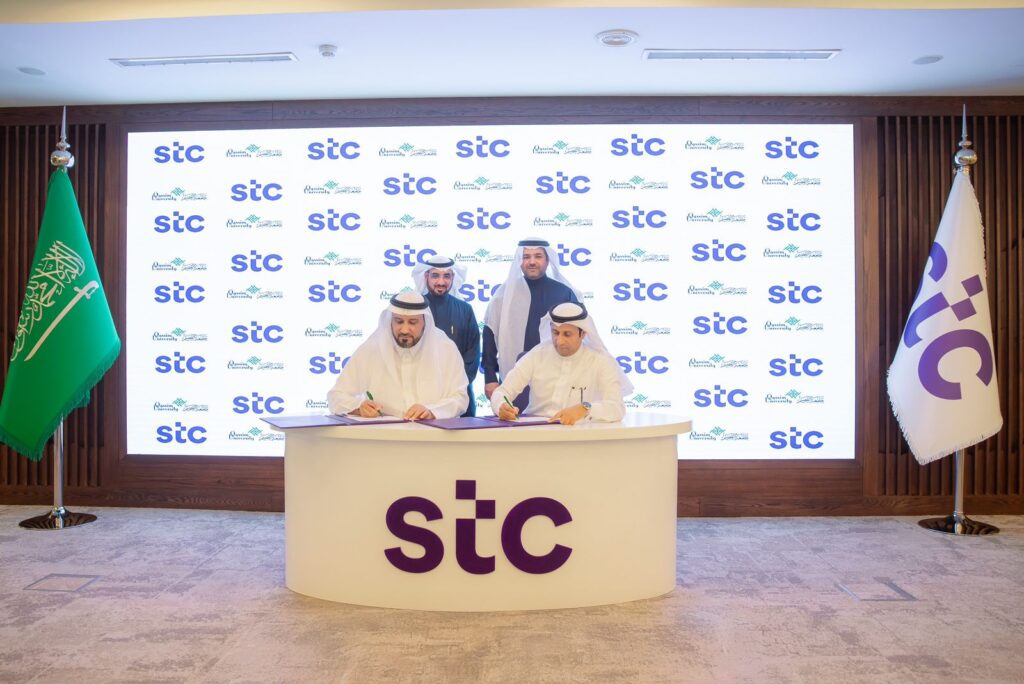
QU-STC Digital Pact for Tech Talent Sustainability
Qassim University and STC Group signed an MoU to develop digital and analytical capabilities, which is a strategic necessity for ensuring the long-term sustainability of the Kingdom’s information and communication technology sector. This collaboration strengthens scientific research and offers professional certificates, thus securing the competitive sustainability of national talent in the global digital economy.
Sustaining Future National Capabilities
As part of the “Future Talents” program, University students from various faculties visited the Global Defense Exhibition in Riyadh, an interactive platform that unites the worldwide defense industry system. This strategic exposure helps equip future graduates with the necessary knowledge and skills to drive technological innovation, ultimately ensuring the nation’s long-term security and economic sustainability.

Student Volunteers Showcase Space Sustainability
The University organized the “Worlds” exhibition in conjunction with World Space Week, successfully engaging the public with themes of astronomical exploration and discovery, primarily staffed by dedicated student volunteers. This focused educational outreach highlights the commitment to future-oriented knowledge and the sustainability of scientific literacy and innovation.
Sustainability-Focused Diploma Admission and Training Rules
The policy confirms practical training is a graduation requirement, reflecting a commitment to sustainability in graduate employability. Passing professional certificates is explicitly equated with mandatory experiential learning, supporting sustainability-aligned skill acquisition.
Policy for Aligning Applied College Programs with Labor Market Needs
The policy mandates that Applied College programs must be flexible and continuously developed to align with current and future labor market requirements. This ensures the university meets regional and national needs by qualifying graduates in demand-driven professional paths.
Sustainability-Aligned Research Affiliation Policy
The university document confirms a mandatory sustainability policy requiring researchers to adhere to the correct institutional affiliation (Qassim University) for externally funded publications. This ensures sustainability-aligned research output complies with grant terms and maintains institutional integrity.
Goal-related news

His Excellency Professor Dr. Abdulrahman bin Hamad Al-Dawood, President of the University, signed today, Monday, corresponding to 6/5/1442 AH, remotely, with the Director General of the Human Resources Development Fund (HRDF), Mr. Turki bin Abdullah Al-Juwaeen, a joint cooperation agreement to support the employment of university graduates and students expected to graduate from the Fund's side. This agreement comes as part of the HRDF's initiative within the Employment Offices Support Program [...]
2020-12-21