 Official government website of the Government of the Kingdom of Saudi Arabia




13
Low-carbon energy tracking

Related Content
Low-carbon energy tracking
As part of Qassim University’s unwavering commitment to environmental stewardship, institutional sustainability, and the objectives of Saudi Vision 2030, the university actively implements a comprehensive framework for Low-Carbon Energy Tracking. This dedicated focus highlights the institution’s strategic transition toward clean and renewable energy sources, showcasing major infrastructural initiatives such as the large-scale solar photovoltaic (PV) projects launched in partnership with the National Energy Services Company (Tarshid) to optimize energy consumption and significantly reduce carbon dioxide emissions across campus facilities. Furthermore, it details the university’s rigorous monitoring of energy efficiency standards and outlines ongoing multidisciplinary research in clean energy solutions, wind power integration, and smart resource management. By systematically measuring, tracking, and advancing its low-carbon initiatives, Qassim University reinforces its proactive role in fostering a sustainable campus ecosystem and driving regional climate action.
Energy Efficiency Commitment
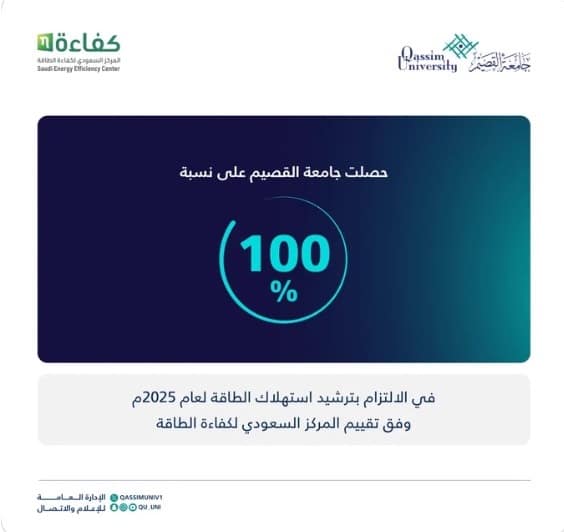
The university achieved a 100% compliance rate in energy rationalization for 2025, according to the Saudi Energy Efficiency Center, reflecting effective practices in raising energy efficiency and promoting sustainability.
Sustainable Electricity from Daily Movement
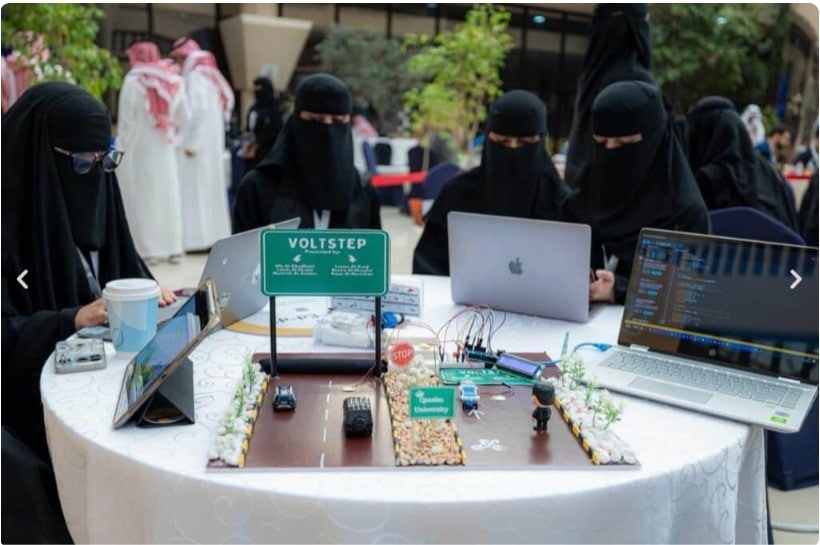
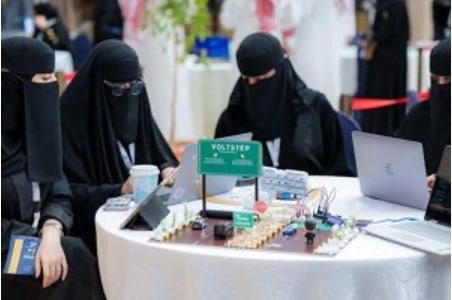
Female students at the university developed an innovative project to convert daily physical movement into sustainable electricity as part of the “Innovation Incubator 5” initiative.
Joint Laboratory in Water Innovations and Renewable Technologies
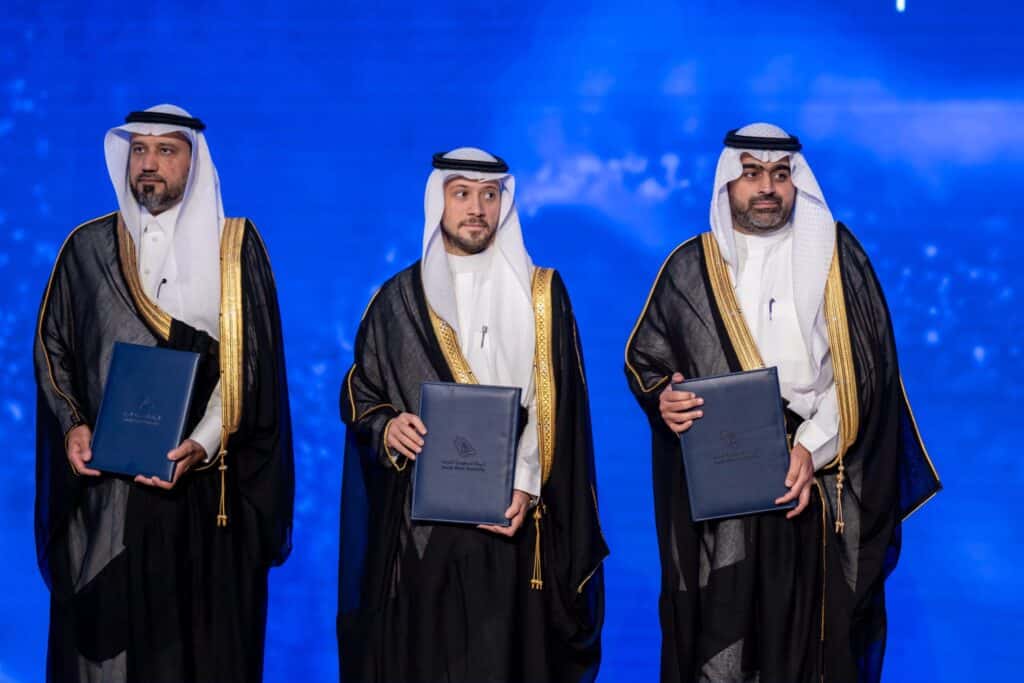
The university signed an agreement to establish a joint laboratory at the Water Innovation Oasis in Rabigh, supporting clean technology research and resource sustainability.
Renovating buildings according to energy efficiency standards
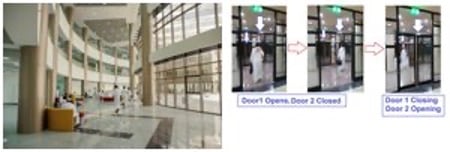
Qassim University (QU) is committed to ensuring all campus infrastructure—new buildings, renovations, and upgrades of existing facilities—comply with energy-efficient standards and design features that minimize operational energy demand and reduce fossil fuel consumption, in accordance with SEEC and Saudi Building Codes (SBC 601, SBC 1001).
Saudi building codes applied to all new university buildings
Qassim University applies all the specifications of the Saudi codes for non-residential buildings in all its new buildings. These codes include all green building elements and energy efficiency specifications, specifically the Saudi Building Code for Energy Conservation – Non-Residential Buildings (SBC 601) and the Saudi Green Building Code (SBC 1001).
Installation of solar panels on university buildings
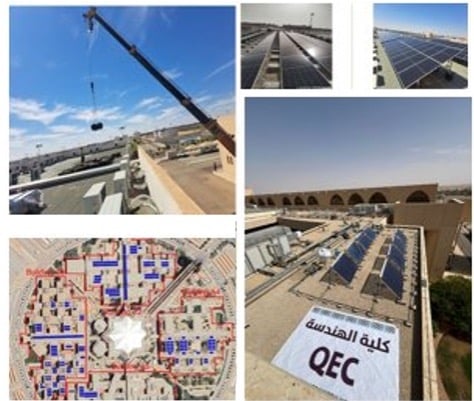
The photos document the installation of the 5,137 kW solar system implemented with Tarshid on the rooftops of existing university buildings and facilities: lifting the panels to the roofs, the rows of panels installed, the distribution map of the panels across university buildings, and the panels at the College of Engineering. The system is expected to generate about 8.6 million kWh of clean electricity every year on the University’s own buildings, reducing the electricity it buys from the grid.
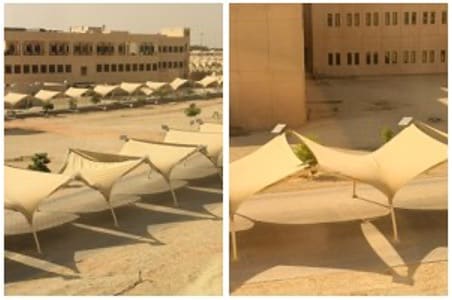
Solar panels on campus walkway shade canopies
Solar panels have been mounted on the shade canopies that cover the pedestrian walkways between university buildings, adding clean-energy generation to existing campus structures alongside the rooftop solar project.
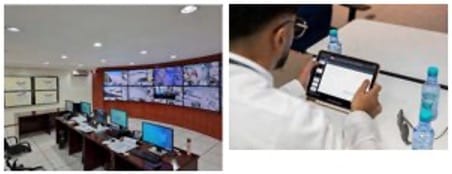
Smart building systems: automatic energy monitoring and building management
The University applies smart-building technologies to detect energy waste: a Building Management System (BMS/BAS/FMS); automatic acquisition and logging of energy and water consumption; monitoring of temperature, humidity and air velocity through MAXIMO; CO2 monitoring; and high-efficiency LED luminaires. The systems are operated from a central control room, where consumption data are followed up continuously.
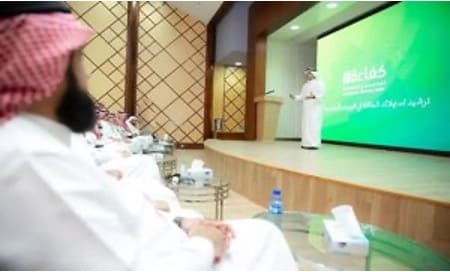
Workshop of the Standing Committee for Energy Management with the Saudi Energy Efficiency Center
The University’s Standing Committee for Energy Management, with the Saudi Energy Efficiency Center, held a workshop on consumption patterns and rationalization in air-conditioning, lighting and vehicles.
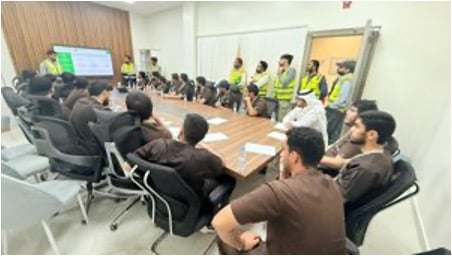
Engineering students visit the Ar Rass 2 solar power plant
On 28 October 2025 the College of Engineering student club organised a field visit for 22 students to the Ar Rass 2 solar power plant operated by ACWA Power, where they learned how electricity is generated from solar energy on a large scale and saw clean-energy technology in operation.
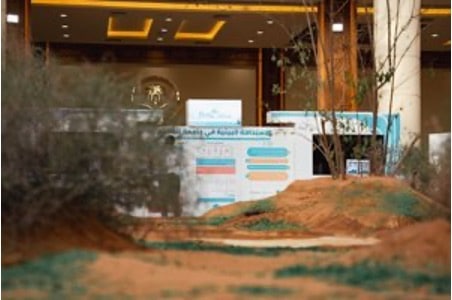
University participation in the First Qassim International Environment Forum
Qassim University, represented by the Sustainable Development Center, took part in the two-day First Qassim International Environment Forum at King Khalid Cultural Center in Buraidah. It presented to the public its green-campus practices, including policies to raise energy efficiency and expand clean energy through the solar energy project and full reliance on treated water for irrigation, together with its research in water, energy and climate. It also highlighted its community role through the Sustainable Development Center: environmental studies, consultations and specialised training programmes, and community partnerships and volunteer initiatives across the cities and governorates of the region.
Qassim University Engineering Club discusses the role of solar energy in boosting the national economy according to Vision 2030
Engineering Club Qassim University researches roles Solar energy In strengthening the national economy according to Vision 2030
Media and Communication Center:
The Engineering Student Club at Qassim University’s College of Engineering organized, along with the organization “ASME”In partnership with the Saudi Council of Engineers, a lecture titled “The Role of Solar energy In strengthening the national economy in line with Vision 2030.
Dr. Radwan Abdel Ghani spoke during his lecture about the pillars on which the vision relies: a vibrant society, a prosperous economy, and an ambitious nation, and the importance of energy in achieving these pillars. This lecture was part of the multiple programs organized by the Engineering Student Club to raise the competency of engineering college students and those interested in this field. The lecture received great attention from the students due to its importance and the information it contained, which explained the role of solar energy in Vision 2030.
For their part, a number of members of the Engineering Student Club affirmed that the club will continue to hold lectures that will develop students and raise their efficiency in line with the Saudi Vision 2030.
The lecture was held at the Engineering College theater with more than 120 attendees, including the Dean of the Engineering College, Dr. Fahd Al-Mofadi, his deputies, and a number of faculty members, engineers, and students.
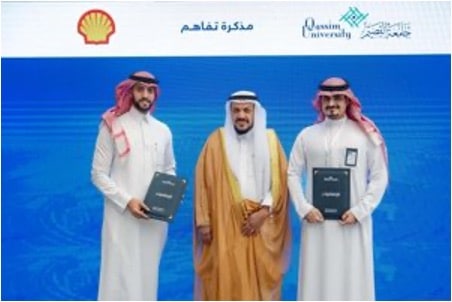
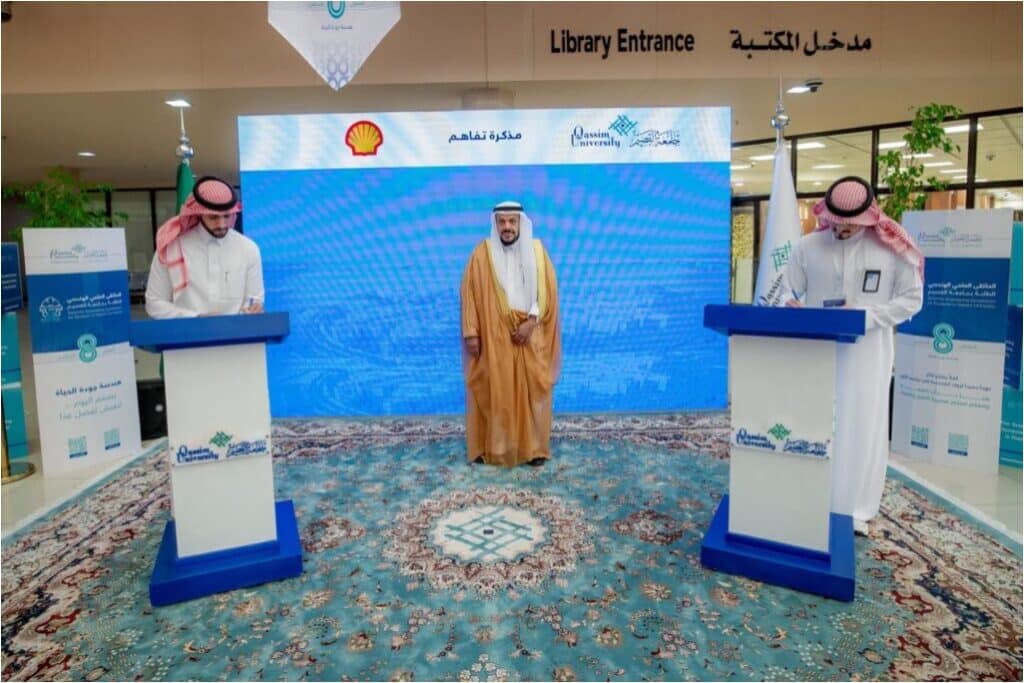
MoU with Shell Global Solutions on engineering innovation and clean energy
The University signed an MoU with Shell Global Solutions to strengthen cooperation in engineering innovation, sustainability and clean energy. It was signed by the Dean of the College of Engineering, Dr. Fahd Al-Sunaidih, and Shell’s Executive Director, Mr. Mohammed Al-Zumai, in the presence of the Vice President for Educational Affairs. The MoU supports innovative initiatives, the exchange of academic and technical expertise, and students’ participation in international programmes and competitions on engineering solutions, clean energy and sustainability, developing engineering and research capabilities with an energy-industry partner.
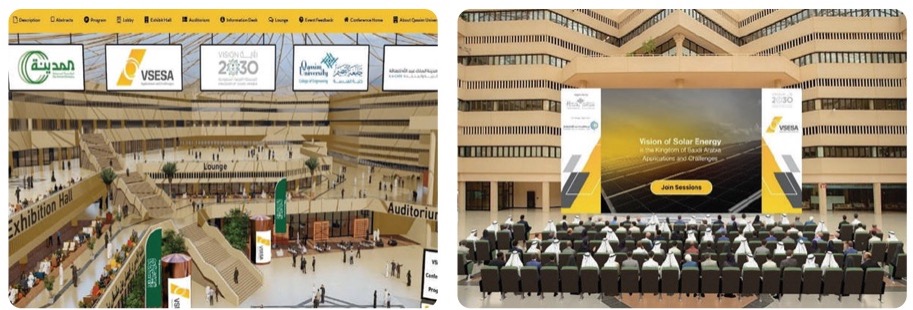
Solar Energy Horizons Conference concludes with 12 scientific recommendations
The conference “Solar Energy Prospects in Saudi Arabia: Applications and Challenges” concluded its work the day before yesterday, Thursday, April 26, 1442 AH, after holding 10 scientific sessions over two days with the participation of a number of academics and researchers in solar energy applications and industry experts from within and outside Saudi Arabia.
The conference outcomes resulted in the issuance of 12 scientific recommendations that covered many aspects and axes of the discussions regarding solar energy, in line with the directions and plans of the Kingdom’s Vision 2030 to diversify energy sources and become an exporter of sustainable energy, especially solar energy.
Dr. Meshal Al-Mushaiqeh, Dean of the College of Engineering and Head of the Scientific Committee of the Conference, explained that the recommendations from the conference covered all the themes discussed by the participants. These recommendations included establishing vocational and university training programs in solar energy at all universities and incorporating solar energy into the curricula of colleges of Architecture, Science, Agriculture, and others. Additionally, the recommendations called for integrating solar energy concepts and technologies into the university engineering college curricula and teaching them in middle and high schools.
Al Mishaiqih added that the conference recommended enacting legislation (systems, regulations, and instructions) and incentives, as well as investment maps for renewable energy in the Kingdom of Saudi Arabia. It also recommended raising awareness of the social, economic, and technological aspects of the new and renewable energy field within the local community, in addition to focusing on local manufacturing of solar energy technology equipment. Furthermore, it recommended exchanging expertise with Arab countries in the field of renewable energy by periodically working to unify testing standards and methods for solar energy systems in Arab countries. This includes focusing on solar thermal and electric applications for cooling and air conditioning, and preparing Saudi standards for solar thermal collectors and systems.
The head of the conference’s scientific committee also explained that the recommendations included urging detailed studies on the impact of dust accumulation on solar/photovoltaic power complexes, recommending the use of geographic information systems and multivariate analysis to select the best locations for building solar desalination plants, in addition to improving the production of desalinated water through solar distillation. It is preferable to use a type of porous column to store a larger amount of moisture and utilize a rotating wheel in solar distillers to enhance the production of desalinated water. It is worth noting that the efficiency of solar distillers that used rotating wheels improved compared to conventional distillers. He prayed to Almighty God that these recommendations would benefit those working in and interested in the field of solar and renewable energy.
“VoltStep”: converting footsteps into clean electricity – Innovation Incubator 5
A team of female students specialising in computer engineering and science and operations research developed “VoltStep” within the University’s Innovation Incubator. The project is a smart floor system with piezoelectric pressure sensors that converts the kinetic energy of pedestrians and vehicles into electricity, to power surveillance cameras and walkway lighting around the clock without carbon emissions. The team highlights its continuous generation while movement continues, low cost relative to expected returns and easy installation without major structural changes, and sees potential uses in crowded places and roads in the Kingdom.
Shell MoU: enabling students to join international clean-energy programmes and competitions
The MoU signed with Shell Global Solutions supports innovative initiatives and enables students to take part in international programmes and competitions on engineering solutions, clean energy and sustainability, alongside the exchange of academic and technical expertise that develops students’ engineering and research capabilities.
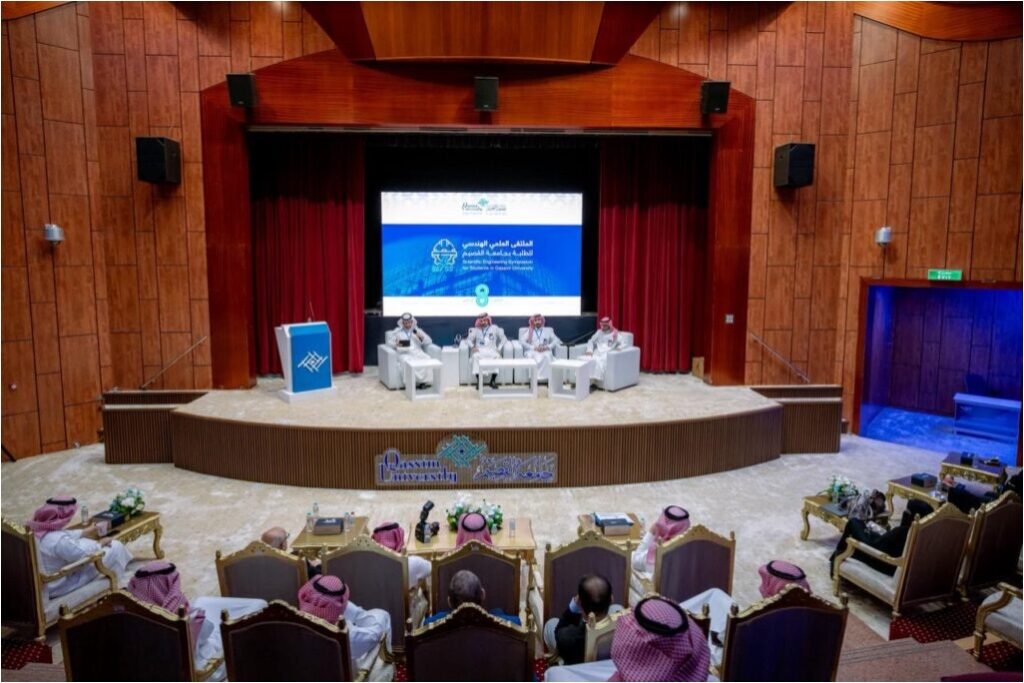
Hackathon “Wind Turbine: From Design to Operation”
The eighth Engineering Scientific Forum included an engineering hackathon, “Wind Turbine: From Design to Operation”, designed by the forum’s enrichment-activities committee from the Mechanical Engineering department. Teams of male and female students from all departments of the College of Engineering assembled the turbine components, designed the required parts and produced them by 3D printing; all teams succeeded in operating their turbines after manufacturing and assembly, and all participating teams were honoured and awarded.
Qassim University Campus Footprint Report
Official report quantifying electricity use and carbon footprint over multiple years; shows systematic measurement, boundary definition, and trend tracking
QU–Tarshid solar project announced
Third-party confirmation of the project’s capacity and annual energy-savings target, demonstrating quantified management of campus energy.
Research team converts palm waste into bio-oils and plans hydrogen production
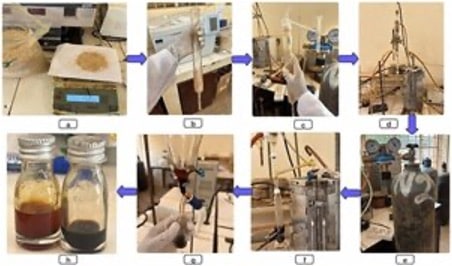
The research team of Dr. Sulaiman Al-Hajji produced four types of bio-oils and activated carbon from palm waste, with plans to produce hydrogen.
Goal-related news

The university, in cooperation with the Small and Medium Enterprises General Authority (Monsha’at), celebrated the graduation of 20 university-based startups from the Qassim University Accelerator on Wednesday morning. The event was attended by His Excellency the President of the University, Professor Dr. Mohammed bin Fahd Al-Sharikh, His Excellency the Governor of the Small and Medium Enterprises General Authority (Monsha’at), Professor Sami bin Ibrahim Al-Husseini, and a number of experts and specialists in the field of entrepreneurship. The program aims to [...]
2024-09-05

With the support of the Ministry of Communications and Information Technology and in encouragement of digital entrepreneurship in the Kingdom, the Code Lab was inaugurated at the university, in the presence of His Excellency the Governor of the Communications, Space and Technology Commission, Dr. Mohammed bin Saud Al-Tamimi, and His Excellency the President of the University, Professor Dr. Abdulrahman bin Hamad Al-Dawood, yesterday, Sunday, December 25, 2022. This lab is the third of its kind for digital entrepreneurship in the Code Labs [...]
2022-12-27
Qassim University has obtained a patent certificate from the Saudi Authority for Intellectual Property for the innovation of a “system and method for water desalination using a salt-tolerant plant.” This is achieved through a closed biological system capable of transforming highly saline water into distilled fresh water. The system operates naturally and can produce fresh water in commercial quantities. The research team, led by Dr. Abdulaziz bin Bani [...]
2022-09-27