 Official government website of the Government of the Kingdom of Saudi Arabia




13
13. Climate Action

Related Content
SDG 13: CLIMATE ACTION
Sustainable Development Goal 13 (SDG 13) calls for urgent action to combat climate change and its impacts. As the global community faces the escalating challenges of climate change, various nations are working towards mitigating its effects. This essay focuses on Saudi Arabia’s efforts to address climate change, with a special emphasis on Qassim University’s role in promoting climate action.
Climate Action in Saudi Arabia
Saudi Arabia, a nation known for its rich oil reserves, has recognized the critical importance of addressing climate change. The country’s Vision 2030 plan reflects its commitment to diversifying its economy, reducing its dependency on fossil fuels, and mitigating greenhouse gas emissions. The Saudi government has initiated several measures to combat climate change:
- Renewable Energy Investments: Saudi Arabia has invested significantly in renewable energy sources like solar and wind power. The country aims to generate 50% of its electricity from renewables by 2030, a significant step towards reducing its carbon footprint.
- Carbon Pricing: The nation has introduced a carbon pricing mechanism to encourage industries to reduce emissions and adopt cleaner technologies.
- Reforestation Efforts: Large-scale reforestation projects have been launched to increase the country’s green cover and absorb carbon dioxide from the atmosphere.
- Energy Efficiency: The government is implementing energy efficiency programs across various sectors to reduce energy consumption and associated emissions.
Qassim University's Climate Action Initiatives
Qassim University, a prominent educational institution in Saudi Arabia, recognizes its responsibility to contribute to climate action. The university has taken several proactive measures to address climate change and promote sustainability:
- Research and Innovation: Qassim University has established research centers and initiatives focused on environmental sustainability and climate change. These centers conduct cutting-edge research on renewable energy, carbon capture, sustainable agriculture, and other relevant areas.
- Curriculum Integration: The university has integrated climate-related topics into its academic curriculum across disciplines. This ensures that students are educated about the science of climate change, its impacts, and potential solutions.
- Awareness Campaigns: Qassim University conducts awareness campaigns and workshops to educate its students, faculty, and the local community about the importance of climate action. These campaigns promote sustainable practices and encourage behavioral changes.
- Renewable Energy Adoption: The university has invested in on-campus renewable energy projects, such as solar panels and wind turbines, to reduce its carbon footprint and serve as a model for sustainable energy practices.
- Collaboration and Partnerships: Qassim University collaborates with governmental bodies, non-governmental organizations, and industry partners to collectively address climate change challenges. This collaboration enhances the impact of climate action initiatives.
Challenges and Future Outlook
While Saudi Arabia and Qassim University have made commendable efforts in climate action, challenges remain. These include transitioning from fossil fuel dependency, ensuring policy implementation, and fostering a culture of sustainability. However, with a strong commitment and ongoing initiatives, both the nation and the university are poised to make significant strides in climate action.
Climate change is a global crisis that demands immediate and concerted efforts. Saudi Arabia’s commitment to SDG 13 and Qassim University’s proactive approach in promoting climate action exemplify the role that nations and educational institutions can play in mitigating climate change. By addressing climate challenges collectively, societies can work towards a sustainable and resilient future for generations to come.
Research for Health Innovation
The university’s commitment to SDG 3 extends to its research efforts focused on health innovation and improvement. Qassim University’s research projects address critical health issues, such as infectious diseases, chronic conditions, and healthcare delivery. By generating knowledge and innovative solutions, the university contributes to advancements in medical practices and patient care.
University receives delegation from Ministry of Environment, Water and Agriculture
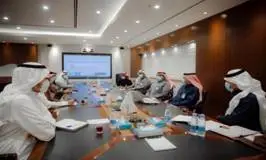

On Wednesday, 7/6/1442 A.H., the university, represented by the College of Agriculture and Veterinary Medicine, received a delegation from the Ministry of Environment, Water and Agriculture. The two parties held the second meeting to activate the memorandum of understanding between them to discuss cooperation in the fields of environmental conservation, and then the delegation toured a number of colleges at the University City headquarters, including the College of Agriculture and Veterinary Medicine, the College of Engineering, the College of Science and the College of Economics and Administration.
This meeting comes as an activation of the memorandum of understanding signed between the university and the Ministry of Environment, Water and Agriculture to cooperate in the fields of environment in order to benefit from the capabilities and expertise of each party. The meeting discussed the tasks of the members of the two teams, the efforts made by each party in the field of awareness of the need to preserve the environment and increase green spaces, and ways to achieve integration between them for the benefit of the entire community.
They also discussed the needs of both sides and how to exchange experiences between them in the field of academic and training programs, whether at the level of intermediate and higher diplomas, or undergraduate and graduate programs, where the university team participating in the meeting reviewed the scientific and research capabilities and expertise that the university and its colleges possess in several fields needed by the environment sector.
For its part, the ministry's delegation made short presentations to introduce the environment sector and the work of the Ministry's Environment Agency, which included the National Environment Strategy, the ministry's efforts in developing vegetation cover and combating desertification, as well as the ministry's efforts in protecting and managing national parks, in addition to its efforts in environmental awareness, and the needs of national environmental centers for academic programs.
Network Water Quality Conference in Buraidah continues its activities
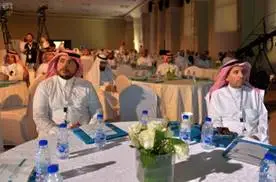
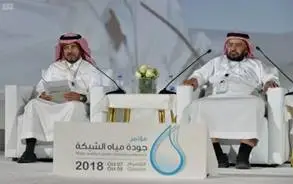
The Network Water Quality Conference continued its activities today at the King Khalid Civilization Center in Buraidah, where three panel discussions were held that included 8 working papers.
The first session, chaired by Qassim University Vice President for Postgraduate Studies and Scientific Research, Dr. Ahmed Al-Turki, discussed three working papers; the first was entitled "Groundwater Quality" presented by Dr. Hussein Al-Ajmi, who explained that groundwater constitutes approximately 98% of freshwater and 60% of the sources of drinking water supply projects in the Kingdom.
The second paper was titled "Plastic pipes used for drinking water in networks and homes," in which Engineer Turki Al-Shahrani talked about the advantages of plastic pipes and that they are environmentally friendly.
Dr. Ahmed Al-Arifi presented the third paper entitled "The Desalination Industry in the Kingdom of Saudi Arabia," in which he addressed the water challenges facing the Kingdom, the history of the desalination industry and some statistics locally and globally.
The second session, chaired by Dr. Abdulaziz Al-Shuaibi, Director General of the Ministry's Water Regulation Department, discussed three working papers; the first dealt with "Promising Desalination Methods" presented by Dr. Ibrahim Al-Mutaz, explaining that there are techniques that are still in the experimental stage, such as desalination by hydration and dehumidification, desalination by freezing, and others.
The second paper discussed "Optimal design of water purification plants to reduce wastewater losses" presented by Dr. Mohamed Heikal, explaining that water purification plants produce daily quantities of...
The third paper titled "Specifications of transported water and their impact on the lifespan of transport systems and their reflection on the quality of water that reaches the consumer" was presented by Dr. Saud bin Murshid, highlighting the operational technical specifications applied to desalinated water transport systems in the Kingdom.
The third session, chaired by Dr. Badr Al-Baridi, former director of the Studies and Designs Department at the General Directorate of Water in Qassim, dealt with two papers; the first discussed "Protecting buried carbon steel pipes used in water transportation from corrosion." Engineer Hamad Ababtah spoke about the importance of protecting the pipes because they represent the backbone of the project to continue the service for as long as possible.
The second and final paper was titled "Monitoring organic and inorganic pollutants in the water produced by the Saline Water Desalination Corporation's plants" presented by Dr. Ali Al-Hamza, pointing out that the World Health Organization's standard specifications for drinking water showed that organic and inorganic pollutants in the water produced from desalination plants are within the globally permitted limits.
Searching for sustainable solutions for Saudi Arabia
Researchers at Qassim University are using the latest technologies to find sustainable energy sources and eco-friendly water management techniques.
From converting date palm waste into renewable energy to utilizing solar energy, Qassim University is seeking sustainable energy solutions.
Investigating sustainable developments in energy, water and environmental engineering is one of the university's ten priorities outlined in its 2020-2024 research strategy.
Sustainable technologies are essential in Saudi Arabia, where wastewater, municipal and construction waste, and air pollution pose environmental threats. The Kingdom's Vision 2030 has set a goal to generate half of the country's energy from renewable sources by 2030.
Qassim University is working on many solutions, from sludge management and waste recycling to seawater and groundwater desalination.
One notable project, led by Prof. Sulaiman Al-Yahya, is investigating how date palm waste can be converted into renewable energy.
The central Qassim region is home to more than 8 million palm trees. The trees produce large amounts of agricultural waste, including dry leaves, stems and seeds. Al-Yahya says: "A quarter of the date palm is waste and many farmers burn that waste, which results in CO2 emissions and harms the environment, and we're really focused on how to turn that waste into energy."
An international group of researchers, including scientists from Iowa State University, are studying how to convert waste into forms of renewable energy such as biomass, bio-oil and biogas.
Researchers are using a new self-heating pyrolysis technology developed by the Bioeconomy Institute at Iowa State University. The process is simpler and cheaper than conventional pyrolysis and does not require an external energy source.
Yahya says: "If we achieve this goal of converting date palm waste into energy, the Kingdom's CO2 emissions will be reduced by nearly 8,000 tons. We will stop burning agricultural waste and at the same time produce higher value products."
Solar energy research at the university focuses on converting light into energy. Dr. Muhannad Al-Araj, an assistant professor in the Department of Electrical Engineering, studies the economic effectiveness of solar panels in the Qassim region and examines the impact of sandstorms and clouds on energy production.
Dr. Salim Al-Salim from the College of Engineering will address water and wastewater treatment using solar energy, gray water treatment, and solutions for solid waste and noise management. He is a member of the university's Center for Sustainable Development, which oversees outreach and sustainability projects.
Future research will also be bolstered by the new AI Research Chair, which will fund studies in energy and agriculture.
Laying the foundation stone for the first phase of the Buraydah Green Oasis project
His Royal Highness Prince Dr. Faisal bin Meshal bin Saud bin Abdulaziz, Governor of Qassim, inaugurated the Green Oasis project in the city of Buraidah, where the foundation stone was laid for the first phase of the project, at a cost of more than 77 million riyals, with a total area of 28 million square meters and the planting of 200 thousand trees, implemented by the branch of the Ministry of Environment, Water and Agriculture in cooperation with the region's Municipality.
The Buraydah Oasis project is one of the giant environmental projects that the Ministry of Environment, Water and Agriculture is working on to advance and develop the environmental sanitation system, and work on everything that promotes the welfare of the country and the citizen, which is supported by His Highness the Emir of Qassim, and supported by the Minister of Environment, Water and Agriculture.
Symposium titled "Sustainable Agriculture: A Safe Product and a Clean Environment
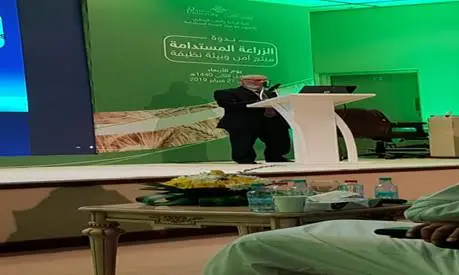
The Department of Plant Production and Prevention held a seminar on sustainable agriculture on 27/2/2019 under the title:
(Sustainable Agriculture: Safe Product, Clean Environment)
A number of students from the protected agriculture course visit the hydroponics project in Unaiza

On Monday, 2/3/1439 A.H., a number of students from the College of Agriculture and Veterinary Medicine - Department of Plant Production and Prevention, within the course of protected agriculture, paid a scientific visit to the headquarters of the hydroponics project of the Directorate of Agriculture in Unaiza Governorate. The delegation was received by Engineer Abdulmohsen Al-Harbi, the supervisor of the project, who accompanied them to the project and gave a full explanation of hydroponics and its importance to the conditions of the Kingdom, and answered all questions and inquiries of the students.
They were then accompanied by Engineer Abdul Rahman Al-Mayman, who manufactures, constructs and installs hydroponic materials and devices, which left a great impact on the students with what they saw, and increased their understanding of the subject and their love for this type of agriculture. This scientific trip was supervised by Dr. Abdul Rahman bin Muhammad Al-Mashili.
Saudi Green Initiative
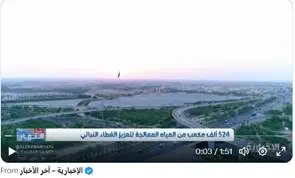
As part of the # Saudi Arabia_Green In fulfillment of the goals of the Kingdom's Vision 2030.
contributes #Qassim University in increasing the vegetation within the university city, utilizing about 524 thousand cubic meters of treated water to reduce the effects of desertification.
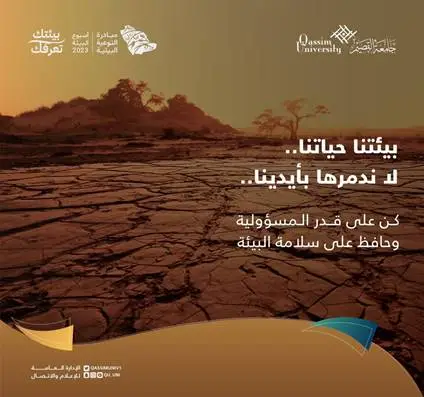
"Our environment is our life. Don't destroy it with our own hands. Be responsible and protect the environment."
The most important initiatives:
- Increase student participation in activities related to sustainability and climate change.
Key performance indicators:
- Number of student organizations related to sustainability (including climate change)
- Number of on-campus cultural activities (e.g., cultural festival), including virtual activities that address sustainability concepts (including climate change).
- Number of community services organized to address sustainability and climate change concepts.
"Our environment is our life. Don't destroy it with our own hands. Be responsible and protect the environment."
References
[1] [Online]. Available: . https://www.qu.edu.sa/content/news/2457.
[2] [Online]. Available: .https://www.spa.gov.sa/1823762
[3] [Online]. Available: . https://www.timeshighereducation.com/hub/p/searching-sustainable-solutions-saudi-arabia
[4] [Online]. Available: . https://qu.edu.sa/files/shares/newspaper/105/105.pdf.
[5] [Online]. Available: .https://www.qu.edu.sa/d_news/1171/
[6] [Online]. Available: .https://twitter.com/QassimUniv1/status/1670478362530181120.
[7] [Online]. Available: .https://twitter.com/QassimUniv1/status/1635948481301839872
Goal-related news
Goal-related tweets
Goal-related files
- About SDG 2
- Campus food waste tracking
- Campus food waste
- Student food insecurity and hunger
- Students hunger interventions
- Sustainable food choices on campus
- Healthy and affordable food choices
- Staff hunger interventions
- Access to food security knowledge
- Events for local farmers and food producers
- University access to local farmers and food producers
- Sustainable food purchases