 Official government website of the Government of the Kingdom of Saudi Arabia




2
2- Eradicate hunger completely

- About the second goal
- Track Food Waste on Campus
- Food waste on campus
- Food insecurity and hunger among students
- Interventions to combat hunger among students
- Sustainable food options on campus
- Healthy and affordable food options
- Interventions to combat hunger among employees
- Access to food security knowledge
- Events for local farmers and food producers
- University outreach to local farmers and food producers
- Sustainable food purchasing
Related Content
Second Goal: Eradicate Hunger
Qassim University's Contribution to Sustainable Development Goal 2: Ending Hunger Through Agricultural Education and Innovation
Sustainable Development Goal 2 (SDG 2) aims to end hunger, achieve food security, improve nutrition, and promote sustainable agriculture. Qassim University, located in Saudi Arabia, recognizes the urgency of SDG 2 and actively engages in initiatives that address hunger by promoting education, research, and innovative approaches to agricultural development.
Enabling agricultural education
The University of Qassim's commitment to Goal 2 is evident in its focus on agricultural education. The university offers programs and courses that equip students with knowledge and skills in modern farming techniques, crop management, and sustainable agriculture practices. By educating future agricultural professionals, the university contributes to building a skilled workforce capable of increasing food production and enhancing food security.
Research for Agricultural Innovation:
The university plays a vital role in driving agricultural innovation through research initiatives. Qassim University's research projects explore ways to enhance crop yields, improve water use efficiency, and develop drought-resistant crops. These efforts contribute to the development of innovative solutions that address food production challenges and support sustainable agriculture.
Community Engagement and Counseling Services
Qassim University extends its impact beyond the campus through engagement with local communities via extension services. The university collaborates with farmers, agricultural cooperatives, and rural communities to share knowledge and best practices in farming, pest control, and sustainable land use. This engagement empowers local farmers to improve their productivity and contribute to food security.
Enhancing Food Safety and Nutrition
Qassim University emphasizes the importance of food safety and nutrition in achieving Goal 2. The university offers courses and workshops that educate students and community members on proper food handling, storage, and nutrition. By raising awareness of these critical aspects, Qassim University contributes to reducing foodborne illnesses and improving public health.
Innovative Farming Techniques:
Qassim University is promoting the adoption of innovative agricultural technologies that improve resource utilization. The university advocates for practices such as precision agriculture, hydroponics, and vertical farming, which can increase yields while reducing resource inputs. These technologies are particularly relevant in addressing food security challenges in resource-scarce environments.
Research Partnerships and Collaboration
The university collaborates with research institutions, government entities, and agricultural organizations to collectively address food security challenges. By fostering partnerships, Qassim University contributes to the development of policies, initiatives, and technologies that enhance agricultural productivity and promote sustainable food systems.
Entrepreneurship in agriculture:
Qassim University encourages students to explore entrepreneurial opportunities in the agricultural sector. The university provides resources, guidance, and training that empower students to establish agricultural businesses and contribute to the local food supply chain. This approach supports economic growth while contributing to food security.
Qassim University's commitment to Goal 2 is evident through its comprehensive efforts to promote education, research, and innovation in agriculture. By equipping students with essential skills, engaging with local communities, fostering sustainable practices, and forging partnerships, the university actively contributes to achieving zero hunger and enhancing food security in the Kingdom of Saudi Arabia. Through its dedication, Qassim University plays a vital role in ensuring access to sufficient, safe, and nutritious food for all.
Applied research at Qassim University safeguards food security and livelihoods.
Click this link [1]
Collaboration helps researchers share agricultural solutions with the Middle East and the world.
The Qassim region is known as the ”food basket” of Saudi Arabia, and its survival depends on agriculture. Crops and livestock drive the region's economy and provide livelihoods and food security for millions in Saudi Arabia and the Middle East.
Researchers at Qassim University say applied scientific research is essential for maintaining the health and productivity of the agricultural sector in the region. Research within the College of Agriculture and Veterinary Medicine seeks to find solutions to diseases that threaten local crops and animal herds, while academics are pushing for the sharing of their knowledge with others in the Middle East and globally.
Professor Ahmed Ali, a veterinary medicine professor at the university, says that camels and dates drive the economy of the Qassim region. He adds, “Camels are important as a source of meat, and they are also part of the cultural heritage of the Middle East,” as he specializes in camel fertility.
There are approximately 1.6 million camels in the Arabian Peninsula, more than half of them in Saudi Arabia, according to the United Nations Food and Agriculture Organization.
However, camels suffer from diseases that threaten their fertility, and thus the livelihoods of herders, according to Ali. An example is Chlamydia, a bacterial infection that causes reproductive problems in camels. The veterinary hospital at Qassim University, the largest in the country, receives between 100 and 150 camels daily, and one-third of the camel cases at the hospital are affected by this bacterial infection.
Ali says, “Surgical treatment is limited, so we are looking for a vaccine to prevent the disease.” In cooperation with researchers in Egypt, Oman, and Qatar, Qassim University is working to isolate the Chlamydia microbe and develop a vaccine.
In another project, Ali and his colleagues linked male camel infertility to heavy metal toxicity. Cadmium, a heavy metal, is often a byproduct of oil extraction, and researchers have found traces of it in infertile male camels. Ali, who has worked at Qassim University for 15 years, says, “Working in the field of camel infertility is like a chain; once we solve one problem in the chain, we move on to the next.”.
Professor Fahd Al-Mundarij, a chemist at the College of Agriculture and Veterinary Medicine, is also working to solve another problem: how to make the most of the abundance of dates in Saudi Arabia.
More than 8 million date palm trees are spread across the Qassim region. In the first quarter of 2021, Saudi Arabia exported 142,000 tons of dates, according to the Saudi Press Agency.
The applicant says: “My project looks at using palm trees to create new products for the market that are beneficial to people.”.
For example, date vinegar is currently expensive, and Al-Mandir seeks to develop a method to mass-produce it to enable its sale as a healthy food. Cellulose extracted from palm trees can also be used to produce biofuels, and filters made from palm-derived nanoparticles can remove heavy metals from water. To achieve these products, Al-Mandir collaborates with his colleagues at the university, as well as in Tunisia and Egypt.
Meanwhile, Professor Ayman Omar, a plant pathologist, is working on developing microbes that enhance the growth and productivity of greenhouse crops such as cucumbers and tomatoes. Omar and his colleagues are isolating growth-promoting bacteria and fungi from the local environment to develop products for farmers.
He says, “These microbes save money and are environmentally safe,” meaning farmers will not rely on chemical fertilizers. Like Ali and Al-Mandraj, Omar also collaborates with researchers in other countries to advance his research, particularly in India and Egypt.
He hopes the products will be ready for display to farmers next year, in addition to two scientific papers detailing their results.
While researchers at Qassim University are actively publishing scientific papers, the main goal remains to assist farmers at home and abroad, ensuring their crops and livestock remain healthy.
The College of Agriculture and Veterinary Medicine holds several online scientific lectures to celebrate World Food Day.
Click this link [2]
In conjunction with World Food Day, and under the patronage of His Excellency Professor Dr. Abdulrahman bin Hamad Al-Dawood, President of the University, the University, represented by the Community Service Unit at the College of Agriculture and Veterinary Medicine, held a number of remote scientific lectures on Wednesday, 4/3/1442 AH, in cooperation with the college departments.
The lectures presented by the university on this occasion were diverse and included: a lecture titled “Food Safety in the Application of the HACCP Program,” presented by Dr. Shawkat Fathi, a faculty member at the college. He discussed the origins of the HACCP food safety system in the United States, then it crossed the Atlantic to Europe and other countries around the world. It was described as an integrated regulatory system that ensures food safety and freedom from hazards by analyzing potential risks in food during its preparation and processing stages, identifying critical control points, and working to monitor and control them to avoid the occurrence of these risks.
The lecture also indicated that many governments and civil institutions have begun to implement this system in order to produce safe food for consumers. In the Kingdom, the Ministry of Municipal and Rural Affairs has paid attention to the “HACCP” system and issued technical bulletins and guides in preparation for its application. The Saudi Food and Drug Authority crowned the ministry's efforts by issuing a circular on 3/24/2019, obligating food and water bottling factories to implement this system due to its great impact on food safety.
Following that, a lecture titled “Functional Poultry Foods and Human Health” was presented by Dr. Tarek Obaid, a faculty member at the college. He emphasized the growing interest in the role of functional foods in improving human health recently. Eggs are considered one of the most important and widespread functional foods, such as eggs enriched with Omega-3, eggs enriched with organic selenium, and eggs enriched with vitamins. Additionally, there are eggs enriched with more than one of the aforementioned elements, such as Columbus eggs. Today, there are also poultry meats enriched with Omega-3, poultry meats enriched with Vitamin E, and poultry meats enriched with selenium.
The lecture revealed that these products play a vital role in protecting the human body from many diseases, including cardiovascular diseases, autoimmune diseases, and some inflammatory diseases. In addition to protecting humans from cancer and Alzheimer's, they are therefore recommended for the elderly and children.
The college held a lecture titled “Together Towards a Balanced Diet for Your Health,” presented by Dr. Raghad Al-Hameed, a faculty member at the college. She explained the essential role of a balanced diet in maintaining a healthy body free from diseases. A balanced diet is defined as food that provides the human body with essential nutrients, including proteins, carbohydrates, fats, vitamins, minerals, and water, which the body needs to function correctly, build cells, tissues, and organs, prevent diseases, and raise community awareness about balanced diets that should include diverse foods in appropriate portions from different food groups.
The lecture emphasized the necessity for food's caloric content to be suitable for the body based on a person's age, gender, and activity level to achieve and maintain a healthy weight, as each type of food contains one or more of these nutrients in varying amounts, and each type has specific functions in the human body.
In conclusion, a lecture was held titled “Organic Agriculture in Achieving Sustainable Agricultural Development: Vegetable Crops as Models,” presented by Dr. Adel Hassan, a faculty member at the college. He explained that organic agriculture is an agricultural system that preserves and develops natural resources by improving soil fertility and properties, and enhancing its biodiversity and biological cycles, thereby protecting the environment from pollution. This characteristic makes it play an important role in meeting the food needs of current generations and protecting the rights of future generations in achieving sustainable development.
The lecture addressed data and figures obtained from the Food and Agriculture Organization (FAO) and practical research centers concerned with organic farming and the management of organic production in various countries around the world, highlighting the importance of organic farming and its role in achieving sustainable agricultural development. It pointed to the need for more studies in the field of organic production by introducing new agricultural systems that rely on the non-use of chemical substances and the rationalization of the use of traditional agricultural inputs through modern and sustainable scientific methods.
It is noted that October 16th of each year coincides with the founding date of the “Food and Agriculture Organization” in 1945. On this day, the organization participates in events in over 150 countries worldwide, through which it raises awareness and promotes global action to eradicate hunger, ensure food security, and provide nutritious diets for all.
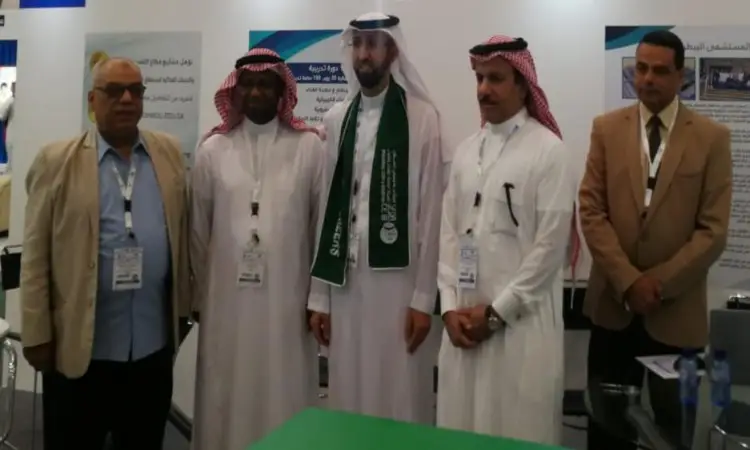
The university participates in the annual Food and Drug Authority exhibition and conference.
Click this link [3]
The university, represented by the Department of Veterinary Medicine in the College of Agriculture and Veterinary Medicine, participated in the exhibition accompanying the Second Annual Conference of the Food and Drug General Authority, which was held from January 14-17, 1440 AH, at the International Exhibition Center in Riyadh. The Department of Veterinary Medicine booth was visited by a number of officials, led by His Excellency Dr. Hisham bin Saad Al-Jadhai, CEO of the Food and Drug General Authority, and His Excellency Dr. Saleh Al-Dosari, Vice President for Food Sector..
The participating pavilion from the Veterinary Medicine Department distributed brochures to exhibition visitors to introduce the department's postgraduate programs, as well as specialized training courses offered by the department under the supervision of the University's Institute of Studies and Consulting Services..
Dr. Abdullah bin Faiez Al-Saegh, Head of the Veterinary Medicine Department at the College of Agriculture and Veterinary Medicine, emphasized that this participation came to introduce the fields of work for veterinarians, which include working in the food sector at the Saudi Food and Drug Authority, in the environmental health and food departments at the Ministry of Municipal and Rural Affairs, and in veterinary laboratories and clinics affiliated with the Ministry of Environment, Water and Agriculture, in addition to many other government and private sectors..
“Al-Sayegh” emphasized that the participation resulted in informing and discussing with interested parties and visitors to the department's special pavilion about the academic programs offered by the Veterinary Medicine department and the modern development mechanisms to raise the efficiency of the veterinarian's performance in line with the blessed vision of the Kingdom 2030.
Qassim University President Launches “Your Health Before Your Appearance” Campaign”
Click this link [4]
Media Center:
His Excellency the President of Qassim University, Professor Dr. Khalid bin Abdulrahman Al-Hamoudi, launched the awareness campaign “Your Health Before Your Appearance.” The campaign was organized by the College of Medicine, represented by the Student Club, with the participation of the Deanship of Student Affairs and a specialized sports club in the region, “Body Masters.” The awareness campaign, which focuses on bodybuilding, included an exhibition on individual health through appropriate nutritional meals, monitoring weight, body mass, and fat density, measuring blood pressure, analyzing blood sugar, providing guidance, and distributing brochures.
For his part, His Excellency the University President praised this step, offering his thanks and appreciation to the Dean of the College of Medicine, Dr. Hani Al-Shabili, and the Student Club for this initiative and their interest in student and youth activities relating to individual health and health factors through proper nutrition, exercise, weight monitoring, and providing guidance. He wished for these activities to be repeated periodically so that students can benefit during this age group, which will be of great advantage to them.
The Dean of the College of Medicine, Hani Al-Shabili, confirmed in turn that this campaign will enhance the concept of health, emphasizing that they were keen to hold these events to raise awareness about bodybuilding, explain muscle injuries, and review the essential meals necessary for bodybuilders, praising the students' interaction through their participation in this campaign.
Dean of Student Affairs, Dr. Khaled Al-Shareedah, praised this initiative by the College of Medicine, saying: "The campaign's slogan is very beautiful, and it emphasizes that a person should take care of their health before their appearance. He added that health is not only physical but also mental, which helps a person have a good appearance." He commended the campaign and the exhibition, which includes many products and guidelines that are important to students.
The campaign coordinator, student Mohammed Al Hassoun, stated that the goal of organizing the campaign is to educate university students and maintain their health, making their bodies athletic by explaining muscle growth, increasing size, and appropriate exercises. They also aim to clarify things that athletes should avoid, introduce them to the most common types of steroids and their harms, in addition to the needs of athletes in body building and slimming processes, and nutritional requirements, emphasizing that all these matters vary from person to person based on age, daily activity, body mass, and body fat percentage. He expressed his gratitude to “Body Masters” for their engagement with the campaign, offering 30 free subscriptions through a raffle for exhibition visitors and distributing over 2,000 promotional items.
The Al-Jandauniyah palm tree is known to visitors of Janadriyah for its products and its nutritional and economic importance.
Click this link [5]
The «Palm Tree» exhibit at the university tells visitors about its benefits and products at its special exhibition in the upper floor of the Qassim region's heritage at the National Heritage and Culture Festival «Janadriyah 33». The exhibit was designed to mimic the region's heritage, and its walls were covered with informational panels about this blessed tree, its byproducts, and its various date varieties. Visitors leave the pavilion laden with a tremendous amount of valuable information about the palm tree and its diverse byproducts.
When festival visitors come to the region's heritage headquarters, their attention is drawn to the attractive design of the palm tree exhibition. They might think that palm trees are only for producing dates. However, as a visitor begins their journey among the palm frond models, surrounded on all four sides by products derived from dates, such as “ma'amoul and chocolates,” and other processed goods, within an exhibition covering an area exceeding 70 square meters, they receive a wealth of historical information about the origin of the palm tree, its distribution worldwide, its growth stages, agricultural practices, methods of date palm propagation, and how to protect it from fungal diseases. The guest leaves with abundant knowledge, allowing them to appreciate the status of this blessed tree and its nutritional, environmental, and economic importance.
Therefore, the College of Agriculture and Veterinary Medicine at the university, which oversees the exhibition, was keen to introduce visitors to the benefits of dates, which are not limited to eating only, but also include by-products and processing industries, the most prominent of which are:
Provide local products instead of importing them from abroad, especially fodder. Diversify products made from dates and the handicrafts based on them. Develop and revive heritage, utilize labor, and provide additional income for farmers. In addition to the environmental importance of investing in palm products, which is represented by a low pollution rate due to not burning these products, reduced pesticide use, and decreased disease incidence from leaving byproducts, as well as increased environmental awareness among farmers.
The exhibition also presents ways to benefit from the palm tree and all its parts and trunks in the furniture industry, woodworking, and ceiling supports. In addition to the palm fiber, which is used in making ropes, carpets, mats, and artificial soil, and as a substitute for bamboo, it is also used as biofuel. Meanwhile, palm leaves (“fronds”) are used in making roofing, wall cladding, traditional furniture, parquet flooring, wooden boards, paper pulp, animal feed, and organic fertilizer. Baskets, mats, and thermal insulation materials are also made from palm fronds, along with other processed products in various industries.
From the fruits of the “palm tree,” several products are extracted, including date juice (dibs), vinegar production, yeast production, and jam production. Dates are also used in the production of animal feed, in addition to composting palm tree waste. Palm tree waste is shredded to be utilized in soil nutrition and to create a suitable agricultural environment for cultivation, as it retains water and helps improve soil properties and fertility.
Studies at the International Date Palm Conference at the University: ”The Kingdom is the second largest producer of dates, with about 15% of production.”
Click this link [6]
The sessions discussed modern methods to combat the “red” palm weevil and the possibility of obtaining safe food products.
Studies at the International Date Palm Conference at the University“The Kingdom is the second largest producer of dates, accounting for about 15% of production.”
Media and Communication Center:
The results of the study presented by Dr. Abdelkader Boufrassawi, a professor at Houari Boumediene University of Science and Technology, at the Second International Date Palm Conference currently held at the university, proved that the Islamic world in Africa and Asia is the main producer of dates globally. He pointed out that the number of date-producing countries in the region is 13, producing 95% of the total global date production.
Boufraoui added during his presentation of the study he submitted to the conference, titled “Comprehensive Talk on Dates,” that Egypt ranks first in date production with 18%of global production, while Saudi Arabia ranks second with 15%, and Iran comes in third with 14%. The UAE ranks fourth with 14%, followed by Algeria in fifth place with 9%, then Iraq in sixth place with 8%of global date production.
The study indicated the diversity of date varieties, which exceed 1400 types. Cultivation began in the Euphrates basin more than 6000 years ago. Humans used it as food in ancient and modern times, and its leaves were used in some traditional industries, and its trunks for building villages. In addition to being a complete food due to its rich composition of iron and potassium, and its high content of vitamins, minerals, and carbohydrates, which make it a high-energy fruit. Furthermore, the date represents a preferred food in the Prophetic tradition.
The halls of Qassim University witnessed, throughout the first day of the Second International Date Palm Conference, numerous scientific sessions being discussed all day long in both morning and evening periods, totaling six sessions.
The first sessions were presided over by Dr. Yusuf bin Abdullah Al-Saleem, and their main focus revolved around the economics and marketing of dates, through a research paper presented by Dr. Hans van der Beek titled “Cooperation between the Kingdom of Saudi Arabia and the Netherlands in improving date production and quality.
During the presentation, Dr. Beck presented methods to assist companies and farmers in water management and reducing consumption by 70%. He also touched upon cooperation methods between the two countries in developing pest treatment methods that threaten palm trees, most notably the “red palm weevil.” Dr. Beck's presentation also included how to improve irrigation techniques and increase the efficiency of domestic marketing.
Subsequently, Professor Saud Al-Fida, Director General of the Agricultural Administration at the Saleh Al-Rajhi Endowment Administration, presented a working paper on how to qualify projects and farms to obtain specialized international agricultural certifications, most notably the “GlobalG.A.P.” certification. He highlighted that the main objectives of obtaining the certification are to ensure the availability of healthily safe food products and to provide a clear indication that the farm is fulfilling its mission in supporting local and global food security. It also aims to protect the environment from the negative impacts of agricultural production. The certification aims to build consumer confidence and serves as a passport for agricultural products to enter many countries worldwide. .
Then, Dr. Ijaz Ashraf presented a paper titled "Farmers' Knowledge Level Regarding Processing, Production, and Marketing of Dates in Pakistan." This was followed by Dr. Shamim Ahmad, who presented a research paper titled "Marketing of Date-Based Food Products as Health Products." He discussed many ways in which food industries producing date-based products, such as juices, can be utilized. At the end of the session, a discussion was opened among the attendees regarding the topics presented in the session and to answer related inquiries.
The second session, “Palm Tree Production and Care Techniques,” was attended by several researchers and experts in the field, including Dr. Emad Fouda, Dr. Gamal Abdel Hakim, Dr. Shahzada Arshad Khan, Dr. Ahmed Khan, Dr. Al Hadi Adam, and Dr. Lobna Abdel Jalil. The session was chaired by Dr. Abdulaziz bin Bani Al-Harbi.
where I presented research papers on the effect of date palm pollination techniques and methods on the quantity and quality of date production.
The third session discussed one of the most important pests that affect and damage palm trees, which is the “red palm weevil.” The session was chaired by Dr. Saleh bin Suleiman Al-Huwayrini and aimed to identify modern methods for controlling this pest and ways to eradicate it. The main speaker, Dr. Frank Vait, presented modern methods used to detect the red palm weevil in its early stages before it spreads in palm trees, allowing for control in its initial phases.
Dr. Mohamed Kamal Abbas, Dr. Bader Al-Sabah, Dr. Atef Abdelrazak, and Dr. Abd al-Ilah Abdel Moneim also presented their scientific papers, which studied and analyzed the “red palm weevil.” The red palm weevil is an edible insect, considered a traditional food in several countries, with high nutritional value, including a high content of fats, protein, and minerals.
The fourth session, chaired by Dr. Nasser bin Saleh Al-Ghamiz, discussed date palm production and care techniques, the future of investment in the date industry, date palm products and food security, and the latest developments in date palm cultivation and related industries. It also covered methods for their care to achieve the highest possible productivity and maximum benefit for farmers and companies interested in date palms. Dr. Abdullah bin Mohammed Al-Hamdan spoke about the most important possible ways for a better future for investment in the date industry and date palm products to achieve a type of food security, as the date palm can fill a significant gap in global food shortages if optimally exploited.
While Dr. Yousef Al-Fahid discussed how to determine and estimate the field water requirements and crop coefficient for date palms using “lysimeters” in Saudi Arabia, in order to provide quantities of water used in date palm cultivation and achieve the highest date yield with the least amount of water, which contributes to increasing the area used for date palm cultivation as well as benefiting from every drop of water in increasing the number of date palms in the Kingdom.
Dr. Khalid Mohammed Houldar discussed pollination methods for the most important palm varieties in the Kingdom, the duration of receptivity for pollination of female flowers of the Kingdom's most important palm varieties, and the effect of water on increasing date production.
Dr. Abdullah Al-Jamdan, Dr. Abeer Abdulkarim, Dr. Ahmed Mahrous, and Dr. Hassan Oweis participated in the session.
The conference sessions continued in the afternoon, with the fifth session witnessing discussions on palm product manufacturing technology. It was chaired by Dr. Fahd bin Mohammed Al-Rameyan and included the participation of Dr. Tarek El-Adawy, Dr. Khalifa Al-Riyahi, Rehab Abdullah, Dr. Sayed Attia, and Adel Ahmed with their scientific papers.
The research papers addressed the most important recent developments in this field, which is witnessing noticeable progress day by day, as dates have become a basic input in many food products and a core component of dining tables in many countries around the world. The session was chaired by Dr. Fahd bin Mohammed Al-Ruwaiyan, where Dr. Adel Mahmoud presented a comparative analysis of date palm fruit drying methods and the effect of sunlight on fruiting times.
The first day's sessions of the conference concluded with the sixth session, which was dedicated to discussing the topic of date palm pests and their control methods. This aspect received great attention from the conference organizers, scientists, and specialists in the study of palm pests, due to the severity of these pests on the entire date palm cultivation process. They can cause farm collapse, reduced productivity, and crop damage.
The session was chaired by Dr. Ahmed bin Ali Al-Ruqaiba, with the participation of Dr. Mawlood Ghadban, Dr. Masoud bin Sassi, Dr. Siham Maashia, and Dr. Khalid Al-Hudaib.
Dr. Samah bint Muhammad Binshaaban spoke about the effect of temperature, biological (“vital”) factors, and demographic (“population”) factors on date palm cultivation. Dr. Khalid Al-Hudaib, on the other hand, discussed methods for examining disease-resistant genes in some date palm varieties in the Kingdom of Saudi Arabia, so they can be developed and increased, which enhances the palm tree's ability to resist pests.
References
[1] [Online]. Available:Click this link
[2] [Online]. Available:Click this link
[3] [Online]. Available:Click this link
[4] [Online]. Available:Click this link
[5] [Online]. Available:Click this link
[6] [Online]. Available:Click this link
News related to the goal
Tweets related to the goal
Files related to the objective
- About the second goal
- Track Food Waste on Campus
- Food waste on campus
- Food insecurity and hunger among students
- Interventions to combat hunger among students
- Sustainable food options on campus
- Healthy and affordable food options
- Interventions to combat hunger among employees
- Access to food security knowledge
- Events for local farmers and food producers
- University outreach to local farmers and food producers
- Sustainable food purchasing