 Official government website of the Government of the Kingdom of Saudi Arabia



Digital transformation
Qassim University highlights its efforts and initiatives in digital transformation and the development of electronic services, contributing to improving operational efficiency and enhancing the quality of the digital experience for beneficiaries, in line with best national practices and standards. It also sheds light on technical initiatives, digital systems, and innovations supporting education, research, and institutional services, thereby promoting digital integration and raising the level of institutional performance and excellence.
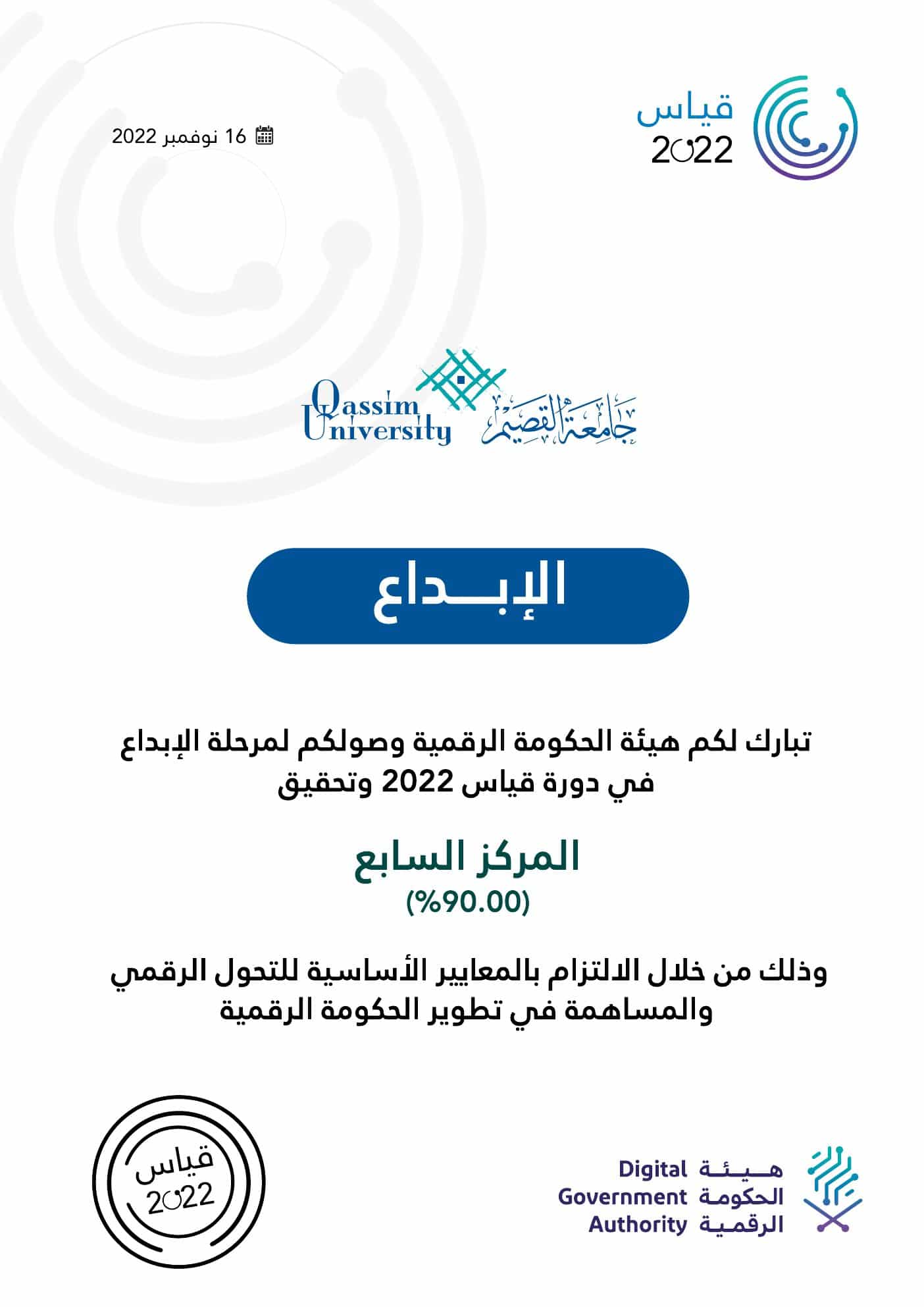
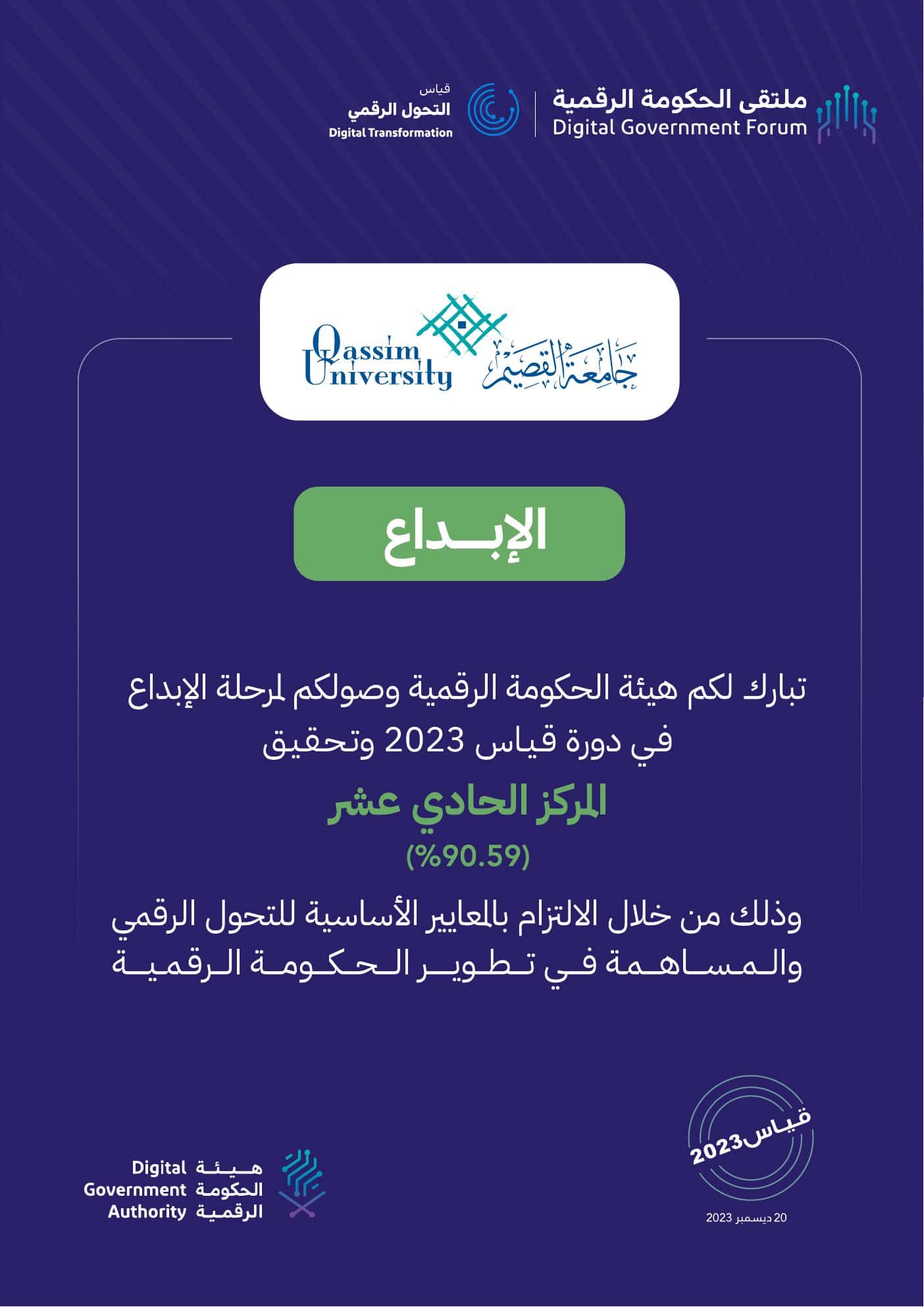
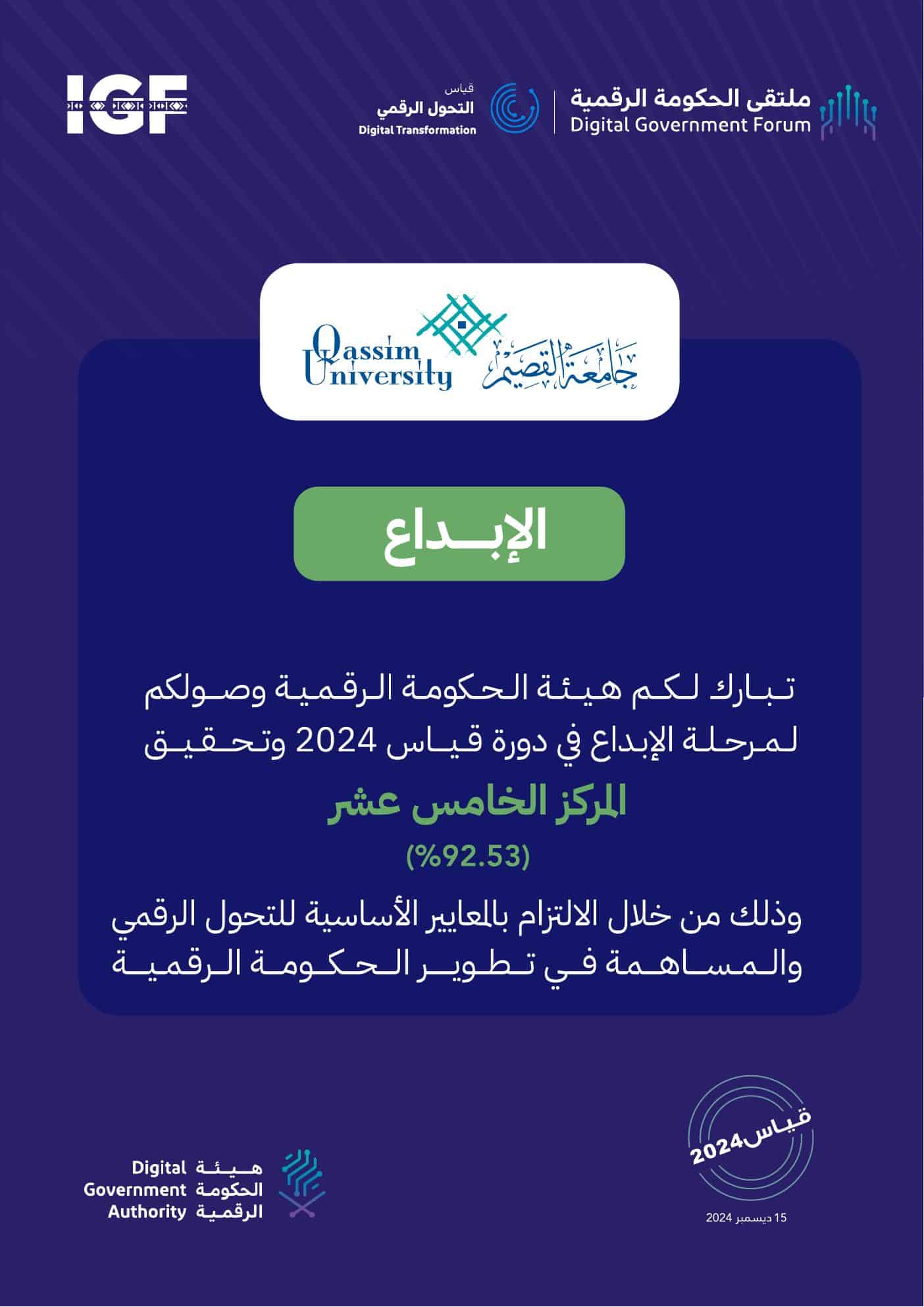
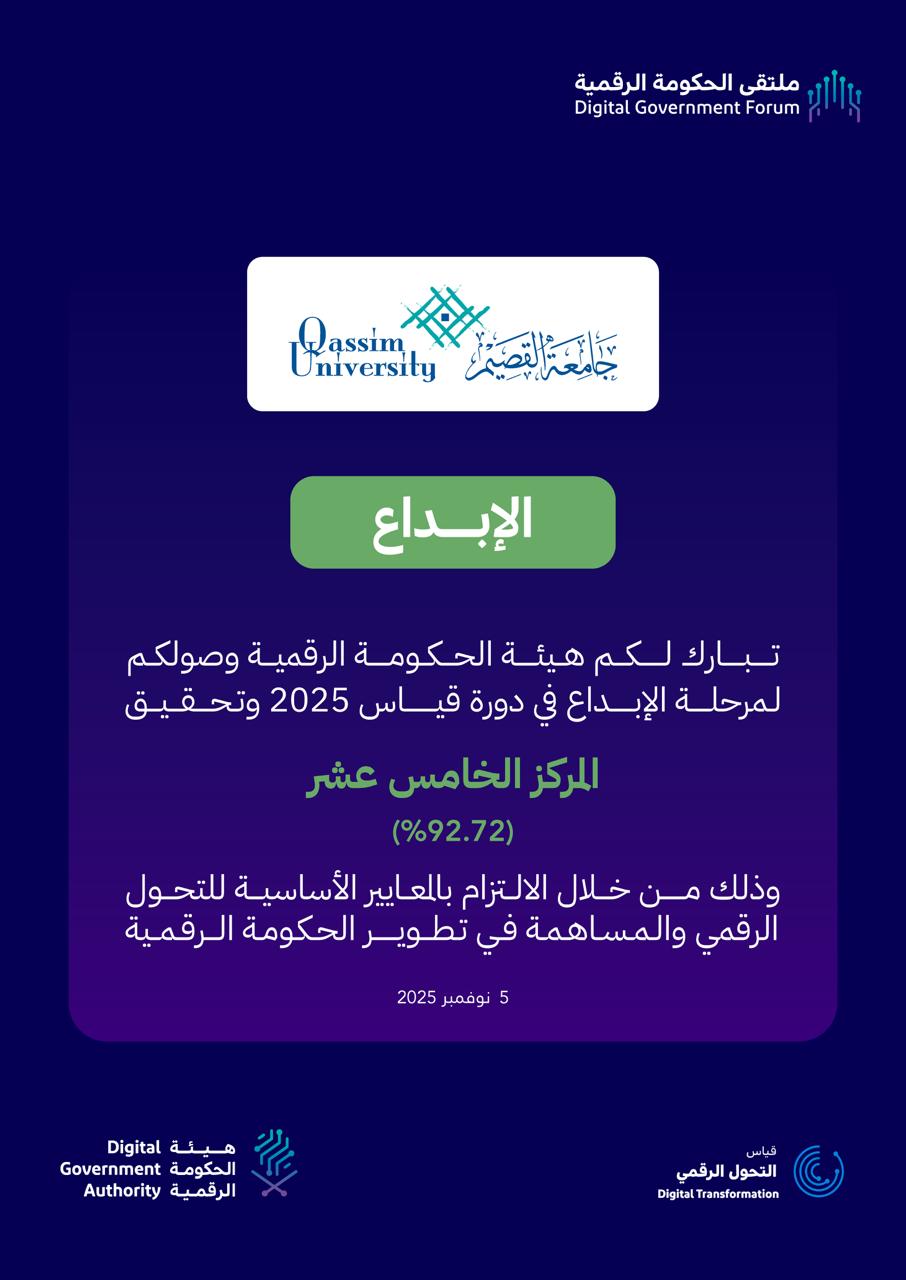
The Qassim University journey in the Digital Transformation Measurement Index
Digital Government Authority Evaluation — 2015 to 2025
Digital Transformation Measurement Results
2015–2021

Leadership presence For Qassim University on the list of nominees for the Best Digital Leader Award
University faculty member nominated among the elite digital leaders across the Kingdom at the Digital Government Forum
Other Certifications
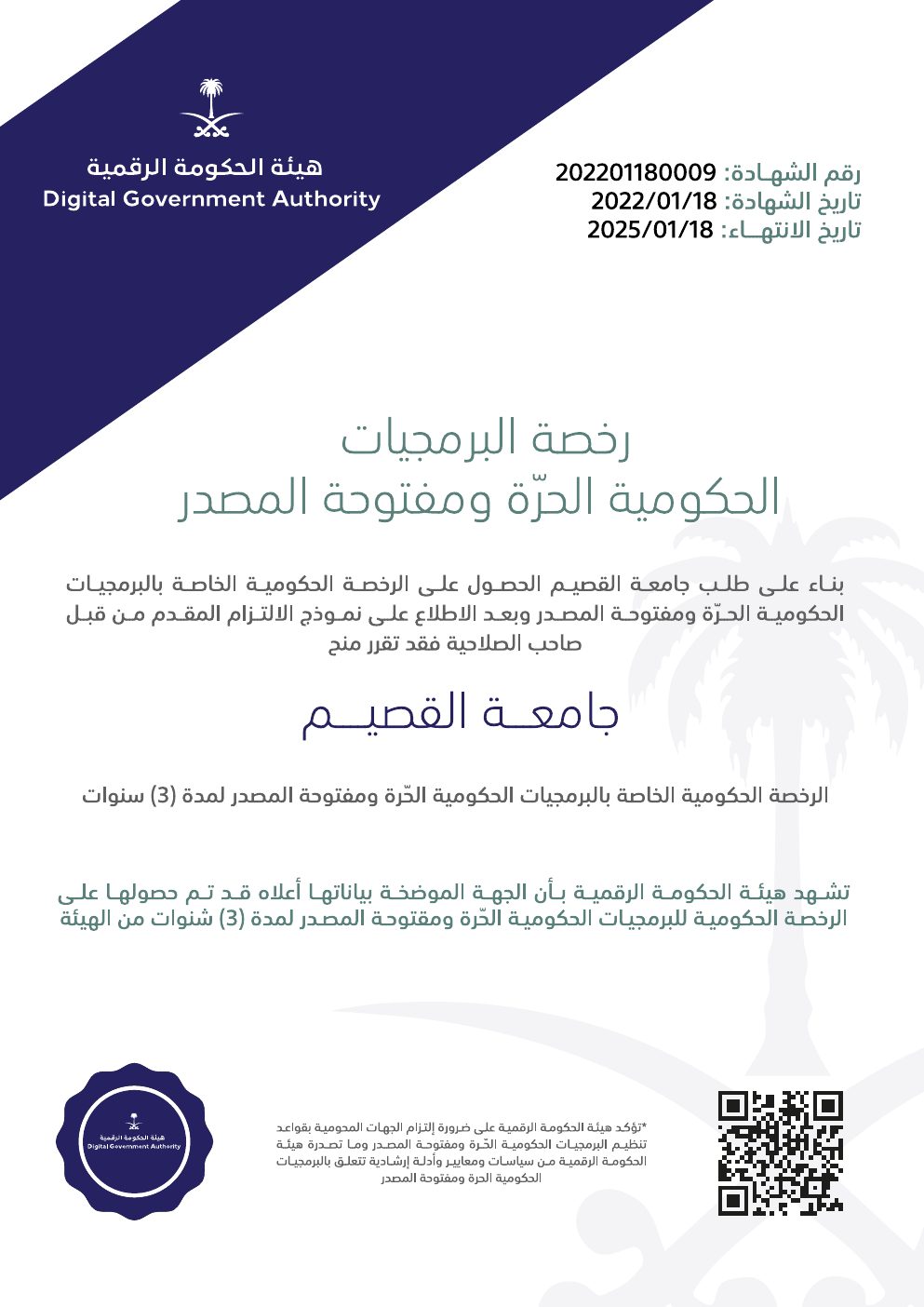
Free Software License
January 2022 · 3 years
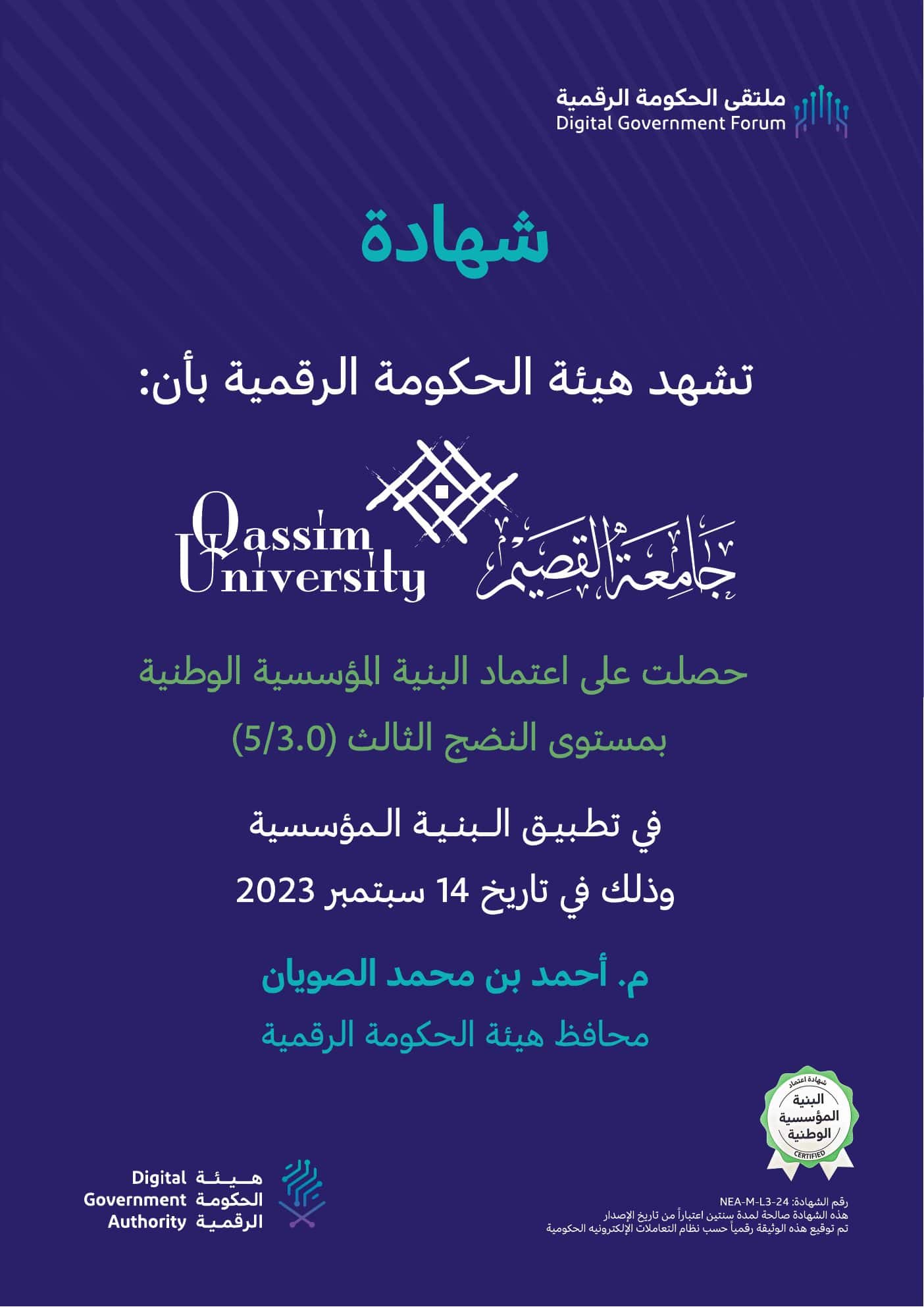
National Institutional Structure
September 2023 · Level Three
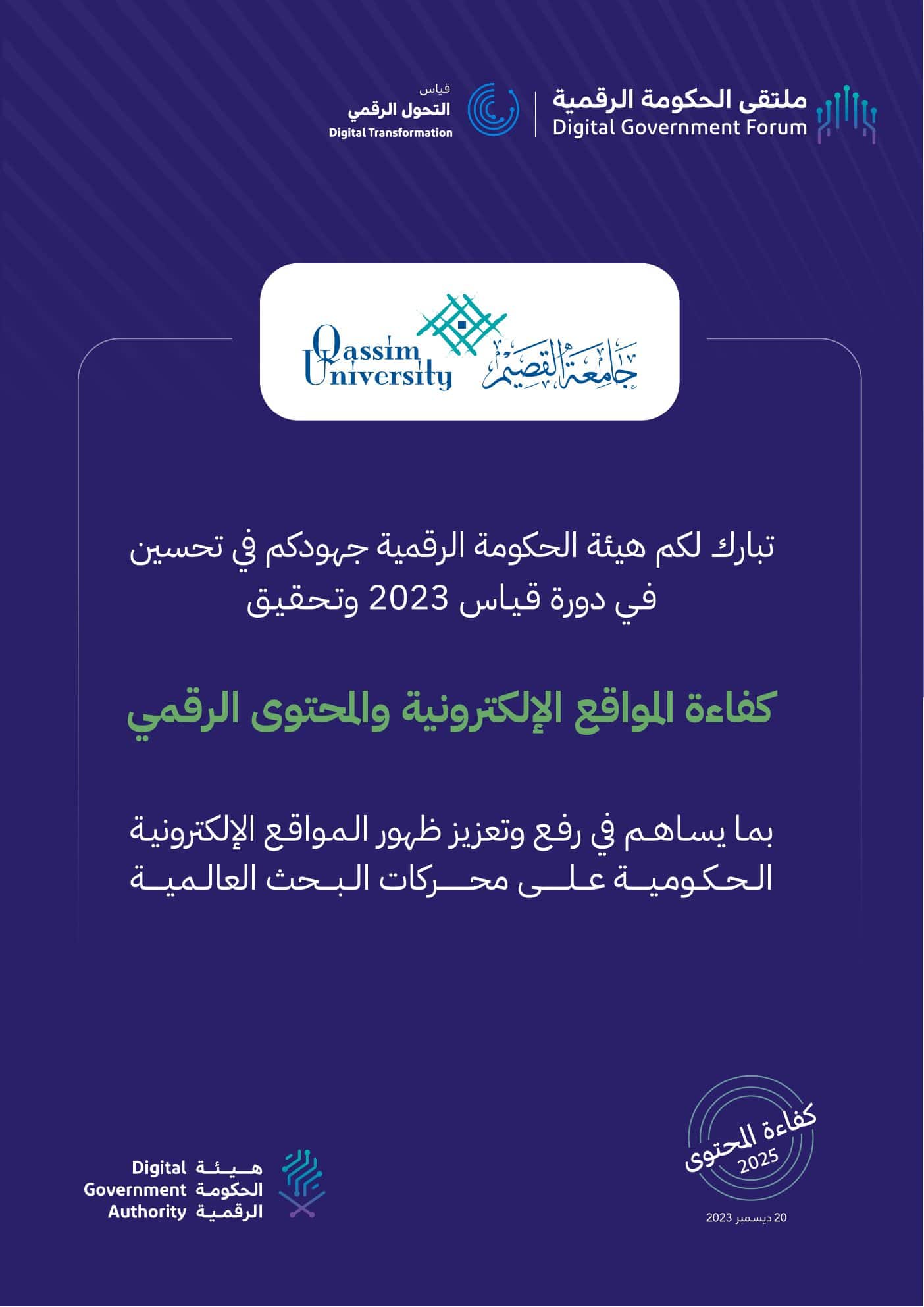
Efficiency Websites and Content
December 2023
A Journey of Achievements in Digital Transformation
A Steady Stream of Grants, Awards, and National Partnerships



University projects in the World Summit on the Information Society Awards
Qassim University has been nominated for two projects in the WSIS Prizes competition, organized by the International Telecommunication Union.
An AI-powered adaptive learning platform, developed at the Deanship of E-learning, provides a personalized experience for each student with analytics to adjust the assessment level according to performance.
An AI governance platform that acts as a unified communication system between university staff and internal departments, with instant answers based on policies and regulations.
Reports and Statistics
Periodic reports and statistics related to the performance of digital services at the university
The 2021 Annual Report of the Deanship of Information Technology at Qassim University documents the deanship's achievements and strategic initiatives during the fiscal year. The report includes the development of the technical infrastructure, improvement of electronic services, and enhancement of digital transformation at the university. It also encompasses the deanship's efforts in maintaining cybersecurity, supporting academic and administrative operations, and developing information systems. The report reflects the deanship's commitment to its mission of enabling university users to access technology easily and securely, and its vision of building a distinguished and reliable technological environment.
The report aims to document the key technical achievements and projects of 2021, showcase the Deanship's contribution to supporting the university's strategic objectives, measure performance indicators, and clarify ongoing efforts in developing technical services and infrastructure in line with the Kingdom's Vision 2030.
The report highlights key areas including preserving institutional construction by developing infrastructure and information systems, updating networks, servers, storage systems, and cybersecurity threat protection, in addition to integration with government entities and other institutions to achieve technical compatibility and benefit from shared services.
The report also addresses efforts to enhance technology adoption by providing technical support and training for users and developing digital awareness programs, as well as developing websites and digital platforms to improve communication channels, in addition to implementing digital transformation projects and developing specialized systems such as the Human Resources Management System, the Financial System, and the Student Management System.
The report targets academic and administrative leaders at the university, faculty members, administrative staff, students, and all beneficiaries of technical services at Qassim University.
The 2020 annual report of the Deanship of E-Learning and Information Technology at Qassim University provides a comprehensive overview of the most prominent technical work and achievements during the year, in line with the university's direction towards digital transformation and enhancing the quality of electronic services. The report reflects the vital role of the deanship in supporting the educational and administrative environment through the development of digital systems and improving the efficiency of the technical infrastructure.
The report focuses on the efforts made in developing e-learning services, especially under exceptional circumstances, where distance learning platforms were activated and technical solutions were provided to ensure the continuity of the educational process with high efficiency. It also clarifies the Deanship's role in providing continuous technical and technological support to students and faculty members, which contributed to facilitating the use of systems and enhancing the learning experience.
The report also reviews a number of e-initiatives and services launched with the aim of improving the beneficiary experience, simplifying procedures, and providing effective digital channels for accessing services. It also addresses efforts to integrate different systems, contributing to raising the level of operational efficiency and maximizing the utilization of technical resources.
The report includes highlighting partnerships and collaborations with various entities inside and outside the university, with the aim of exchanging expertise and developing technical capabilities, in addition to supporting training and qualification programs in modern technology fields. The report also reflects the Deanship's interest in applying the best global practices in the field of digital transformation.
In summary, the report reflects the Deanship's commitment to developing an integrated technical system that supports the achievement of the university's strategic goals, enhances the quality of services provided, and keeps pace with the rapid changes in the field of technology and digital education, thereby contributing to improving the user experience and raising the level of institutional performance.
The 2017-2019 Achievement Report for the Deanship of Information Technology at Qassim University documents the major technical achievements and projects during this time period. The report reflects the Deanship's journey in developing technical infrastructure, expanding the scope of electronic services, and enhancing the university's participation in the national digital transformation process. The report includes major projects, implementation programs, ISO projects, and distinguished initiatives. The report also clarifies the Deanship's wide geographical scope of work, which extends across 55 geographical locations at the university, and the beneficiary categories, which include more than 89,000 users.
The report aims to document achievements and technical initiatives during the period 2017-2019, present the Deanship's efforts in supporting the university's digital transformation, clarify services provided and their beneficiaries, and contributions to improving academic and administrative processes through advanced projects and innovative technical solutions.
The report highlights key areas, including the establishment and development of the Deanship and its strategic missions, as well as the distribution of its services across 55 locations on campus to serve more than 89,000 users, including students, faculty, and staff. It also reviews various projects, including access control systems, asset management, monitoring, and electronic payment systems, as well as programs for developing systems, network infrastructure, and data centers.
The report highlights the implementation of ISO 20000, 27001, and 22301 standards to ensure quality, security, and continuity, as well as distinguished initiatives such as the Student Data Center, Unified Access Gateway, and Electronic Directory. It targets academic and administrative leadership at Qassim University, faculty members, administrative and technical staff, students, and all beneficiaries of the Deanship of Technology services.
Getting or renewing government documents used to mean taking time off work and standing in a long queue. Today, it can be done through smart devices in minutes. This is exactly what digital transformation means when it's translated into tangible reality.
The term "digital transformation" is widely circulated and perhaps complex, but its core idea is simple: redesigning the way organizations work using technology, not just by adding new tech tools, but by fundamentally changing the way services are conceived and delivered, with the user experience at the center of their rebuilding. And the difference between these two approaches is fundamental. Every service completed, every financial transaction executed with a single click, and every medical record reaching the doctor in seconds – all are direct results of digital transformation efforts. Digital transformation has become a cornerstone that touches individuals' lives and reshapes the service ecosystem in both the public and private sectors.
Health sector
For example, this impact is clearly evident in the health sector. Paper records, long waitlists, and delayed lab results were the hallmarks of the general landscape. Today, doctors can access a patient's complete health history upon arrival, and medical data can be accessed instantly through digital systems. Technology here has not added a new step, but rather eliminated existing steps to improve the beneficiary's experience and the quality of services. The same applies to education, commerce, transportation, and energy. According to a McKinsey Global Institute report released in 2023, institutions that fully embraced digital transformation achieved an increase in operational efficiency of 20 to 30 percent in just three years. These figures do not describe marginal improvement; they describe a systematic rebuilding.
Smart Cities and Decision Making
What distinguishes true digital transformation from mere digitization of services is the use of real-time, high-quality data in decision-making. When a smart city collects real-time traffic data and automatically redistributes traffic signals, it not only improves traffic flow but also reduces emissions, saves fuel, and decreases emergency response times. This integration of data and decision-making is what makes a digital society more than just an internet-connected society.
Education sector
The situation is no different in the education sector, as digital transformation contributes to reshaping the experience of the student, professor, and institution alike. Previously, academic procedures required in-person attendance and repeated follow-ups with stakeholders. Today, they are accomplished through integrated platforms that include admissions, registration, monitoring academic performance, and other services. This impact extends to the very method of delivering educational content, through:
This transformation seeks not only to add advanced technology but also to redesign the educational system, making it more responsive to the needs of its students and more closely aligned with the demands of the job market.
And in the end, digital transformation is in reality Time travel which is wasted on procedures that could be simplified. When what used to take days is accomplished in minutes, it's an indicator of a society that has placed service beneficiaries at the heart of its priorities.