 Official government website of the Government of the Kingdom of Saudi Arabia




12
Waste tracking

- About SDG 12
- Ethical sourcing policy
- Getting rid of hazardous waste
- Policy waste disposal - landfill policy
- Reducing the use of plastic
- Reducing the use of single-use materials
- The extension of single-use material policies to outsourced services
- The policy of reducing costs extends to suppliers
- Waste tracking
- Publication of a sustainability report
Related Content
Waste tracking
Qassim University tracks its waste streams: specialised contracted companies collect, transport and treat the medical waste of the Medical City and hazardous laboratory waste; its Landfill Policy requires contractors and service providers to submit monthly waste data; and campus wastewater is treated and reused to irrigate the campus. The University also hosted the first international conference on the sustainable management of solid waste.
Medical and Hazardous Waste Handling (Action)
Specialized companies are contracted to collect, transport, and treat biomedical waste (from the Medical City) and hazardous laboratory waste in accordance with KSA’s standards.
Hosting Solid Waste Management Conference (Commitment)
Qassim University hosted the First International Conference on the Sustainable Management of Solid Waste, bringing together experts to discuss national strategies for waste minimization, recycling investment, and resource recovery.
Treated wastewater reused for campus irrigation
Campus wastewater and rainwater undergo tertiary treatment, and about 8,512 m³ of treated water per month is reused to irrigate the University’s green spaces, through a treatment plant and 21 substations. This measured liquid-waste stream is recycled instead of being discharged.
UI GreenMetric: the University’s waste-management performance
In the UI GreenMetric sustainability ranking, the University achieved 52nd place worldwide and first place nationally in the waste-treatment criterion, alongside a full score and 26th place worldwide in the water-treatment criterion. Waste management remains one of the seven criteria on which the University continues to lead Saudi universities in the ranking.

University President inaugurates the First International Conference on Natural Resource Sustainability: Sustainable Solid Waste Management
The College of Engineering and the Sustainable Development Center organised the First International Conference on Natural Resource Sustainability: Sustainable Solid Waste Management, with 36 speakers and 168 participants from more than 15 countries, and more than 120 reviewed papers. Its themes were the responsible citizen and valued food, attractive investment, resource recovery, integrated solid-waste management and environmental protection. It aimed to estimate the natural and economic resources wasted and the environmental cost of waste, move towards sustainable food systems with less food loss and waste, and encourage investment in waste-recycling technologies. An exhibition accompanied the conference, and the College of Engineering signed a cooperation memorandum with a cement company.
University launches awareness campaign with posters on containers and compressors
The university, represented by the College of Engineering, launched an awareness campaign across the Qassim region by placing stickers with awareness messages about waste on sanitation carts. This is part of the preparations for the first international conference on natural resource sustainability, “Sustainable Solid Waste Management,” organized by the university.
Awareness stickers were placed on 30 mobile “compactor” vehicles, both inside and outside the university city. These stickers contained a number of awareness and guiding phrases, including: “The Earth has no tongue to speak of environmental injustice… so be its tongue,” “Sustainability is meeting our needs now… and those of generations to come,” “Preserve this place so it remains for your children; be a friend to the environment; your positive environmental behavior is charity to yourself,” “Desertification is the cancer of the environment; contribute to its treatment with awareness and behavior,” “Balancing resource consumption gives the environment opportunities for permanence and growth,” and other awareness phrases.
Through this conference, the university seeks to contribute to preparing a comprehensive vision for solid waste management at the national and global levels, demonstrating the volume of wasted natural and economic resources, and estimating the environmental cost of waste. A number of speakers will participate, who will present the latest developments in modern science in this field, and will also discuss many relevant scientific research and papers.
The conference includes several themes, such as: sustainable waste management practices at all stages “starting from generation and source separation, collection, transportation, transformation, and ending with disposal,” and at all levels “planning, management, operation, maintenance, and investment.” The second theme addresses how to manage food loss and waste at the production and consumption levels. The third theme discusses investment in waste recycling and processing industries, while the fourth theme deals with sound waste management from a legal and cultural perspective.
International conference to discuss sustainable solid waste management
The university, represented by the College of Engineering, is preparing to host the First International Conference on Natural Resources Sustainability: Sustainable Solid Waste Management, in cooperation with the Sustainable Development Center. This conference aims to explore ways to contribute to the preparation of a vision for sustainable solid waste management at the national and global levels, through the participation of a number of experts, academics, and specialists in this field, accompanied by discussions on the results of the latest studies, research, and scientific papers related to sustainable solid waste management.
The conference also aims to highlight the extent of wasted natural and economic resources and estimate the environmental cost of this waste. It will also discuss the necessary measures to transition to sustainable food systems with reduced loss and food waste. Additionally, it aims to stimulate integration among partners from various disciplines for sustainable waste management, explore opportunities to encourage investment in waste recycling technology development in the Kingdom, and study the obstacles to investment in waste processing industries. This will be achieved through several key themes, which include: Responsible Consumer and Valued Food, Attractive Investment, Resource Recovery, Integrated Solid Waste Management, and Environmental Protection.
Conference participants seek to reduce per capita consumption rates of certain goods and services in Saudi Arabia, which are among the highest globally, leading to an increase in solid waste generation. They also aim to limit the depletion and degradation of natural resources due to high consumption rates, and to transfer and localize modern global technologies in waste management that are compatible with the Kingdom’s conditions. Furthermore, they intend to address the challenges arising from waste, which is the responsibility of every member of society, raise community awareness about the risks of waste generation, encourage initiatives aimed at improving sustainable waste management, and provide opportunities for exchanging expertise and knowledge among specialists in waste management and sustainable development.
Professor Dr. Khalid bin Bani Al-Harbi, head of the conference’s organizing committee and Vice President of Qassim University for Planning, Development, and Quality, explained that this conference comes at a time when sustainability has become an essential requirement for maintaining development in communities, achieving a dignified life for their members, and ensuring their progress and prosperity as civilized societies. He pointed out that the conference will shed light on the sustainable management of solid waste, which in turn ensures a sustainable return, reduces the waste of natural resources, making it economically fruitful, environmentally beneficial, and meeting actual needs.
The “Head of the Organizing Committee” pointed out that the university has recognized the importance of sustainability and its diverse factors, especially developmental ones, making it one of its priorities, and indeed a fundamental building block in its vision and mission which it strives to achieve. From this perspective, the university’s College of Engineering attaches great importance to these topics due to their specialized nature, which will be one of the most important arms of the university in achieving this noble goal, alongside other specialized entities from colleges and units, most importantly the University’s Center for Sustainable Development, as a partner in organization and host of the conference with the college in holding this distinguished international forum.
The head of the conference’s organizing committee confirmed that the university could only play this role under the strategic directives that our wise government attaches great importance to. These directives have a positive impact on improving the quality of life and enhancing economic aspects, which are among the pillars of our dear kingdom’s vision. Through this vision, we elevate it to the ranks of developed countries and advanced societies. He explained that the university, in turn, is working to overcome all obstacles and has harnessed all capabilities for this distinguished conference. He expressed his hope that its recommendations will contribute to advancing sustainable management in general, and solid waste management in particular, thereby achieving the sustainability of our natural resources.
Sustainable Development Center Annual Report: Achievements and SDG Performance Indicators
This document is the main guide to sustainability reporting, outlining the university’s achievements, projects, and key performance indicators (KPIs) associated with the integration of the United Nations Sustainable Development Goals (SDGs) into the Strategic Plan.
Contractual tracking of hazardous medical waste
The hazardous medical waste contract makes tracking mandatory: the contractor collects waste in three scheduled visits per week, each documented on a healthcare waste transfer form; it issues a certificate of completed treatment at the end of every month for the medical, chemical, pharmaceutical and cytotoxic waste received; and both parties keep the transport records and documents and provide them to the competent authorities on request. These records document the amounts of hazardous waste generated and treated.
Goal-related news
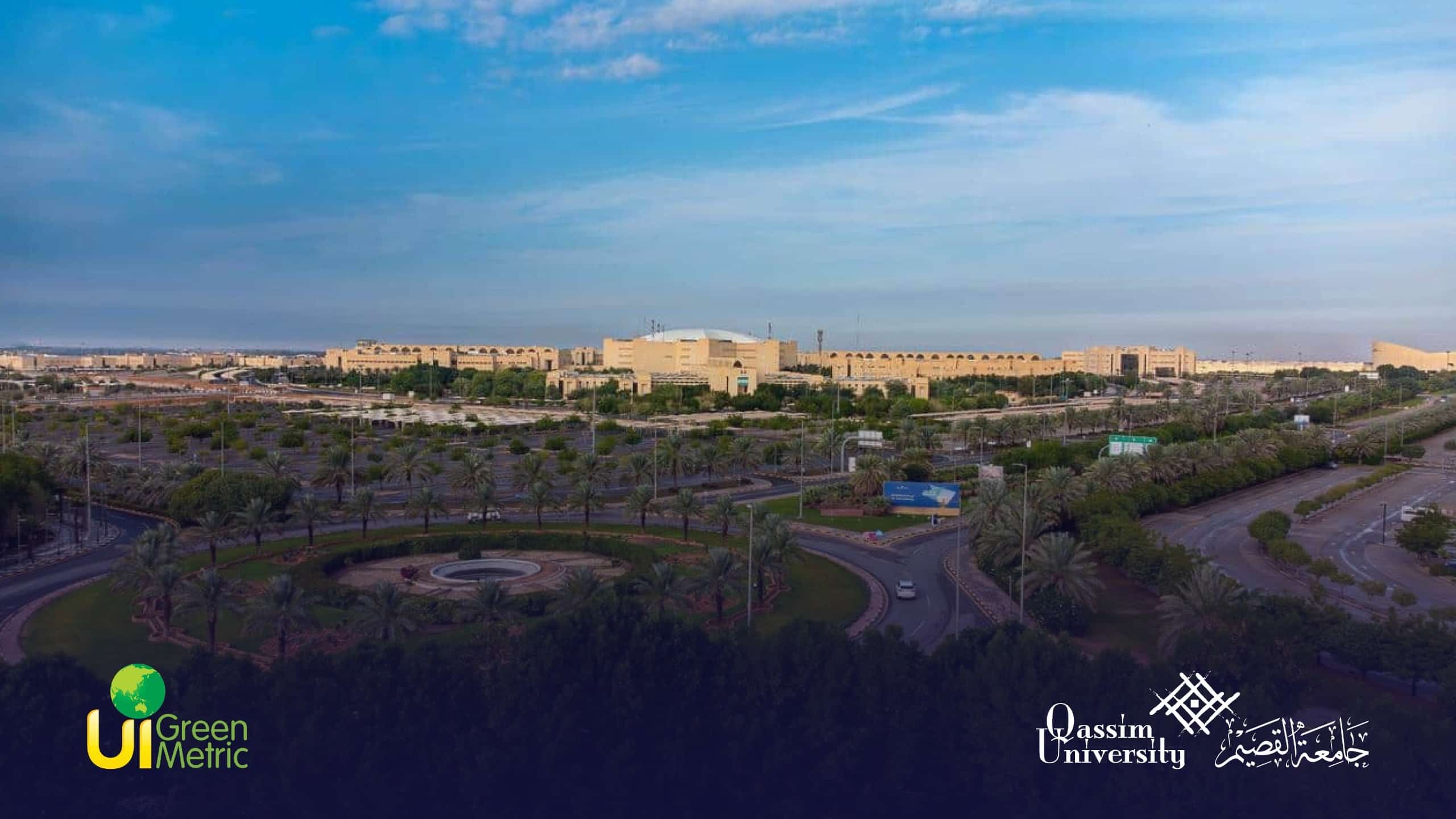
Kuwait University has continued to lead nationally in the UI GreenMetric Ranking of Sustainable Universities 2026 for the fourth consecutive year, achieving 39th place globally after advancing 22 positions compared to last year among more than 2,000 universities and educational institutions from various countries around the world. This advancement reflects the continued development of the university’s performance in the ranking […]
2026-09-25
The university achieved the 153rd position globally and the 2nd position locally in the international sustainability ranking “Green Metrics 2022,” out of 1050 local and international universities. This recognition is due to its commitment to comprehensive institutional and environmental sustainability principles at academic, social, and economic levels, maintaining its advanced global position in the ranking. This achievement underscores the university's continuous progress in various international rankings over a short period, as it continues to [...]
2022-12-19

His Excellency Professor Dr. Abdulrahman bin Hamad Al-Dawood, the University President, affirmed that achieving environmental sustainability is one of the most important pillars of the Kingdom's Vision 2030, in order to raise the efficiency of waste management and reduce pollution. As the Kingdom is an active member of the international system, especially in the G20, which strives to achieve the UN Sustainable Development Goals, he pointed out that the issue of waste management is [...]
2019-11-05

The university, represented by the Faculty of Engineering and the Center for Sustainable Development, is hosting tomorrow, Tuesday, the 8th of March 2020, for two days the first international conference on the sustainability of natural resources “Sustainable management of solid waste”, with the aim of discussing the necessary procedures for the transition to sustainable food systems that reduce waste and reduce food waste, in addition to stimulating the integration between partners from different disciplines for waste […]
2019-11-04

The university, represented by the College of Engineering, launched an awareness campaign across the Qassim region on Thursday, March 3, 1441 AH. This campaign involved placing posters with awareness messages about waste on garbage trucks, as part of the preparations for the First International Conference on Sustainable Natural Resources, “Sustainable Management of Solid Waste,” which the university will organize next Tuesday and Wednesday. Awareness posters were placed on the mobile vehicles, “compactors,” that [...]
2019-11-02

The university, represented by the College of Engineering, is preparing to host the first International Conference on Natural Resource Sustainability: Sustainable Solid Waste Management, during the period of 8-9 Rabi' al-Awwal 1441 AH, in collaboration with the Center for Sustainable Development. This conference aims to explore ways to contribute to the preparation of a vision for sustainable solid waste management at the national and global levels, through the participation of a number of experts, academics, and specialists in […].
2019-10-31
Goal-related files
2026-11-05
2026-07-01
- About SDG 12
- Ethical sourcing policy
- Getting rid of hazardous waste
- Policy waste disposal - landfill policy
- Reducing the use of plastic
- Reducing the use of single-use materials
- The extension of single-use material policies to outsourced services
- The policy of reducing costs extends to suppliers
- Waste tracking
- Publication of a sustainability report