 Official government website of the Government of the Kingdom of Saudi Arabia




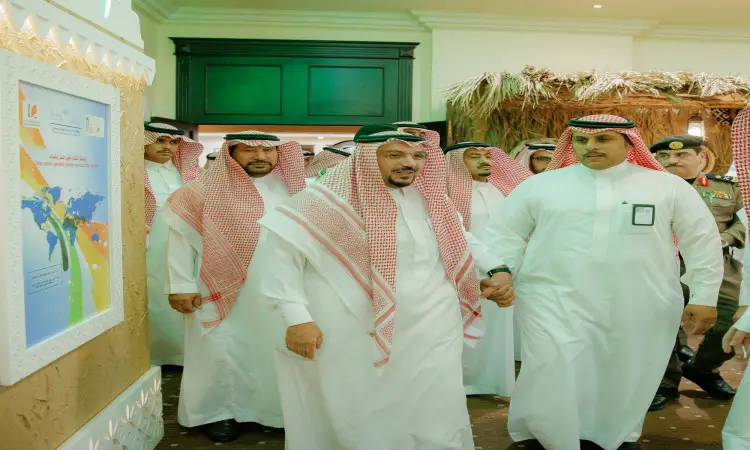
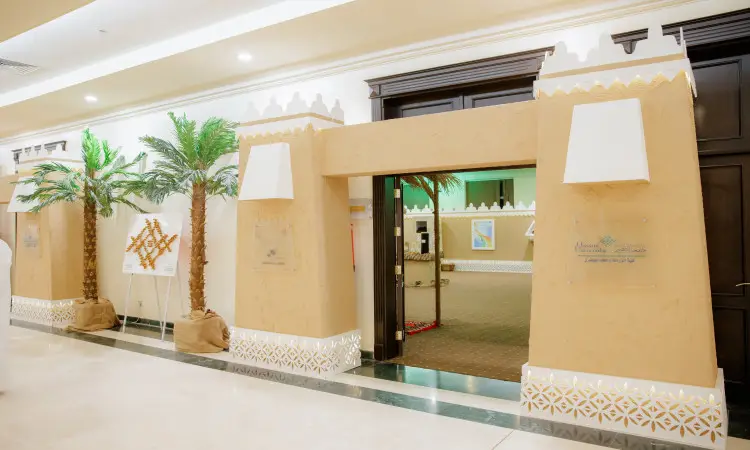
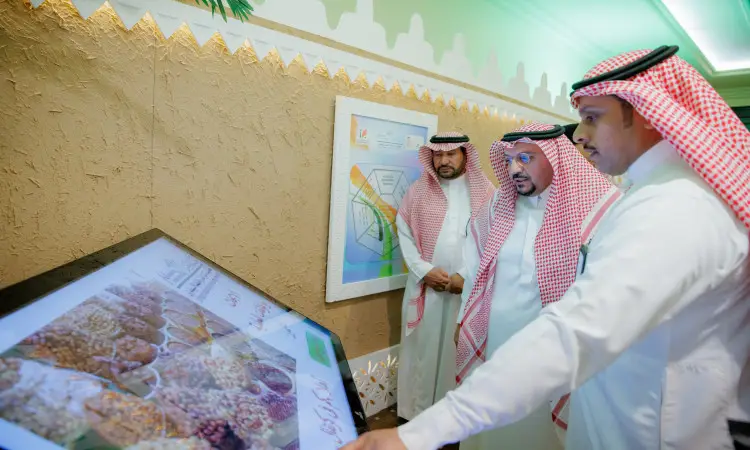
His Royal Highness Prince Dr. Faisal bin Mishaal bin Saud bin Abdulaziz, Governor of Al-Qassim Region, visited the Qassim University booth participating in the Buraydah Dates Carnival on Monday dawn. He viewed the contents of the «Palm Tree» exhibition, which includes several sections, in the presence of His Excellency the Dean of the College of Agriculture and Veterinary Medicine, Professor Dr. Saleh bin Sulaiman Al-Huwayrini, at the Dates City in Buraydah.
His Highness reviewed the university's exhibition, represented by the College of Agriculture and Veterinary Medicine, which comes as part of the university's continuous endeavor to participate in events that serve the agriculture and industry sectors. The college is holding its exhibition on «The Palm Tree» for 32 days, from the 14th of Muharram to the 15th of Safar 1445 AH, as part of the university's steps to achieve its mission in serving the community in line with the objectives of the Kingdom's vision.
Through this exhibition, the university aims to provide date farmers, traders, manufacturers, and related industries with the necessary technical and logistical support to advance this important industry, in line with the university's vision and mission of serving the community and achieving the goals of Vision 2030 by strengthening the local economy, promoting domestic resources, maximizing their utilization, and elevating the Kingdom's status in all international forums.
The "Palm Tree" exhibition includes a dedicated pavilion for the university and the palm tree, reflecting the university's commitment to this blessed tree. The exhibition also provides a comprehensive explanation of the university's most significant achievements in serving the palm tree, including its focus on scientific studies and research related to it, its cultivation, pest control, and the processing of dates and their by-products. It highlights the university's efforts in bridging the gap between those working in this field and the college's scientists and researchers. Furthermore, it offers books and informational brochures about palm trees, in addition to organizing seminars, conferences, and workshops focused on the palm tree. The university's participation in local and international exhibitions and festivals is also showcased to emphasize the Kingdom's role on both international and local levels.
The exhibition also includes information about the red palm weevil caravans organized by the university to educate farmers and interested parties on prevention methods for this pest. A large number of farms have benefited from these caravans. In addition, scientific awards established by the university are displayed, including the Sheikh Abdullah Al-Suleiman "Good" Award. This award is supervised by the College of Agriculture and Veterinary Medicine and offers one million riyals every two years to winners and researchers in the field of palm dates.
The university also ensured that its exhibition included a section dedicated to date palm production, discussing the multiple health and nutritional benefits of dates for humans. In addition, there were realistic models of the date palm, including one showcasing the most important diseases and pests that affect it. The exhibition also featured insect and pest models with accompanying information for visitors. Furthermore, a realistic model of a date palm displayed its main and secondary products. Finally, a model of a date palm was presented with the most famous date varieties of the Kingdom displayed beneath it.
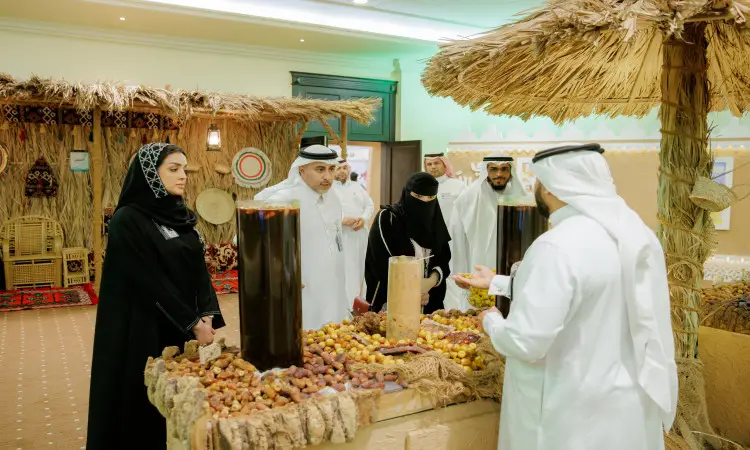
The University's Date Palm Exhibition staff are keen to display date by-products and processed industries. Several products are extracted from the fruits, including date syrup (dibs), vinegar, yeast, and jams. This also extends to the animal feed industry and the production of compost from palm waste. The palm waste is then ground down to be used for soil nourishment and to create a suitable agricultural environment for cultivation. This environment retains water, helps improve soil properties and fertility, in addition to environmental conservation and promoting sustainability.
Examples of secondary industries based on palm trees are also presented, where their parts are fully utilized. Palm trunks are used in furniture making, woodworking, and roof supports. The fiber from the palm is used in making ropes, mats, rugs, and artificial soil. Additionally, the date palm fronds are used to make bamboo alternatives, used as biofuel. The leaves of palm trees (fronds) are used in roofing, wall paneling, traditional furniture making,parquet flooring, wood panels, paper pulp, animal feed, organic fertilizer, and palm frond products including baskets and thermal insulation materials.
The exhibition provides its visitors with a wealth of valuable scientific information and resources, including methods for date palm propagation and disease control, as well as palm classification and geography. It also showcases the most important types of dates in the Kingdom in general and Al-Qassim in particular, as their cultivation and production thrive in the Al-Qassim region. This region boasts popular varieties famous for it, such as Sukari, Sagai, Hishishi, and Al-Qassim Khalas. Additionally, it features other varieties from outside the region, like Medjool and Ajwa Al-Madinah, among other different types.


