 Official government website of the Government of the Kingdom of Saudi Arabia




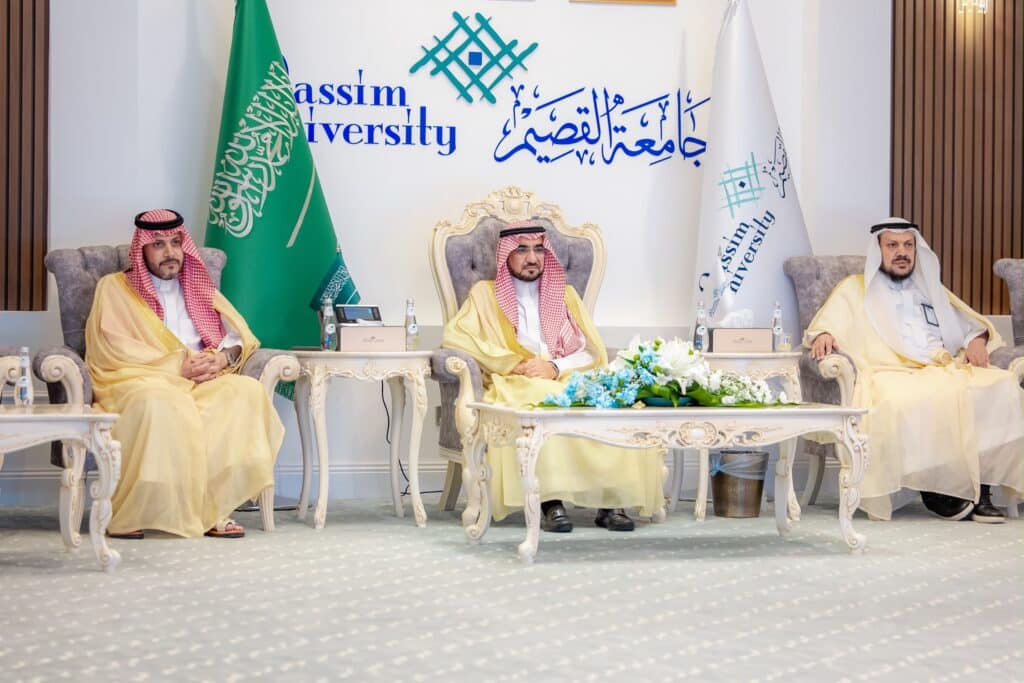
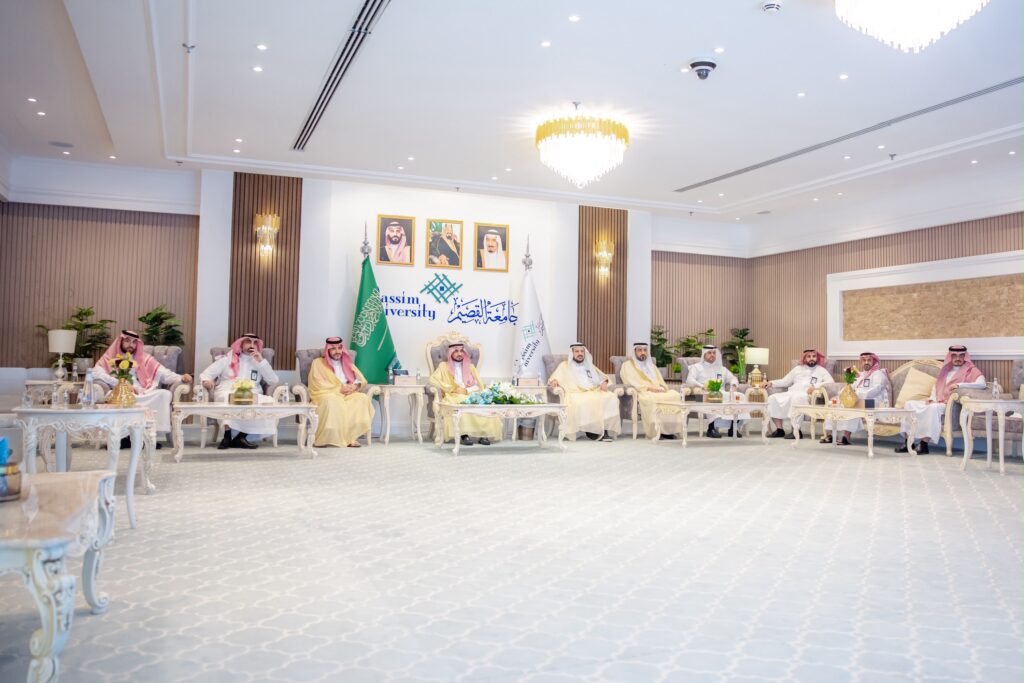
His Excellency the President of Qassim University, Prof. Dr. Mohammed bin Fahd Al-Sharikh, received His Excellency the Deputy Minister of Environment, Water and Agriculture for Research and Innovation, Dr. Abdulaziz bin Malik Al-Malik, and the accompanying delegation on Sunday, September 6, 2026, to discuss ways of cooperation and enhance partnership in areas of mutual interest. The meeting was attended by the Vice President for Educational Affairs, Dr. Fahd bin Suleiman Al-Ahmad, the Vice President for Graduate Studies and Scientific Research, Prof. Dr. Waleed bin Saleh Al-Battaeh, and a number of college deans, at the main headquarters in the University City.
During the meeting, the areas of cooperation and joint opportunities between the university and the ministry were reviewed, along with discussing support for research and innovation fields, and enhancing integration in the fields of environment, water, and agriculture. In addition, the university's role, its scientific and research capabilities, and its achievements in these fields were discussed, as well as the competencies, equipment, and specialized laboratories it houses that can be utilized to serve the sector and support its targets.
The visit included a field tour of a number of the university's colleges, which encompassed the food products retail outlet at the main university building, the training food factory at the College of Agricultural and Food Sciences, the centers of excellence laboratories at the College of Agricultural and Food Sciences, the centers of excellence laboratories at the College of Veterinary Medicine, the soil mechanics laboratory, and the central science laboratory. This was to inspect the research and training equipment and capabilities, and to learn about the most prominent projects and practices related to the fields of environment, agriculture, food, and veterinary medicine. The visit also included a session reviewing areas of strategic alignment and shared priorities between the university and the ministry.
