
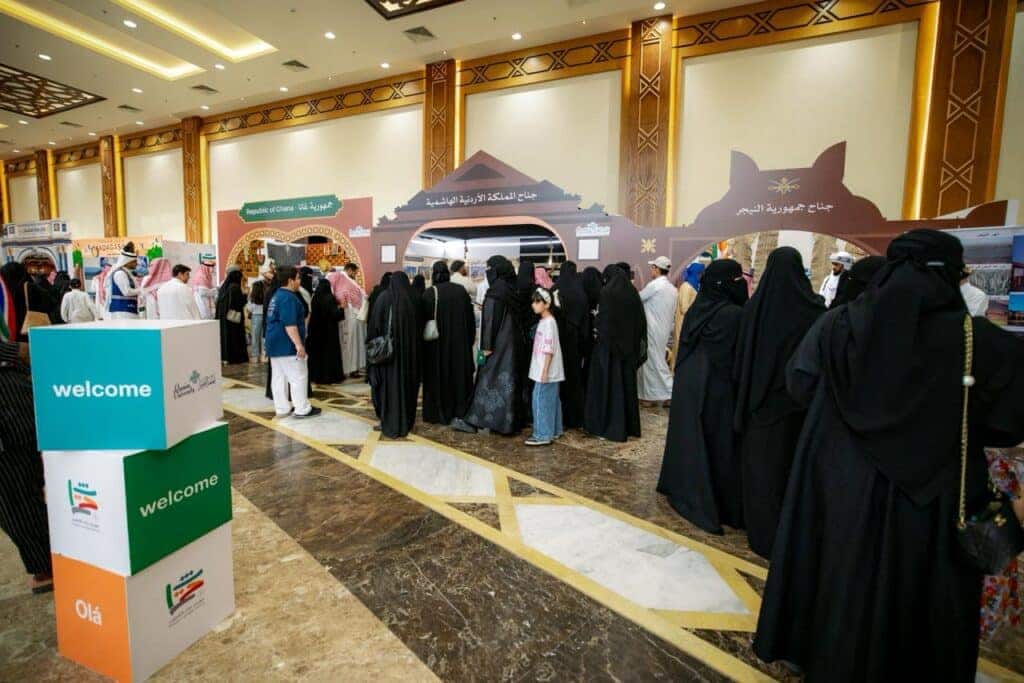
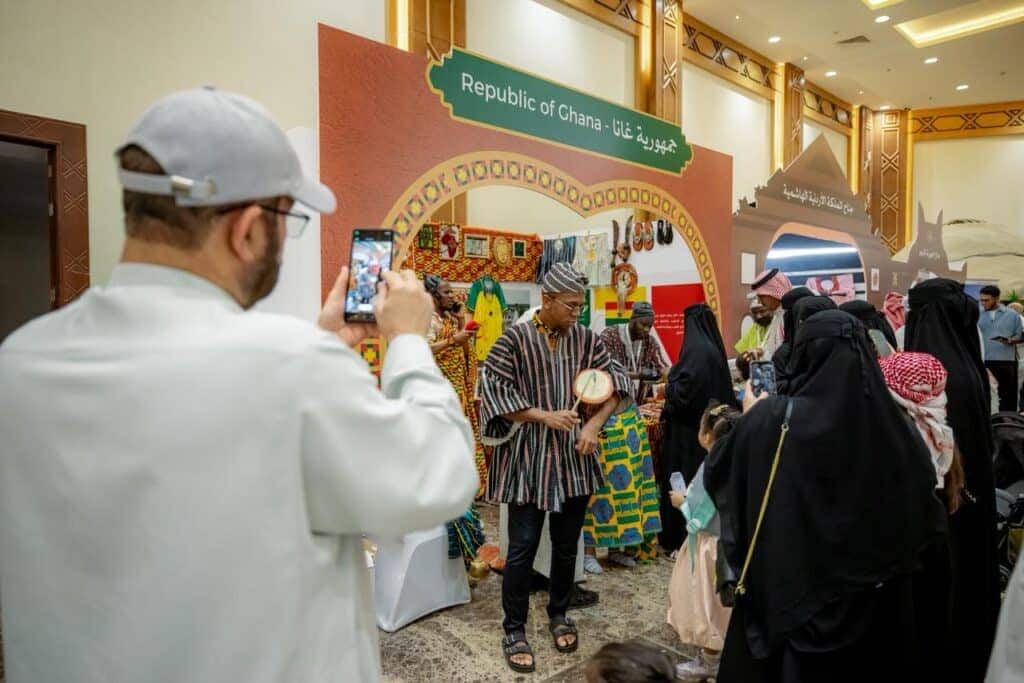
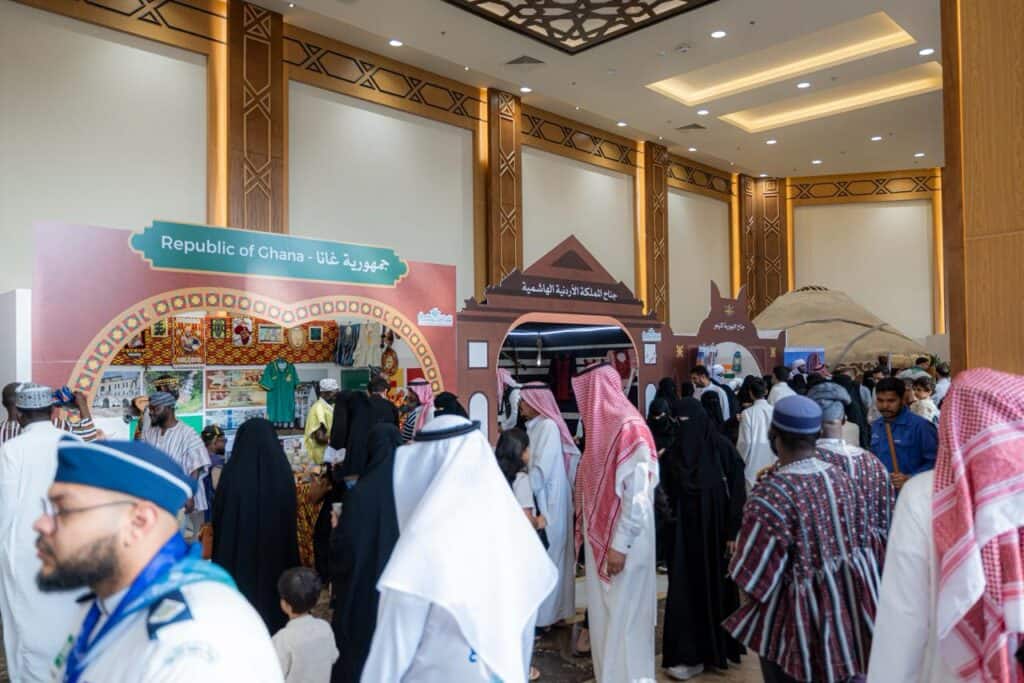
In the Ghanaian corner of the fifth «Peoples» Heritage" festival, heritage artifacts are not displayed as tools from the past, but rather transform into stories that speak of a deep-rooted history and culture. Visitors are taken on a journey to West Africa through symbols of kings, village crafts, and social customs that are still present in the details of life. This is embodied in the festival, organized by Qassim University, which will last for 6 days and is being held at King Khalid Cultural Center in Buraydah, with the participation of several entities and more than 90 nationalities from around the world.
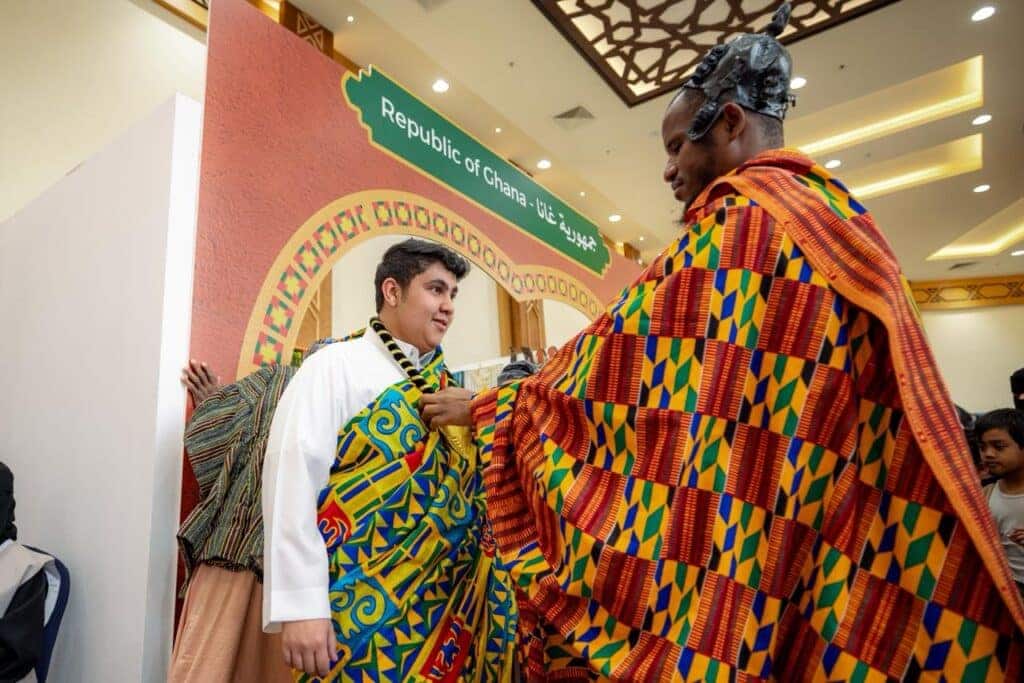
Muath Abdullah from Ghana, an international master's student at Qassim University and a participant in the Ghanaian pavilion, tells the story of the traditional attire that tops the participation. He explained that it is a garment associated with ancient kings, hand-woven, and its colors carry symbolic meanings. For example, the color yellow symbolizes the abundance of gold for which some tribes were famous. In the past, some of these outfits were exclusive to kings, before becoming a part of formal wear for men and women today.
The corner also features a traditional war helmet, worn in times of war, alongside distinct handicrafts for which specialized villages in Ghana are known, reflecting the depth of traditional crafts and their connection to cultural identity.
In one aspect of the popular heritage, the corner offers products and varieties brought from Ghana, including traditional clothing, shea butter, and “Milo tea,” in addition to Ghanaian chocolate, which is popular with festival visitors, in an experience that allows visitors to learn about aspects of daily life and Ghanaian taste.
The story doesn't end with food and clothing; the Ghanaian culture also highlights a unique social aspect in its naming traditions. The names of newborns are linked to the day of the week they were born, a customary practice that gives the name a special meaning associated with the day the person was born.
The Ghanaian corner offers a vivid picture of a culture that speaks its own language through colors, symbols, and customs, in an experience that enriches visitors to the Peoples' Heritage Festival and opens a window onto a diverse human heritage that brings together world cultures in one place.
 Official government website of the Government of the Kingdom of Saudi Arabia How to verify
 Official government website of the Government of the Kingdom of Saudi Arabia How to verify
Links to official Saudi educational websites end with
edu.sa
All links to official educational websites of government agencies in Saudi Arabia end with .edu.sa.

protocol for encryption and security. HTTPS for encryption and security.
Secure websites in the Kingdom of Saudi Arabia use the HTTPS protocol for encryption.
Registered with the Digital Government Authority with no: 20260416249

University
University administration
Other
Administrative
Humanity
pedagogical
scientific
Engineering
Health colleges


