 Official government website of the Government of the Kingdom of Saudi Arabia




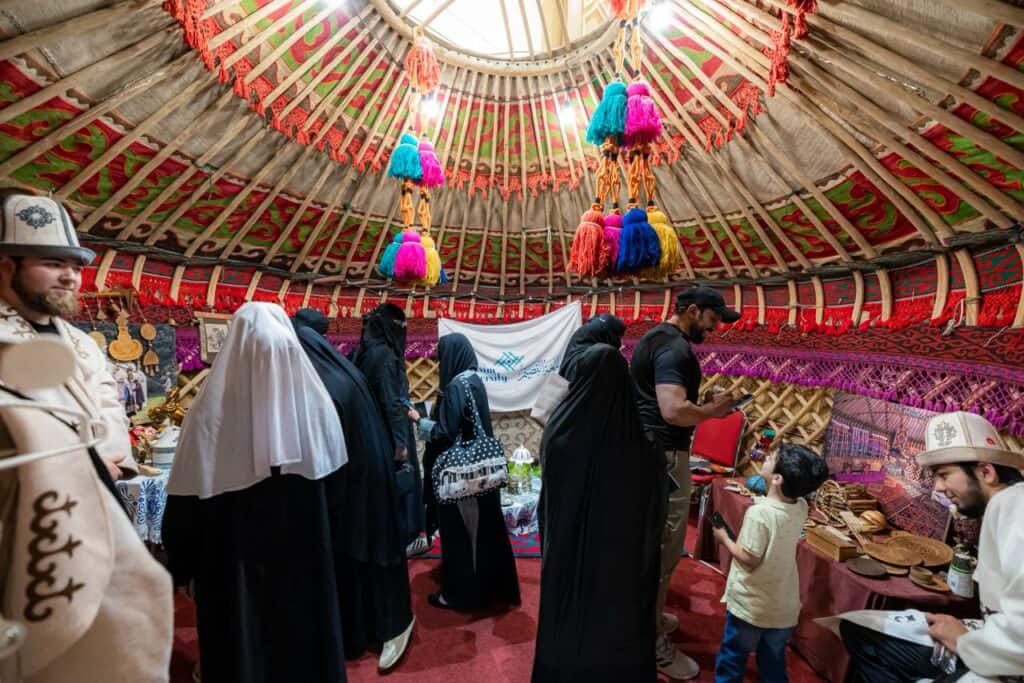
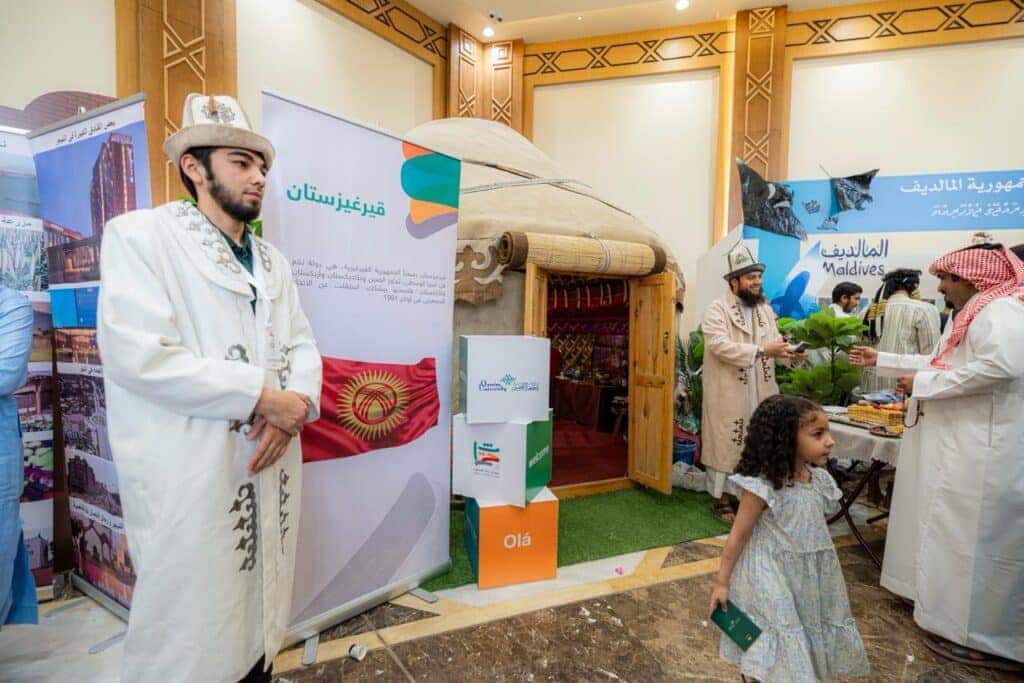
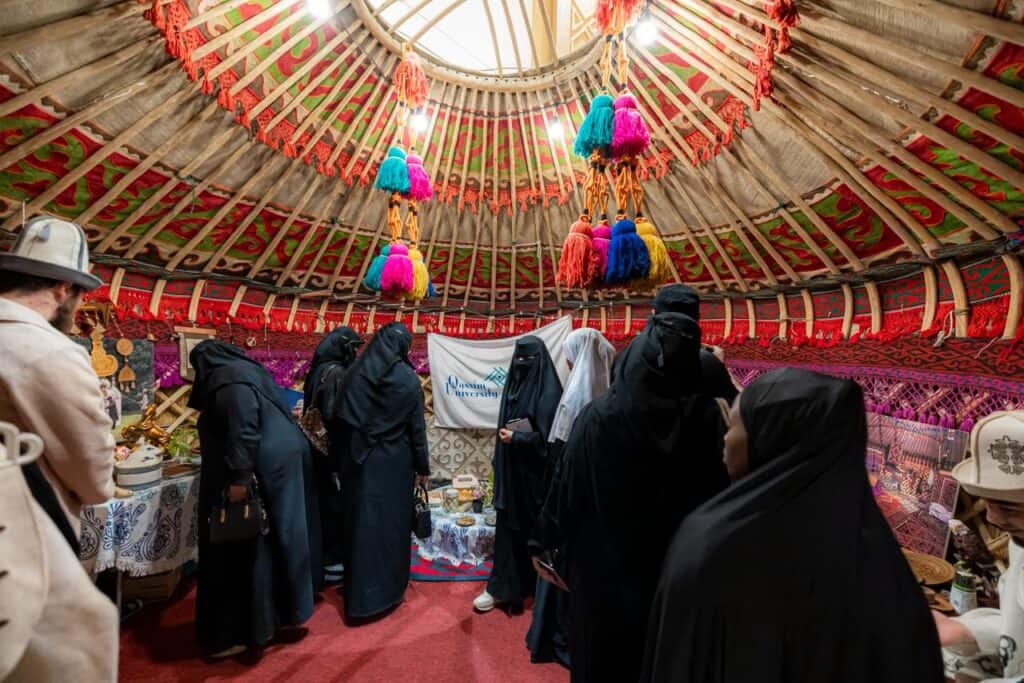
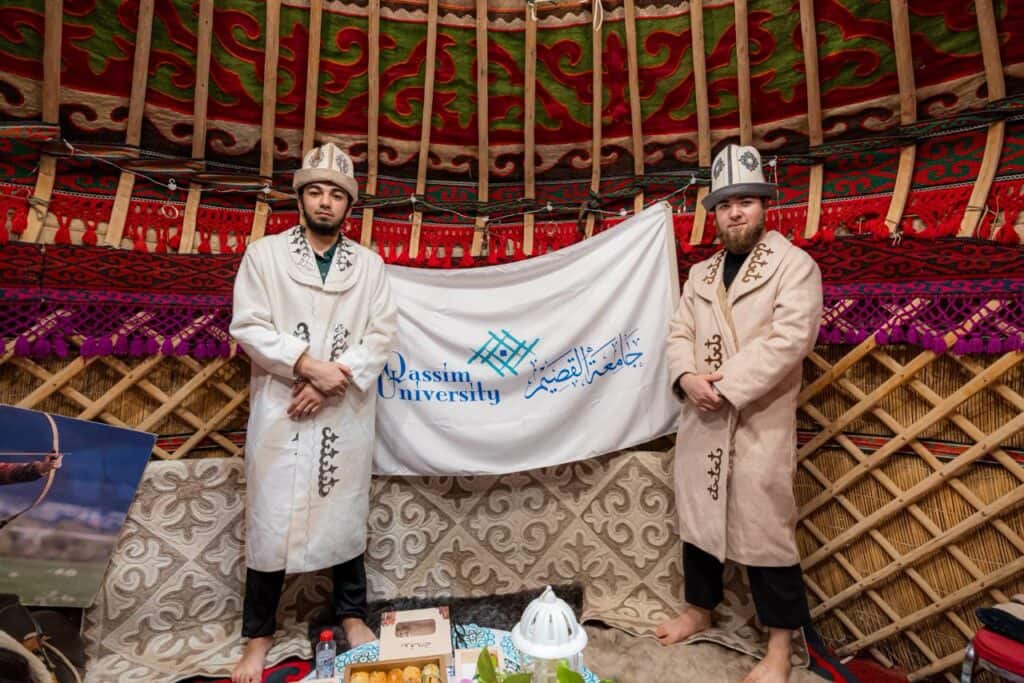
Inside Kyrgyzstan's corner at the 5th «Peoples» Heritage" festival, organized by Qassim University, stands a tranquil, well-structured circular tent woven from wool and held together by wood, without a single nail. Its details open a door to understanding a complete way of life that has spanned centuries on the steppes of Central Asia.
The tent, which took two days to set up, is less of an exhibit and more of a recreation of a way of life that is still present in the Kyrgyz countryside. Student Ammar Jalaluddinov, who studies at the Institute of Arabic Language for Non-Native Speakers, says its construction relies on interlocking wood and binding parts with wool woven from sheep's hair, a traditional method that allows for disassembly and reassembly in line with nomadic life.
Inside the tent, elements of daily life are arranged as if they were plucked from their original environment. Equestrian equipment is prominently displayed, from saddles to rider's gear, indicating the centrality of horses in Kyrgyz culture. Alongside these, traditional dishes are presented, including brown rice, as well as horse meat, which forms part of the local cuisine.
The folk costume occupies a special corner, made of wool, and is worn on major occasions, especially weddings. The corner allows visitors to try it on, giving them direct contact with the details of the culture, beyond just a visual display.
The general scene goes beyond the idea of introducing a geographically distant culture, and presents a living model of how international students can bring their experiences to a new environment, within the «Peoples» Heritage" festival with the participation of more than 90 nationalities, over 6 days.
In this corner, heritage is transformed into a lived experience, evoking the memory of the place and reformulating it before the visitor in an understandable and shareable form.

