 Official government website of the Government of the Kingdom of Saudi Arabia




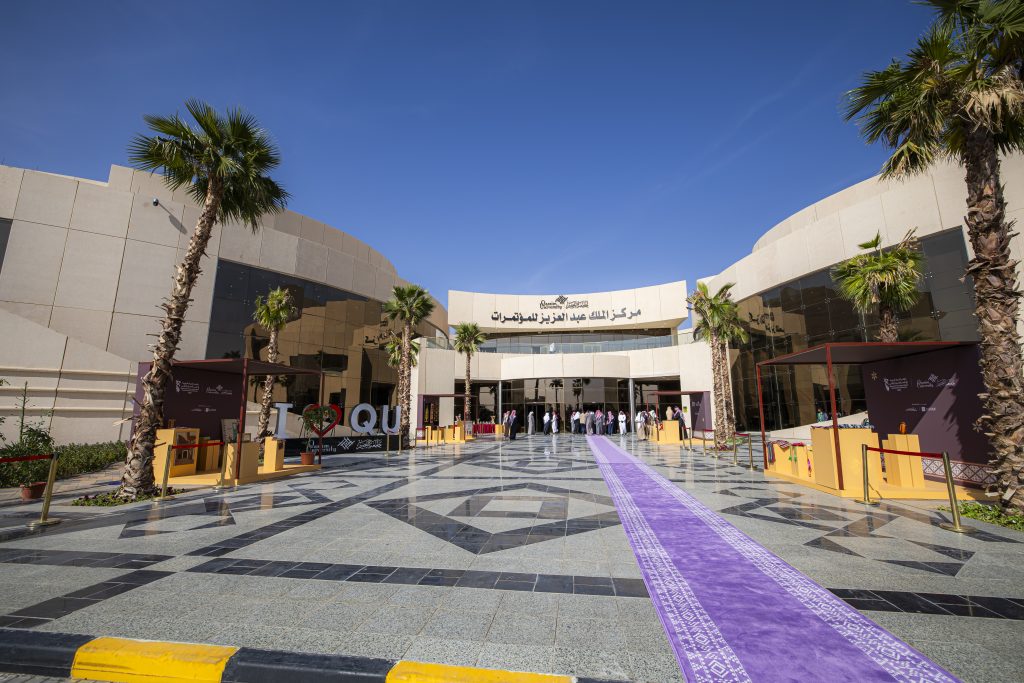
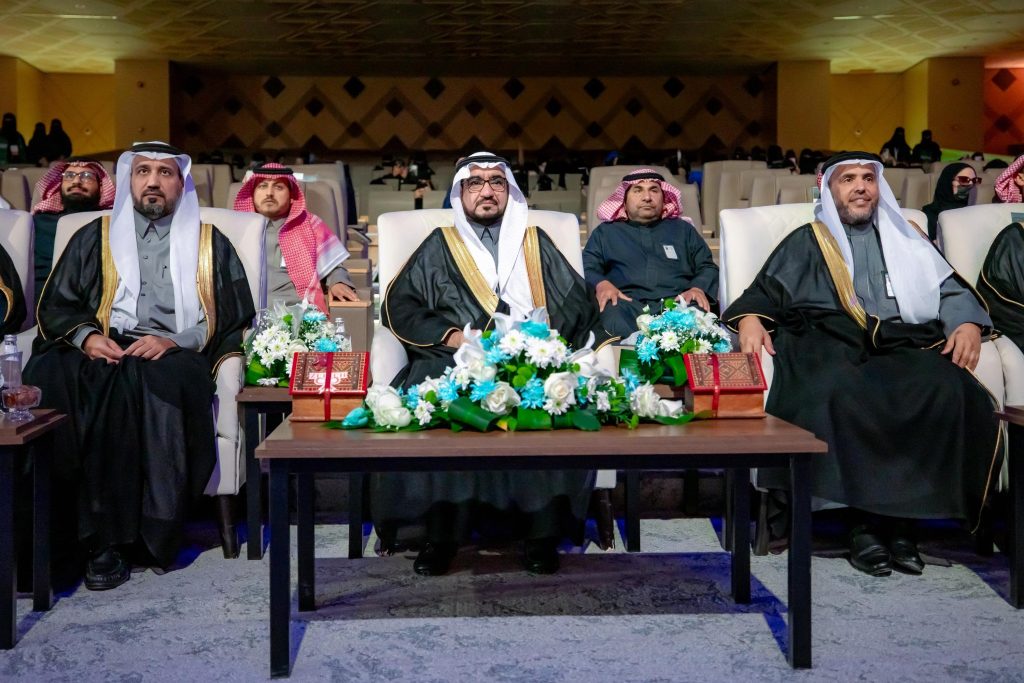
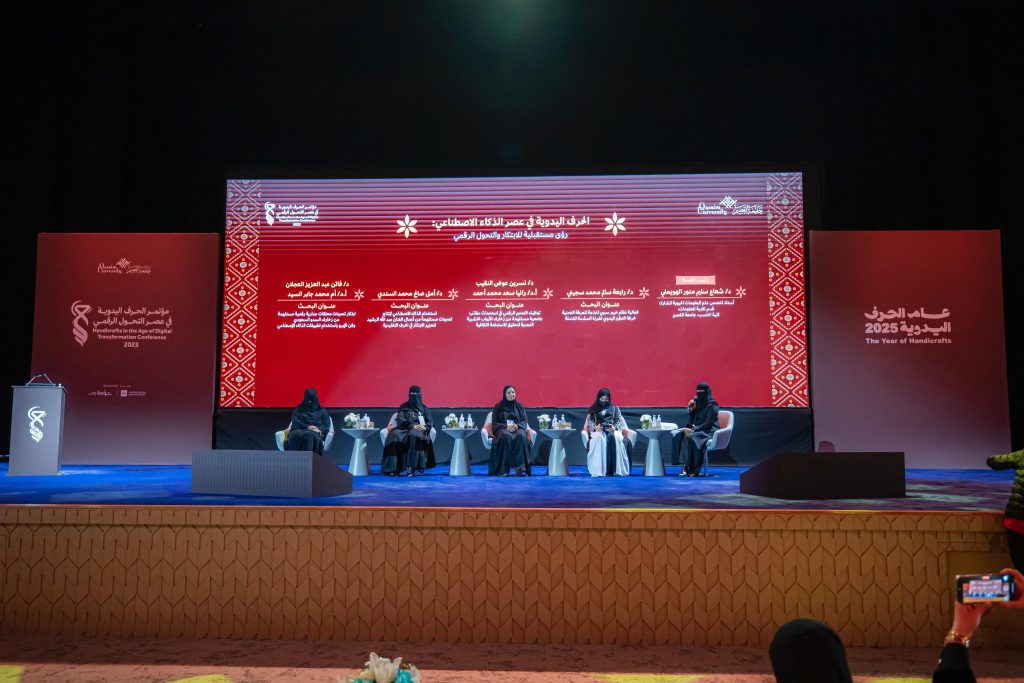
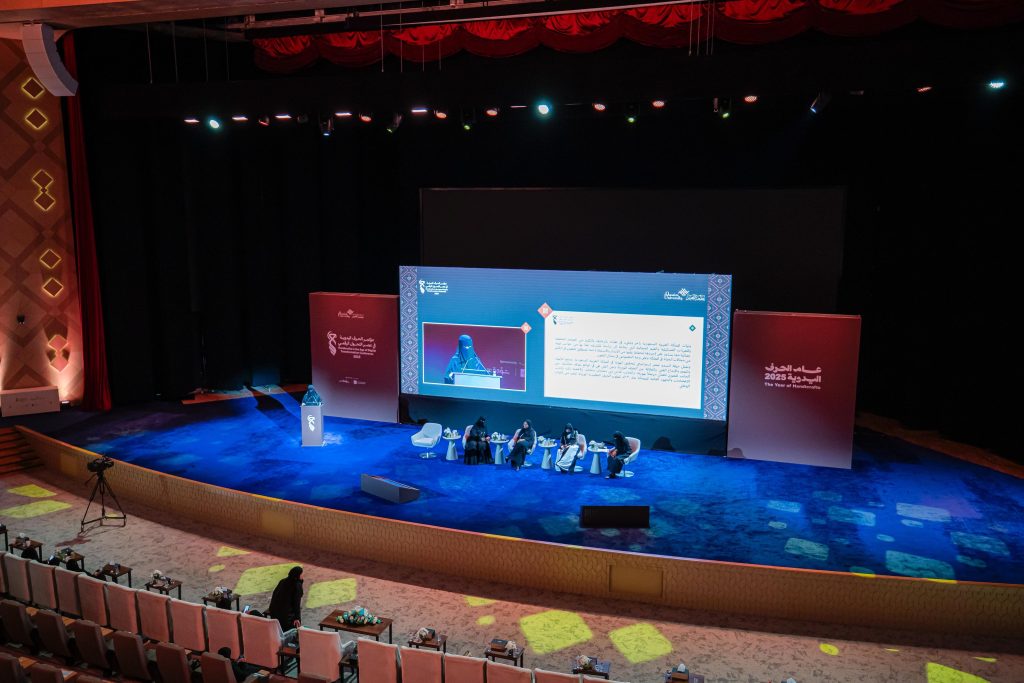

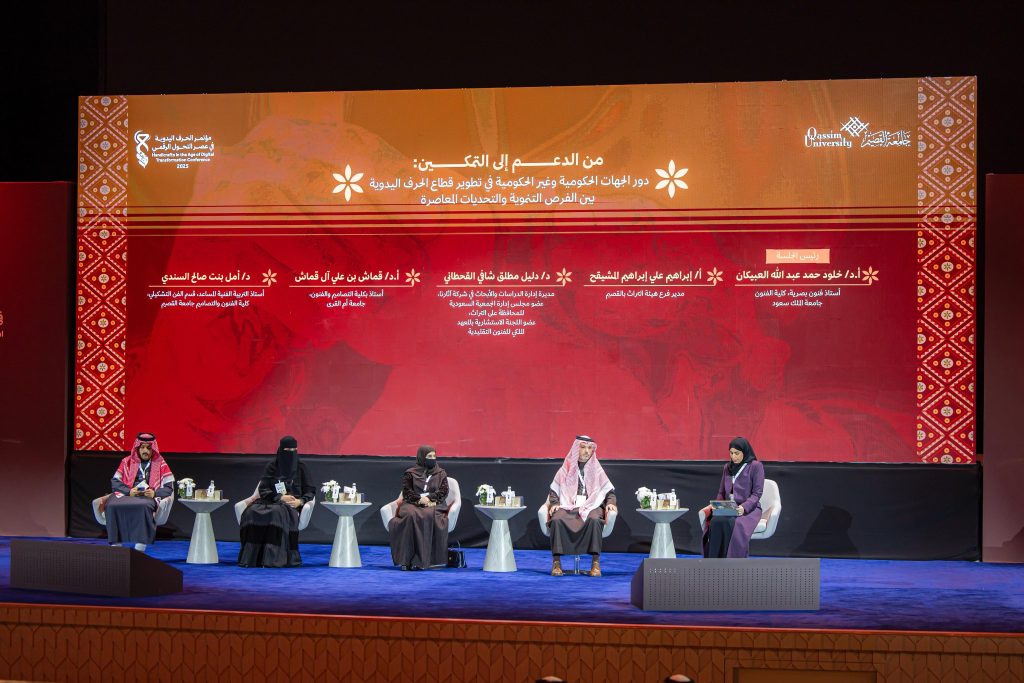
The university concluded, today, Wednesday, December 24, 2025, the conference «Handicrafts in the Digital Transformation Era: Opportunities and Challenges,» which was organized by the College of Arts and Design over two days. The conference was held under the patronage of the University President, Professor Dr. Mohammed bin Fahd Al-Sharikh, with a wide attendance and participation of experts, specialists, researchers, institutions, associations, and artisans at the King Abdulaziz Conference Center in the university city.
The conference's first session addressed the importance of comprehensive empowerment for artisans, transitioning from traditional support to an integrated development system encompassing training, development, and innovation, leading to entrepreneurship. It reviewed notable initiatives such as the Artisan House, the «Abde»" platform, and interactive exhibitions to ensure the sustainability of handicrafts as a long-term cultural and economic investment. The second session focused on the role of digital marketing and business incubators in empowering artisans and building sustainable businesses, while enhancing their awareness of intellectual property rights and transforming traditional aesthetic values into contemporary designs that support national visual identity and open new economic horizons.
The third session addressed digital transformation and artificial intelligence as tools to develop the quality and production of handicrafts, by integrating digital design into the field of sustainable fashion, producing innovative products that combine authenticity with modernity, rationalizing resources, and enhancing the competitiveness of the national sector. The fourth session reviewed the potential of artificial intelligence in documenting and transmitting traditional skills, and drawing inspiration from heritage motifs and arts to produce contemporary digital designs, thereby strengthening national identity, supporting the creative economy, and keeping pace with the Kingdom's Vision 2030 targets for innovation and digital transformation, while preserving the essence of traditional handicrafts. The conference served as an effective platform for exchanging expertise and ideas, and presented an integrated vision for transforming Saudi handicrafts into a sustainable sector that combines heritage, innovation, and modern technology, thereby enhancing their presence both locally and globally.
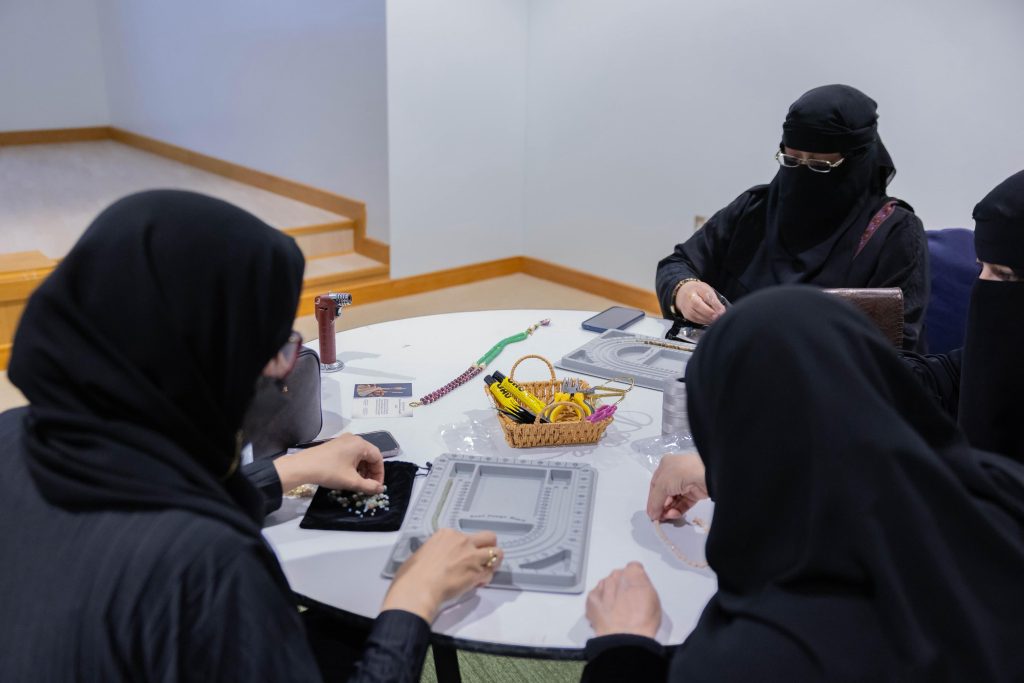
The conference program also included several workshops that discussed the role of modern technologies and artificial intelligence in developing Saudi crafts, the importance of protecting intellectual property for craft products, and promoting sustainable patterns in the digital age, with the participation of an elite group of experts and specialists.
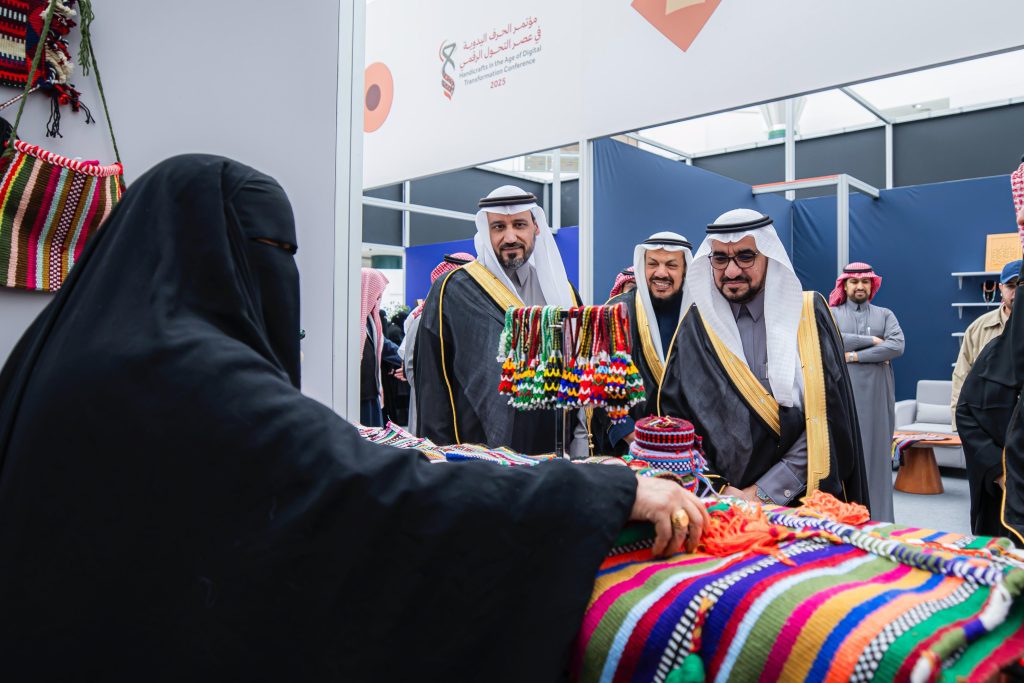
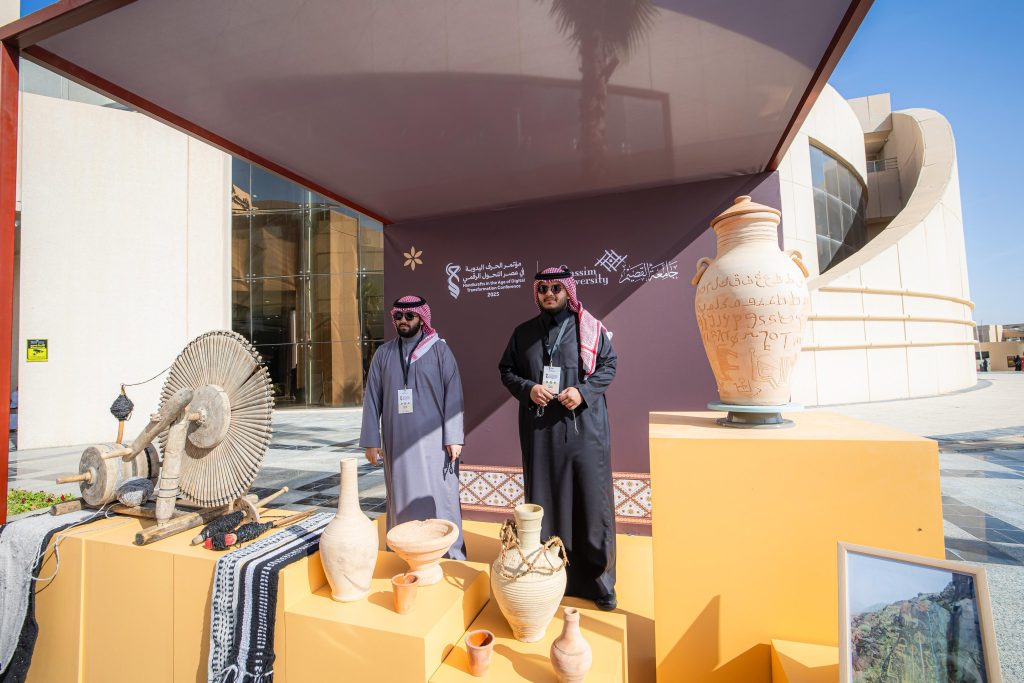
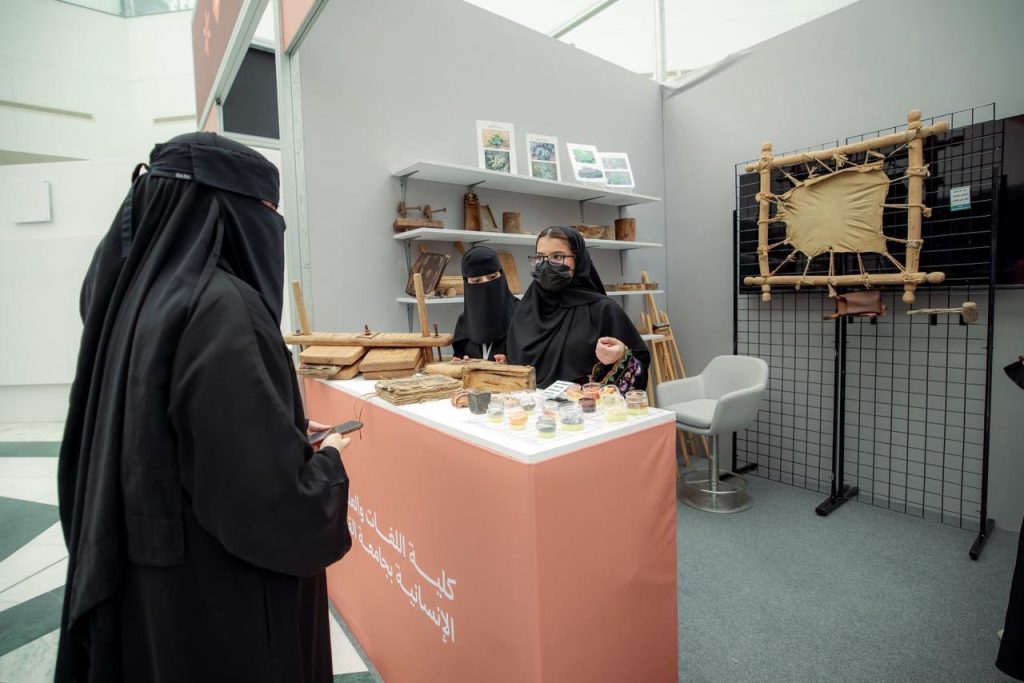
The conference included an accompanying exhibition with the participation of a number of bodies, institutions, civil associations, specialized companies, and a number of craftsmen with their experiences and handicrafts, in addition to the handicraft and artistic products of the College of Fine Arts and Design, to highlight the efforts of these entities in supporting handicrafts and the services they provide, and to shed light on initiatives and practices that contribute to the development and sustainability of the handicraft sector.
