 Official government website of the Government of the Kingdom of Saudi Arabia




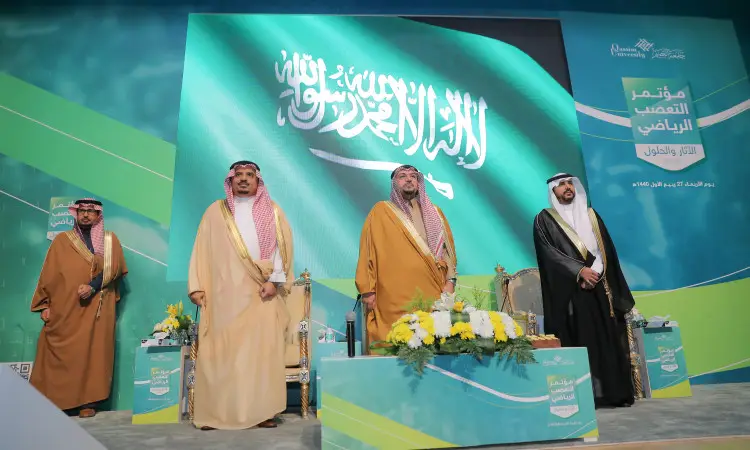
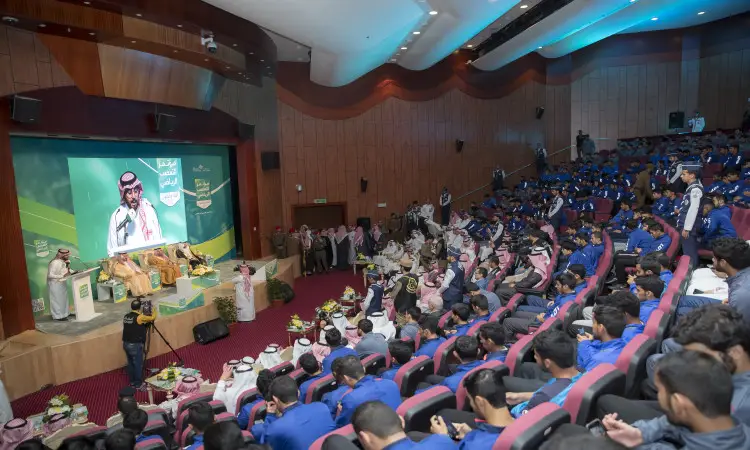
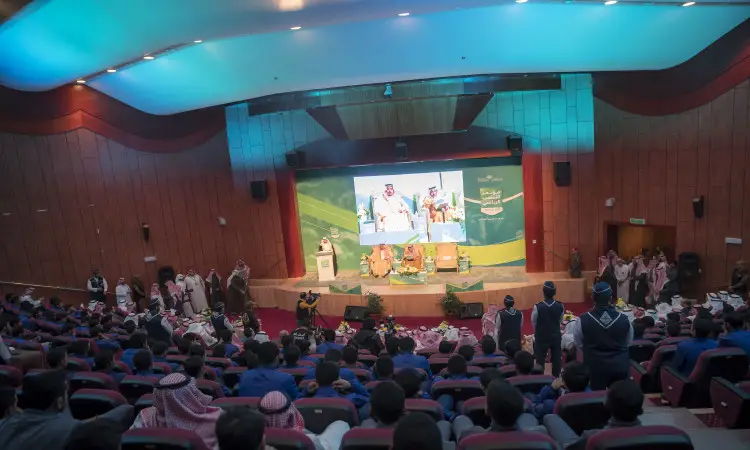
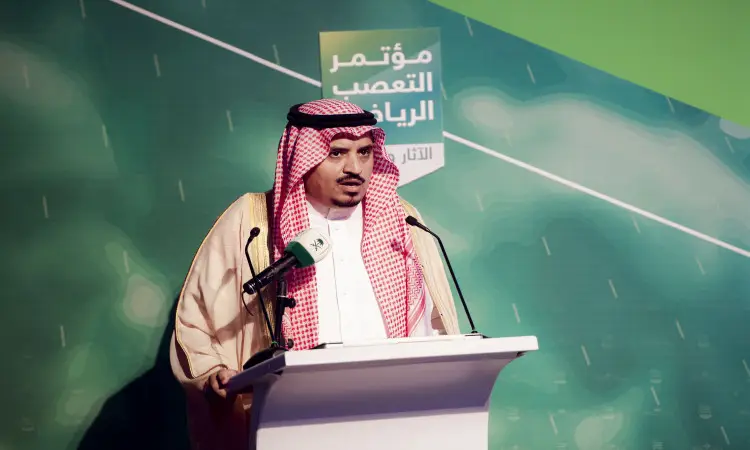
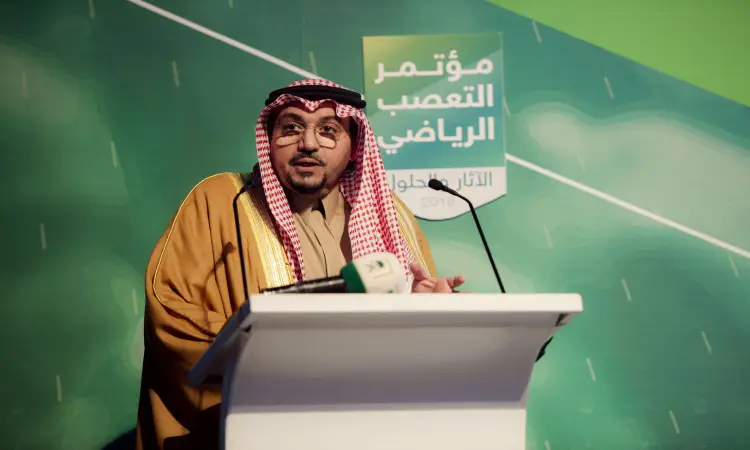
His Royal Highness Prince Dr. Faisal bin Mishaal bin Saud, Governor of Al-Qassim Region, emphasized the importance of sportsmanship among sports fans, club presidents, and officials, as this spirit makes them more accepting of everything, most importantly, accepting the other party. He noted that everyone can support a specific club, but without being hostile to another club, as we are all citizens of one nation, and we are all loving and close families, and we should not be hostile to each other for the sake of a match in any sport.
His Highness expressed his wishes for the phenomenon of sports fanaticism to disappear during his speech at the opening of the conference «Sports Fanaticism: Impacts and Solutions,» which was organized by the university, represented by the College of Education, on Wednesday, March 27, 1440 AH, at the University City campus in Al-Miledaa. The conference was attended by researchers specialized in this field who presented 18 papers addressing all aspects of sports fanaticism, its causes, and ways to confront and curb it. His Highness also expressed his happiness that Qassim University is a pioneer in discussing such a scourge and finding appropriate solutions. He pointed to the responsibility of fathers, club presidents, and officials in setting a good example for their children and raising them on the culture of sportsmanship.
His Highness the Emir of Al-Qassim expressed his confidence that everyone will follow this approach and distance themselves from tension, fanaticism, and animosity towards other clubs. He pointed to the important role of the region's clubs, which have presented many initiatives to combat sports fanaticism and instill patriotism and love for the homeland. This is something that is remembered and appreciated from the region's clubs, whose tasks are not limited to sports aspects but also national and social aspects, such as this forum. He praised the working papers presented from inside and outside the Kingdom, asking Almighty God for success and guidance for all, and extending thanks to His Excellency the President of the University, Professor Dr. Abdulrahman bin Hamad Al-Dawoud, and all university staff and workers for this conference.
On his part, His Excellency Professor Dr. Abdulrahman bin Hamad Al-Dawood, President of Qassim University, expressed his happiness with organizing a conference on sports fanaticism at the university and discussing this negative phenomenon from a scientific perspective. He considered this to be one of the important roles that the university plays towards sports, which has become linked to development in many fields. He emphasized that sports of all kinds play a fundamental and primary role in supporting development and growth in our nation, the Kingdom of Saudi Arabia.
"Al-Dawood" pointed out the importance of practicing these sports in their various forms in an atmosphere of familiarity, love, fair competition, and good morals. He explained that the phenomenon of fanaticism is a scourge that we must address, identify its effects, discuss it, and record its solutions. In conclusion, he will seek to find solutions and proposals that help those involved in sports, help us as scientific, educational, and research bodies, and help supervisory bodies such as the General Sports Authority and other clubs in curbing this phenomenon, which our society cannot accept and cannot stand idly by. We must strive to find appropriate solutions to eliminate it. The General Sports Authority has sought to curb this phenomenon with many programs, and we are collaborating with them to research the scientific and educational aspects of this phenomenon.
Al-Dawood announced at the end of his speech that the university council had approved the transformation of the Department of Physical Education and Sports Sciences into an independent college, which will be launched soon. He extended his thanks to all the organizers of the conference, the participants from inside and outside the Kingdom, all the media representatives, and the attendees, asking God for success and guidance for all.
For his part, the head of the scientific committee, Dr. Sami Al-Sunaidi, Dean of the College of Education, explained that the government of the Custodian of the Two Holy Mosques paid great attention to sports and established sports clubs under the umbrella of the General Sports Authority, and was keen to open physical education and sports science departments in Saudi universities, and Vision 2030 focused on the importance of the role of sports and its place in creating a vibrant society and developing the next generation of young people physically and healthily in order to achieve the desired goals of the vision and increase sports awareness in various groups of society, but those interested in sports may stray away from its true meanings, which are represented in honest competition and competition.
Al-Sunaidi said that this conference aims to emphasize the role of sports competitions in promoting loyalty and loyalty to the homeland and employing sports games in raising the reputation of the Kingdom of Saudi Arabia regionally and internationally, as well as identifying the causes of sports fanaticism and its harmful effects on building a vibrant society, and spreading awareness of the importance of the role of sports in integration, social cohesion and solidarity between individuals, and the effects it reflects on economic, political and social growth. It also contributes to presenting ideas and proposals to reduce sports fanaticism and the means to curb it. Developing and promoting sports ethics in sports and community circles. The conference addresses several themes, the most important of which are the negative effects of this phenomenon on the development of games and sports in the Kingdom, the role of educational and educational institutions, sports clubs, relevant community institutions and regulations in raising awareness and reducing it, especially among sports fans, in addition to the relationship of the media and social media in increasing it, and the role of media codes of ethics and professional media honor charters in combating it and minimizing its effects.
Al-Sunaydi added that the diverse fields of scientific papers submitted for participation in the conference, after review and arbitration by the scientific committee, has reached 24 papers in several fields, including sports, educational, and psychological sciences, as well as sociology, in addition to Sharia sciences, Islamic culture, and systems. Many researchers and academics from within and outside the Kingdom participated, with submissions from outside the Kingdom coming from the Arab Republic of Egypt, Algeria, Sudan, Iraq, and Sweden.
The conference discussed several axes to address the phenomenon of sports fanaticism as follows: Axis 1: The negative effects of sports fanaticism on the development of games and sports in the Kingdom, and its impact on their excellence and ability to compete locally and internationally. Axis 2: The role of educational institutions, sports clubs, and relevant community institutions in raising awareness among members of society, especially sports fans, about the dangers of sports fanaticism, and the importance of promoting sports ethics and fair competition among clubs and their fans. Axis 3: The relationship of media and social media with the increase of sports fanaticism, and the role of media commentary blogs and professional media codes of honor in combating fanaticism and its effects. Axis 4: The role of systems and laws in curbing the phenomenon of sports fanaticism, and the mechanisms and procedures to ensure the activation and implementation of these systems and laws.
