A simple icon, consisting of a series of links surrounded by a circle, is a common symbol for a connection or hyperlink. The lines of the icon are outlined in a dark black color on the background, with the addition of military elements of the Saudi national identity such as the Ghutra, Shamaa, and Saudi Bisht, to reflect the distinctive local character of Qassim University.
Links to official Saudi educational websites end with edu.sa
All links to official educational websites of government agencies in Saudi Arabia end with .edu.sa.
Black leather minimalist gesture tag, black circular grip, topped with a clear depiction of a Saudi tunic with a shamma and aqal, emphasizing the features of the Saudi bisht. This design symbolizes the concept of security and digital data privacy and reflects the identity of Qassim University.
protocol for encryption and security. HTTPS for encryption and security.
Secure websites in the Kingdom of Saudi Arabia use the HTTPS protocol for encryption.
Digital Government Authority

College of Education

Instructional Technology Department
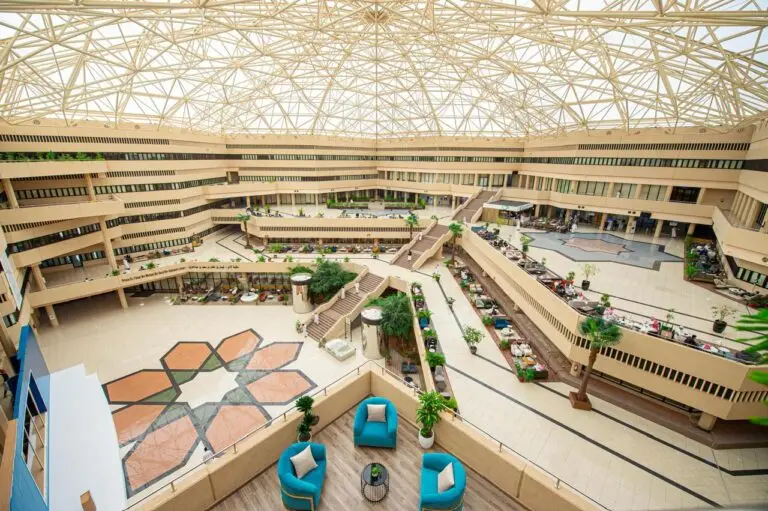
The venue includes a spacious interior foyer characterized by a geometric glass dome roof, surrounded by multiple balconies with seating areas containing blue chairs, and decorated with green spaces; the foyer also witnesses a number of people, many of them employees of the Business Administration Department, gathering around tables spread at different levels, and some attendees wearing the Saudi shemagh or Saudi ghutra as befits the official character of Al-Qassim University.
Head of Department:
Dr. Mohammed bin Hamad Al-Suwailem
Office :
College of Education Building
Phone number :
01603020892
e-mail:
edtech@qu.edu.sa

Vision

The Department of Educational Technologies aims to design, develop, use, manage and evaluate educational technologies effectively and efficiently at all theoretical, applied and ethical levels, follow up developments in the field of educational technologies, participate effectively in research activities and community service, and graduate distinguished scientific and professional leaders who contribute to solving education and training issues in systematic ways.

Mission

The department prepares scientific human resources capable of contributing to the development of the field of educational technology and effectively integrating educational technology into the learning environment. The department supports the provision of a rich learning environment through strategic planning of its academic programs, research activities, and services to the local community. The department also emphasizes ensuring qualitative quality in performance by possessing faculty, staff, students, and infrastructure in accordance with acceptable local and international standards and providing opportunities for professional growth for its members to enhance teaching and learning processes.

Overview

Undoubtedly, the current development of information technology has cast its shadow over all aspects of social, political, economic, and even educational life. In fact, the course of human development in all its dimensions and axes has changed with the evolution of technology, placing on educators the responsibility to leverage this new era, which constantly demands new thinking and new skills to navigate successfully. This development has led to continuous advancements in the educational system of the Ministry of Education in the Kingdom of Saudi Arabia, in line with Vision 2030. Education has thus become a system that scientifically and systematically utilizes information and communication technology tools in a pedagogical manner, enabling individuals to reach a high level of competence that qualifies them to face the challenges of the era and meet the needs of the labor market. From here, the field of educational technology emerges to help fulfill the Kingdom's Vision 2030 in its direction toward employing innovations in information and communication technology within an educational system to build a citizen qualified to face the labor market with professionalism and creativity. Therefore, the Department of Educational Technology, supported by the Deanship of the College of Education and reflecting the vision and mission of Qassim University, offers the community two graduate programs: a Master's program in Educational Technology (courses + thesis) and a Doctoral program in Educational Technology (courses + thesis). Furthermore, the department teaches all courses related to the specialization of educational technology within and outside the College of Education. In this regard, the department extends its thanks and appreciation to the Deanship of the College and the University Administration for their continuous support of the department and the academic programs and activities it offers in the field of specialization.

Academic programs :

Objectives :

1. Developing academic competencies capable of utilizing educational technologies to improve digital environments and enhance teaching and training practices.
2. Produce original scientific research that contributes to addressing national priority educational and technical issues using advanced analytical tools.
3. Building effective partnerships with educational and training institutions to support digital transformation and serve the community and national development.
4. To instill commitment to professional values, scientific research ethics, and intellectual property rights.

Learning outcomes

Knowledge and understanding:
It evaluates theories and research in the field of education in general and educational technologies in particular.
2. Analyzes types of computer programs and interactive interfaces and their applications in the educational process.
3. Classify e-learning and distance learning resources for education and training.
4. Analyzes the foundations and principles associated with developing a new project or product in the field of educational technologies applicable in the educational field.
Skills:
It employs technological innovations to meet educational and pedagogical needs.
2. Designs quality learning environments rich with educational and learning resources in light of instructional design theories and models.
3. Completes an original doctoral dissertation that addresses a research problem in the field of educational technology in light of research and methodological procedures.
4. Utilizes digital information and university library databases in the field of specialization.
5. SPSS software is used for statistical data processing.
Develops computer applications in the development of various educational environments according to educational technology product standards.

Values, autonomy and responsibility:

Adheres to the highest standards of scientific integrity and ethics in research and development.
He practices academic and research leadership and takes full responsibility for scientific decisions.
3. It contributes to community service and the development of educational policies through partnerships and innovation.

Cookies

This website uses special cookies to ensure ease of use, improve your browsing experience, and clarify the terms and policies related to About user privacy. By continuing to browse this website, you acknowledge that you accept the use of cookies and the terms of the Privacy Policy
