 Official government website of the Government of the Kingdom of Saudi Arabia





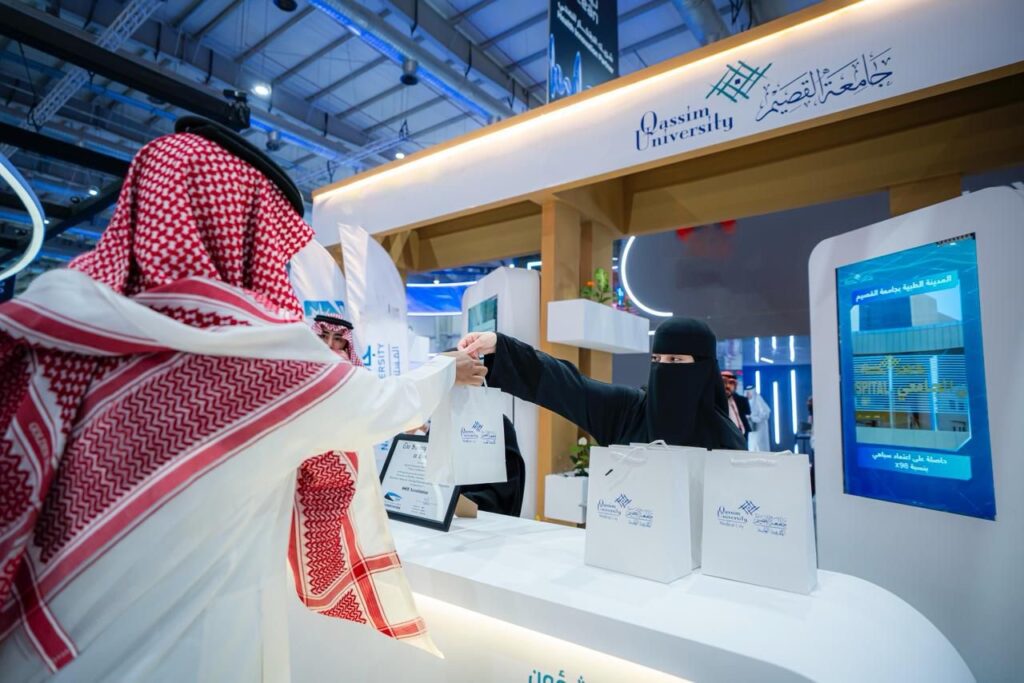
Qassim University concluded its participation in the World Health Forum 2025 on Thursday, October 30th. The four-day forum, held at the Riyadh Exhibition and Convention Center, aimed to showcase the university's developmental role in the health sector, highlight its efforts in educating and qualifying health professionals, and present its advanced services and facilities. This was achieved by demonstrating the university's experience in managing an integrated health and academic system that combines education, community service, and scientific research.
The University Medical City participated in an introductory exhibition, showcasing its efforts in developing health services and medical training. It also highlighted initiatives contributing to the achievement of the Kingdom's Vision 2030 health sector objectives. Furthermore, the exhibition presented the Medical City's projects in digital transformation of health services, simulation training programs, and research initiatives across all health fields. The advancements in clinical and educational services at the City, which serve as a national model combining academic education and professional practice, were also on display. Additionally, there was a focus on distinguished medical procedures and the total services provided to over one hundred thousand beneficiaries by early 2025.
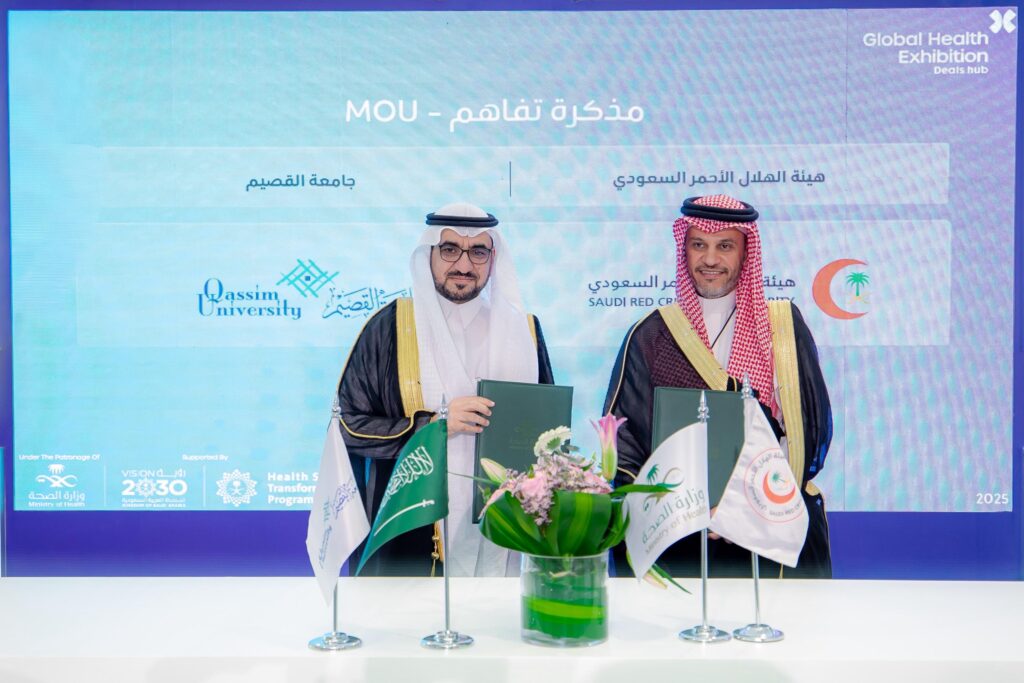
The forum witnessed the signing of four cooperation agreements between the university and several health entities, in the framework of strengthening academic, research, and training partnerships. The university signed a cooperation agreement with the Saudi Red Crescent Authority to enhance academic, research, and training cooperation in the fields of emergency medical services, continuing education, and human resource development. A cooperation agreement was also signed with the Ministry of Health branch in the Qassim region, aiming to activate the partnership in scientific research and applied initiatives related to extending healthy life and supporting quality of life indicators, through the collection and analysis of population health data and the identification of health intervention priorities.
The agreements signed during the university's participation in the forum included a memorandum of understanding between the College of Applied Medical Sciences and the Ministry of Health to develop the optics specialty and support national efforts to improve the quality of vision care in the Kingdom. In addition, there was a cooperation agreement between the College of Nursing and the Saudi Association for Health Simulation to enhance cooperation in research and training, and to participate in the design and presentation of specialized scientific programs and events in multidisciplinary health simulation.
