
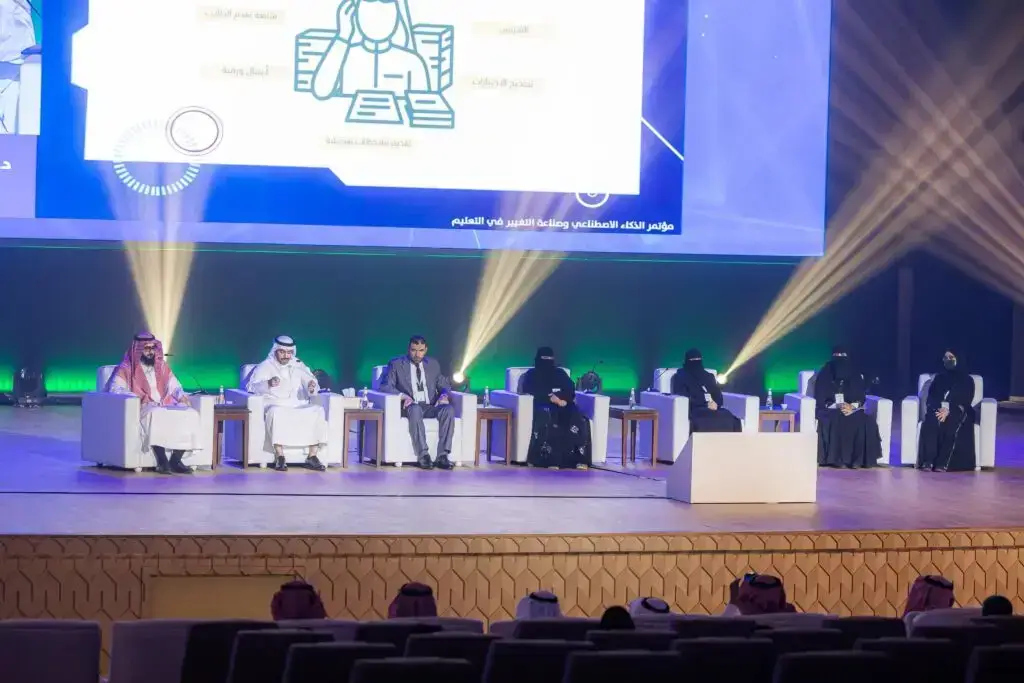
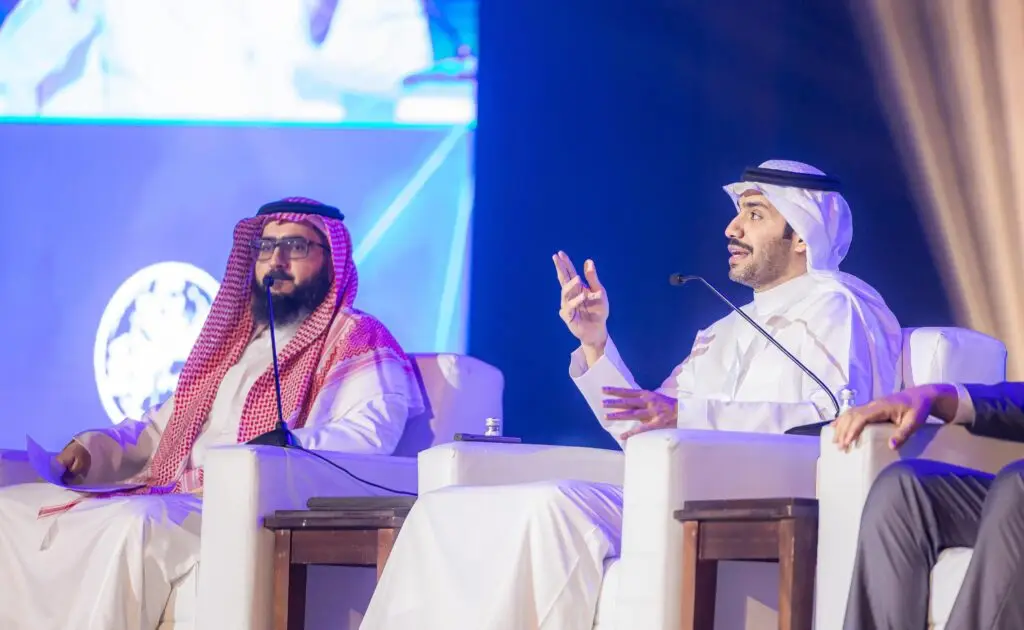
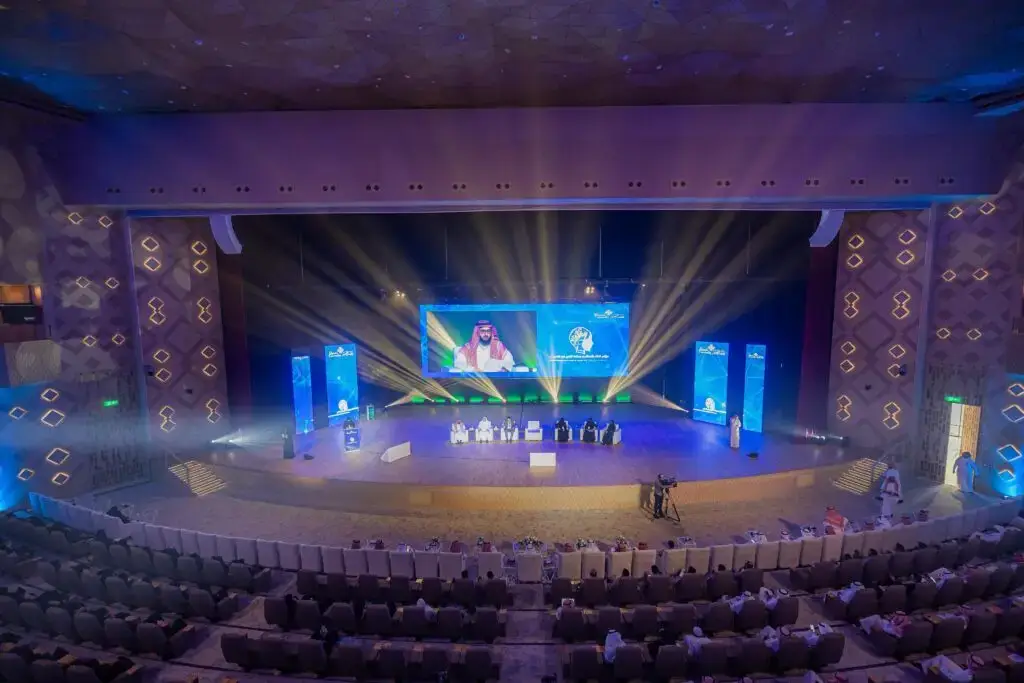
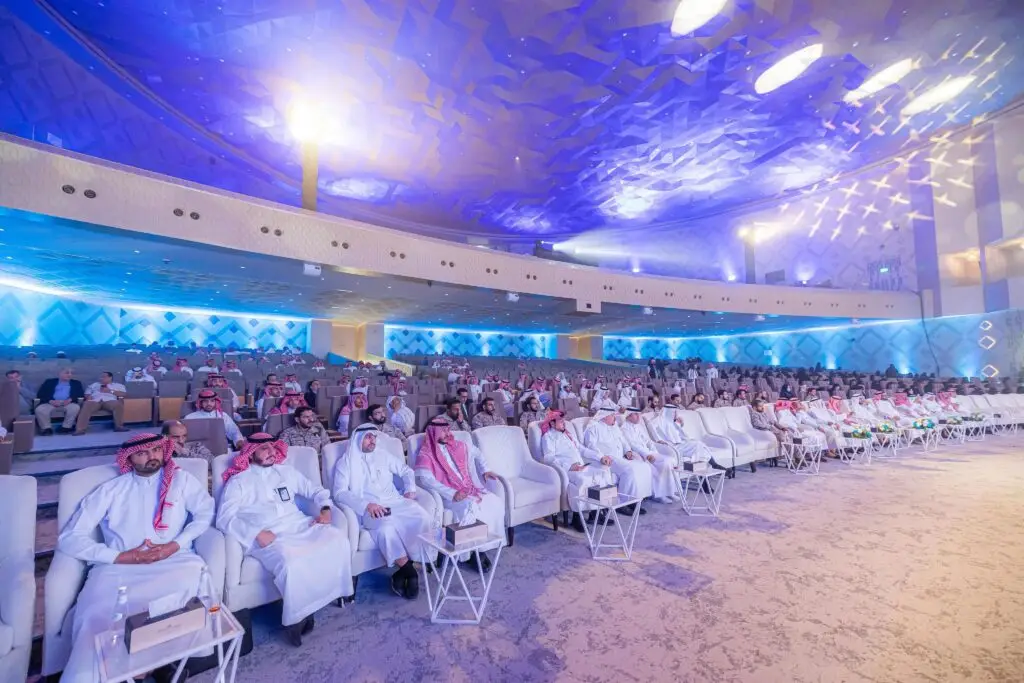
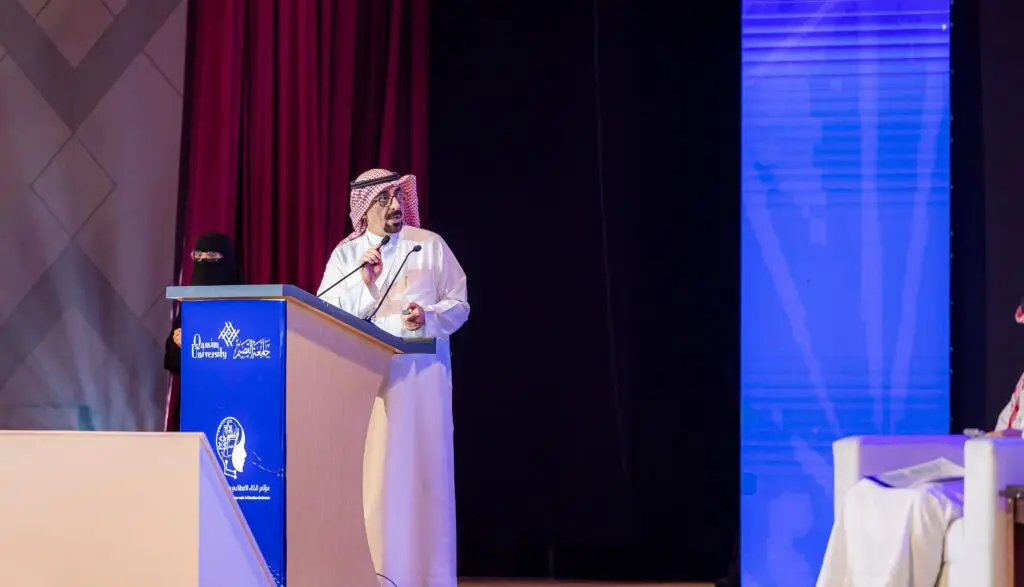
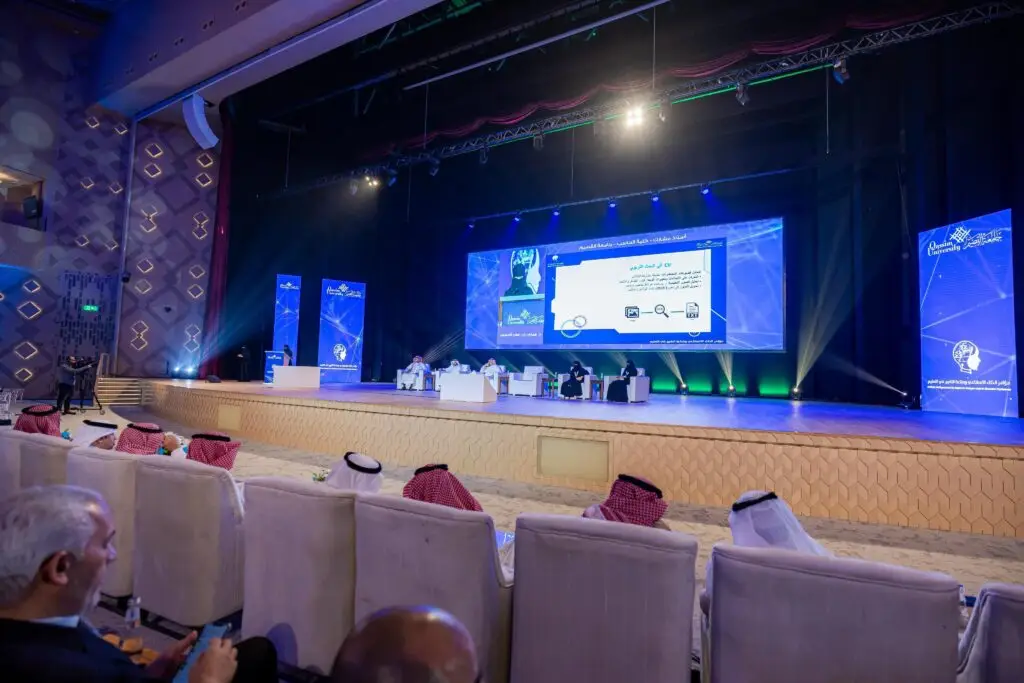


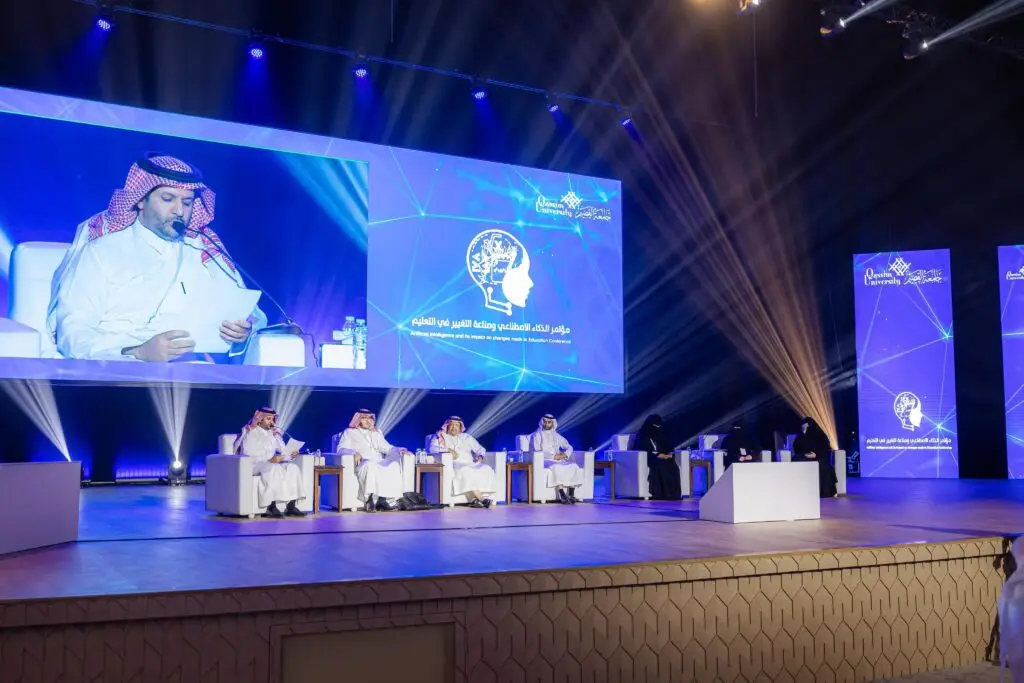
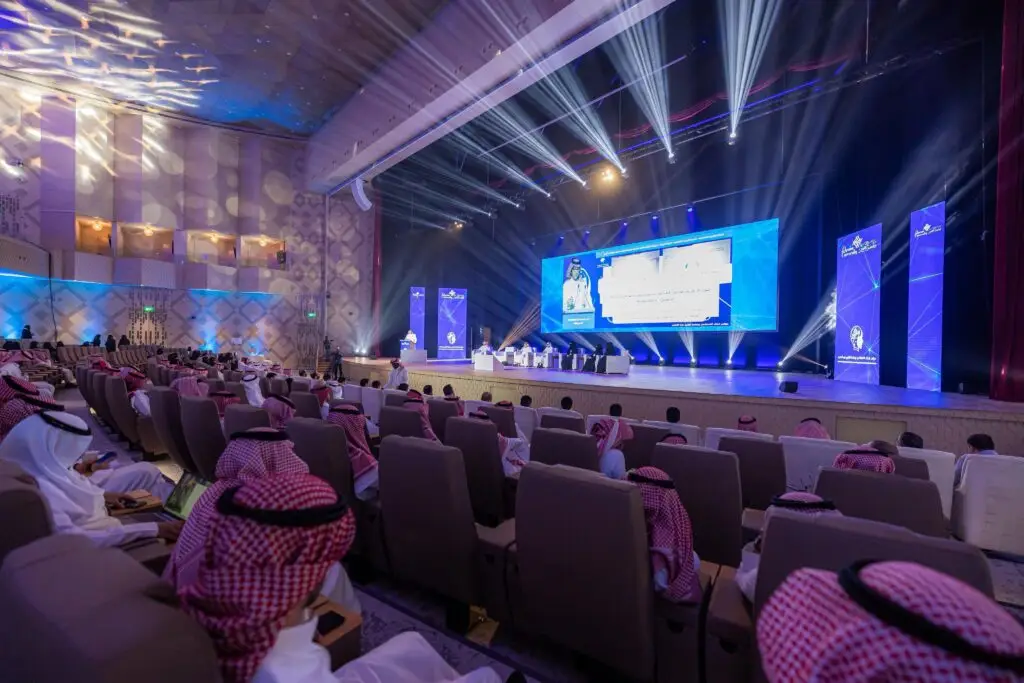
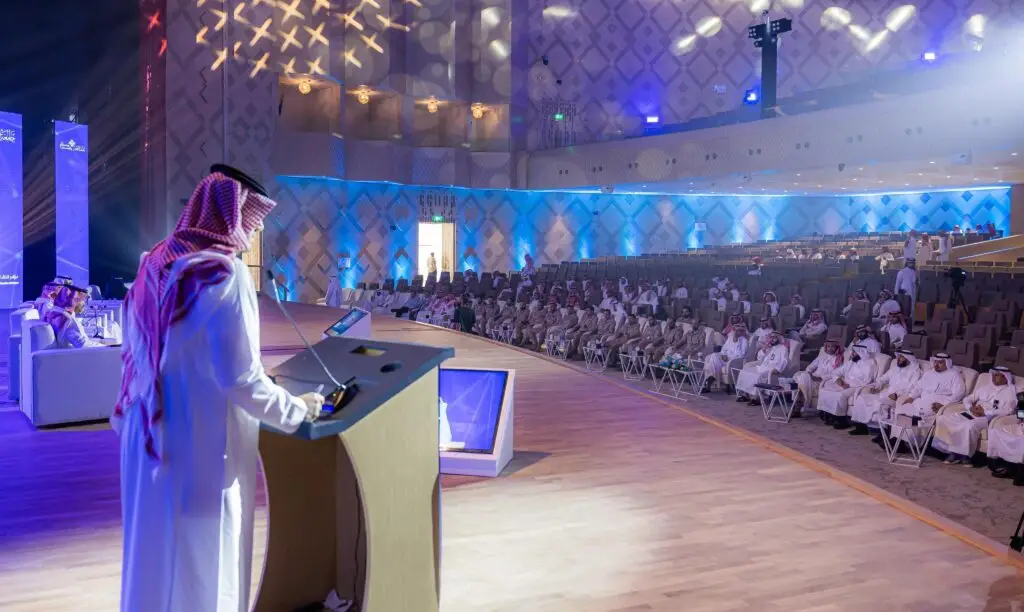
Qassim University, represented by the College of Education, concluded the activities of the conference «Artificial Intelligence and the Industry of Change in Education,» which lasted for two days at the University City Conference Center, with the participation of an elite group of researchers and specialists in the fields of education and artificial intelligence technologies.
The conference is organized as part of the university's efforts to explore the future of education, contribute to addressing educational challenges through artificial intelligence, bridge the digital divide, stimulate research activities, and enhance the use of smart technologies in line with the Kingdom's Vision 2030 and the national cultural and educational context.
Applied insights.
The speakers in the first session discussed the potential of artificial intelligence in developing education and scientific research. Theoretical and applied insights were presented, including a paper that addressed the shift from algorithms to classrooms, a study that reviewed faculty perceptions of utilizing generative applications, and research that evaluated the impact of these technologies on scientific performance from the perspective of Taibah University students. Issues of values and ethical controls were also raised, along with the role of artificial intelligence in developing the professional competencies of female teachers and the training needs of mathematics teachers in artificial intelligence environments.
Towards smart university management.
In the second session, speakers discussed the role of artificial intelligence in developing administrative systems in higher education, through the theme “Hybrid Learning and Modern Trends in Smart Administrative Systems.” A proposed vision for redesigning administrative processes using AI technologies was also presented, aiming to enhance institutional efficiency and keep pace with the requirements of smart governance and digital transformation in universities.
AI Ethics.
The third session focused on the ethical and professional dimensions of using artificial intelligence technologies in educational settings. The speakers discussed the need for regulatory frameworks to govern usage, protect learner privacy, and strike a balance between technological advancement and ethical requirements, thereby preserving the teacher's role and enhancing societal trust in smart education systems.
Improving the quality of learning.
Speakers in the fourth session highlighted the use of artificial intelligence in improving the quality of the educational process. One study discussed the importance of adaptive learning in providing personalized educational experiences that contribute to raising academic achievement, increasing engagement, and achieving educational equity by considering individual differences among learners.
Future recommendations and research aspirations.
The conference concluded with a number of recommendations, most notably emphasizing the importance of building effective educational policies that utilize artificial intelligence according to clear ethical standards, supporting the trend towards developing smart educational tools that accommodate individual and cultural differences, and strengthening the partnership between educational and technological institutions to develop a sustainable artificial intelligence-based educational system.
 Official government website of the Government of the Kingdom of Saudi Arabia How to verify
 Official government website of the Government of the Kingdom of Saudi Arabia How to verify
Links to official Saudi educational websites end with
edu.sa
All links to official educational websites of government agencies in Saudi Arabia end with .edu.sa.

protocol for encryption and security. HTTPS for encryption and security.
Secure websites in the Kingdom of Saudi Arabia use the HTTPS protocol for encryption.
Registered with the Digital Government Authority with no: 20260416249

University
University administration
Other
Administrative
Humanity
pedagogical
scientific
Engineering
Health colleges
