A simple icon, consisting of a series of links surrounded by a circle, is a common symbol for a connection or hyperlink. The lines of the icon are outlined in a dark black color on the background, with the addition of military elements of the Saudi national identity such as the Ghutra, Shamaa, and Saudi Bisht, to reflect the distinctive local character of Qassim University.

Links to official Saudi educational websites end with

edu.sa

All links to official educational websites of government agencies in Saudi Arabia end with .edu.sa.

Black leather minimalist gesture tag, black circular grip, topped with a clear depiction of a Saudi tunic with a shamma and aqal, emphasizing the features of the Saudi bisht. This design symbolizes the concept of security and digital data privacy and reflects the identity of Qassim University.
protocol for encryption and security. HTTPS for encryption and security.
Secure websites in the Kingdom of Saudi Arabia use the HTTPS protocol for encryption.
Digital Government Authority

Faculty members

Content

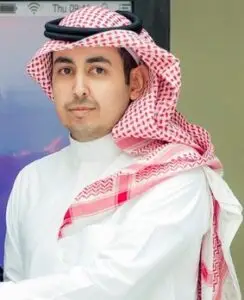
Inside a building, a man dressed in a traditional white uniform with a red and white Saudi shemagh wears a neutral expression as if he were taking a picture of a faculty file at Qassim University.
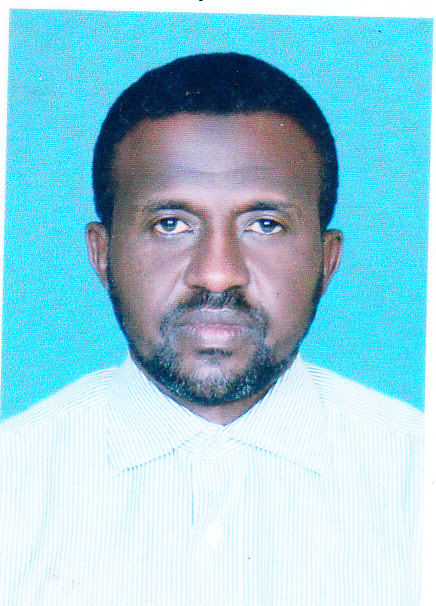
Photo of the faculty member

Ahmed hussien Birima Mohammed

Associate Professor
College of Engineering
section

Personal data

    Scientific qualifications

    • PhD in Health and Environmental Engineering
    • Master in Civil Engineering
    • Bachelor of Science in Civil Engineering

    Research interests

    • water treatment, wastewater treatment and solid waste managment

    Published research

    • Linear and stratified sampling-based deep learning models for improving the river streamflow forecasting to mitigate flooding disaster (2022-02-18)
    • Application of Artificial Intelligence Models for Modeling Water Quality in Groundwater: Comprehensive Review, Evaluation, and Future Trends (2021-10-01)
    • Past, Present and Perspective Methodology for Groundwater Modeling-Based Machine Learning Approaches (2022-01-27)
    • A comparison of various machine learning approaches performance for prediction suspended sediment load of river systems: a case study in Malaysia (2021-10-08)
    • Comprehensive comparison of various machine learning algorithms for short-term ozone concentration prediction (2021-12-29)
    • Development of prediction model for phosphate in reservoir water system based on machine learning algorithms (2022-01-01)
    • Improving sea level prediction in coastal areas using machine learning techniques (2024-07-19)
    • Exploring machine learning algorithms for accurate water level forecasting in Muda river, Malaysia (2023-07-07)
    • Groundwater level forecasting with machine learning models: A review (2024-02-07)
    • Predicting suspended sediment load in Peninsular Malaysia using support vector machine and deep learning algorithms (2022-01-07)
    • Machine learning algorithm as a sustainable tool for dissolved oxygen prediction: a case study of Feitsui Reservoir, Taiwan (2022-03-07)
    • Predicting streamflow in Peninsular Malaysia using support vector machine and deep learning algorithms (2022-03-10)
    • Artificial neural network model with different backpropagation algorithms and meteorological data for solar radiation prediction (2022-06-21)
    • Water level prediction using various machine learning algorithms: a case study of Durian Tunggal river, Malaysia (2022-12-31)
    • Application of Soft Computing in Predicting Groundwater Quality Parameters (2022-02-28)
    • Integrated Water, Energy, and Carbon Footprint Analysis of Higher Education Campuses in Arid Environments: Sustainability Insights (2026-05-12)
    • Ozone Concentration Forecasting Leveraging Regression Machine Learning: A Case Study in Klang Valley, Malaysia (2024-02-09)
    • Waste quantification, characterization, and potential for recycling and energy production in universities (2024-12-31)
    • A Cross-Sectional Study of Knowledge, Practice, and Management of Solid Waste Segregation in Higher Educational Institutions: A Case Study in KSA (2023-03-01)

    Teaching materials

      Cookies

      This website uses special cookies to ensure ease of use, improve your browsing experience, and clarify the terms and policies related to About user privacy. By continuing to browse this website, you acknowledge that you accept the use of cookies and the terms of the Privacy Policy