 Official government website of the Government of the Kingdom of Saudi Arabia




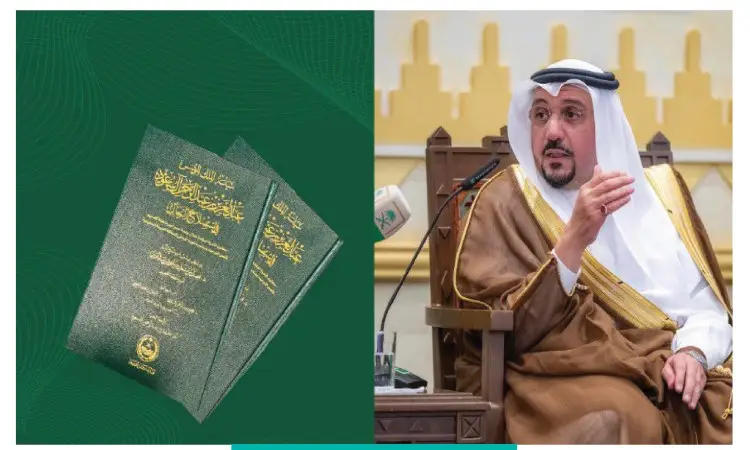
The university has published a book on the historical era of the Kingdom's founding titled "The Policy of the Founding King Abdulaziz bin Abdul Rahman in Reforming Men," prepared by a group of professors from the History Department at the College of Languages and Humanities at the university. The introduction was written by His Royal Highness Prince Faisal bin Mishal bin Saud bin Abdulaziz, Governor of the Qassim Region. The book was printed by the university and is 164 pages long, published by Dar Al Obeikan Publishing.
The book, which comprises three chapters, was prepared by a selection of university history professors: Professor Dr. Ahmed bin Abdulaziz Al-Bassam, Dr. Sulaiman bin Mohammed Al-Athoni, and Dr. Mohammed bin Abdulrahman Al-Salama. Professor Dr. Khalifa bin Abdulrahman Al-Masoud conducted the scientific review of the book. The first chapter is titled "King Abdulaziz's Leadership Qualities and the Impact of His Pardon and Forgiveness in Reforming Men," the second chapter is titled "King Abdulaziz's Selection and Follow-up of Men," and the third chapter is titled "The Effects of King Abdulaziz's Reforming of Men.".
The book's introduction by His Highness the Prince of Al-Qassim region touched upon the book's concept, which stemmed from His Highness's interest in the biography of the founding King and his keenness to highlight it with new historical readings. This book came as a result of one of His Highness's weekly sessions at Al-Tawhid Palace, which discussed the founder's methodology in reforming men, with the participation of an elite group of specialized academics. It is also a product of a joint effort with the university, which undertook the printing and release of the book to the reader, in order to introduce his methodology – may God have mercy on him – in dealing with men and his skill in attracting them to his side after they had been on the opposing side.
His Royal Highness Prince Dr. Faisal bin Mishaal bin Saud bin Abdulaziz says in his foreword to the book: "Through contemplating the biography of the Founder - may God have mercy on him - and recognizing his stature, I became drawn to delving deeper into his history, interested in highlighting his approach and achievements. From this perspective, I was keen to host numerous historians and specialists in the weekly meetings of Qasr Al-Tawhid to talk about the qualities of this great man, and to highlight his achievements and struggle during the stages of unifying this great entity; to be an example for us and for future generations; through clear models, evident examples, and witnessed stances; in which he employed with penetrating insight the policy of rehabilitating men, and giving opportunity to every seeker of truth and moderation; through this policy, he was able to reform opponents and those who deviated from the right path; not only by preventing their hostility but also by returning them to the path of truth and transforming them to a positive track, changing their trajectory from enemies and combatants to instruments of goodness and construction, so they became great leaders and pioneers in the honor of representing and building the nation internally and externally.".
The book illustrates an aspect of the biography of King Abdulaziz as a role model for a balanced ruler, characterized by Islamic qualities and the noble attributes of the Prophet Muhammad in good conduct and following the path of forgiveness when able. This is achieved by tracing his eventful life, which has been affirmed by reliable written sources and recounted by his contemporaries, both Arab and foreign. Consequently, many individuals were rehabilitated and their paths diverted to work in building the Kingdom of Saudi Arabia after having been among its adversaries.


