 Official government website of the Government of the Kingdom of Saudi Arabia




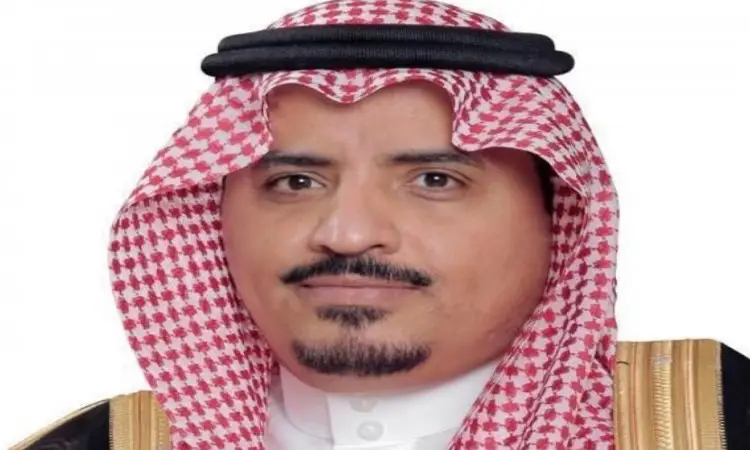
His Excellency the President of the University, Professor Dr. Abdulrahman bin Hamad Al-Dawood, affirmed that the Royal Order stipulating that February 22nd of each year shall be known as "Founding Day" and become an official holiday, reaffirms the importance of connecting the contemporary generation to the glorious history. This is to revive the memory of the pivotal historical moment when the political thought of the First Saudi State transitioned from a limited urban center (Diriyah) to the horizons of a great state (Saudi Arabia). Subsequently, it became a state of great international standing, transforming the region from a stage of disintegration and chaos to a stage of maturity and organization.
His Excellency said: it has been three centuries since Imam Muhammad bin Saud - may God have mercy on him - announced the establishment of the First Saudi State, which was based on several principles, the most important of which are faith in the Quran and Sunnah as a methodology and constitution, establishing security and stability, achieving justice, unifying the word and the ranks, and spreading knowledge and science in society. Then it struggled to keep its principles alive and prove to everyone that it is a stable state, despite all the circumstances that tried to deter it from continuing its ambitious project.
And whoever reflects on the three phases of the Saudi state will see the extent of the imams' and kings' belief in those foundations and pillars, which have remained one of the most important principles in the state's formation, whether in the first phase that began with the era of establishment at the hands of Imam Muhammad bin Saud in (1159 AH), or the second phase that began with the era of Imam Turki bin Abdullah in (1240 AH), or the third phase that began in (1319 AH) at the hands of the founding King Abdulaziz bin Abdul Rahman Al Saud – may God have mercy on them all.
His Excellency explained, saying:
The issuance of this noble royal order comes within the framework of the interest of the Custodian of the Two Holy Mosques, King Salman bin Abdulaziz Al Saud, and his Crown Prince, His Royal Highness Prince Mohammed bin Salman bin Abdulaziz - may God protect them - in commemorating the blessed anniversary of the founding of this blessed nation and connecting the present with the past through recalling the sacrifices made by the generation of builders who sacrificed their lives, wealth, and time to build the edifice of this glorious homeland.
And it is incumbent upon contemporary generations, especially my sons and daughters, the students, to be proud of their rich past, to comprehend the magnitude of the sacrifices, and to play their role in continuing the journey so that this nation remains towering, honored, and prosperous, built by the hands of its sons and daughters. They will be capable of this, God willing.
Asking the great Lord to protect this nation, land and sky, leadership and people. He is the All-Hearing, the All-Responding.
