 Official government website of the Government of the Kingdom of Saudi Arabia




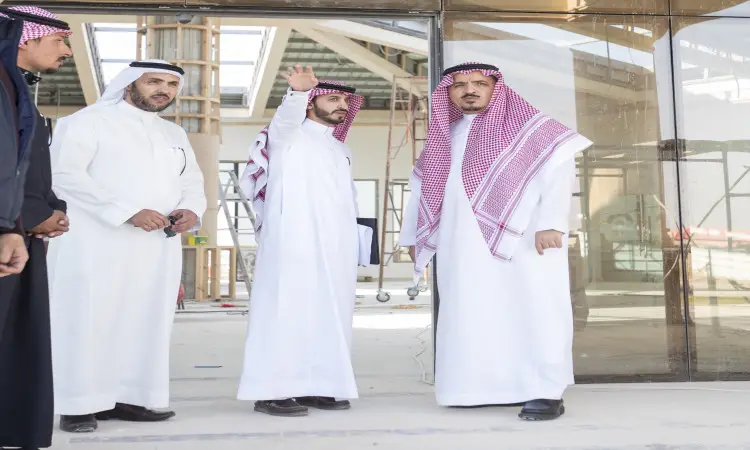
The day before yesterday, His Excellency Prof. Abdulrahman bin Hamad Al-Dawood, President of the University, inspected the "University Driving School" project, which is the first of its kind in the Al-Qassim region and aims to provide driving instruction and training services for women. The decision to establish the school was issued in response to the royal decree aimed at empowering Saudi women and activating their role in society. The school building covers an area of approximately 1,800 square meters and can accommodate more than 180 trainees at a time. The project is currently 95% complete.
Dr. Majed Al-Enezi, supervisor of the driving school at the university, stated that the establishment of the school came as part of the university's efforts to achieve a strategic goal, which is to serve issues related to women and families, due to its highly positive social and economic outcomes, and to solve many obstacles faced by women in terms of difficulty in commuting to and from their workplaces or educational institutions. It also aims to provide high-quality driving education and training services for women and men, in addition to providing an excellent educational system and content, contributing to raising awareness about road safety and traffic safety among drivers, and providing a generation of experienced Saudi female instructors in driving education and training.
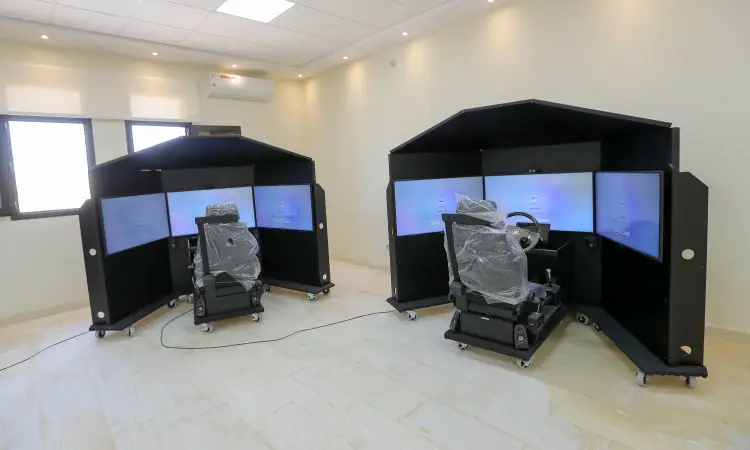
Al-Anzi added that the building includes a special department for the Traffic Department to issue driving licenses, a number of classrooms equipped with the latest technologies, simulator rooms, testing halls, and 20 training cars equipped with additional brakes and mirrors for instructors, in addition to administrative offices, a nursery, and a medical clinic. The possibility of future expansion and increasing the capacity of the school has been taken into consideration. The general site area is estimated at approximately 10,000 square meters and can accommodate more than 500 parking spaces for school visitors, in addition to 150 parking spaces for school staff.
Regarding the school's field, Al-Enezi confirmed that the school's location was chosen within the university campus to take advantage of the campus's internal roads for training, accommodating the largest number of trainees. In addition to the vast roads within the university campus, training within the campus provides a safe environment for real-life driving, unlike training in virtual environments. He pointed out that the school's field was designed by traffic engineering experts, with an area of approximately 30,000 square meters. It contains 21 traffic skills that test the trainees" driving abilities.
Al-Anzi added that the school's adopted curriculum is the "Amnah" program for driver education, which provides integrated content of videos and advanced display tools, and the use of interactive educational tools in teaching and training. The Amnah program is an accredited program for teaching beginners to drive by the Canadian Ministry of Transportation and the General Directorate of Traffic in the Kingdom. The Amnah program consists of 30 hours of instruction, including two hours in simulation labs, eight hours in classrooms, and 20 hours of in-car training. The number of hours has been adjusted to comply with the traffic management standards in the Kingdom. The curriculum also includes training on simulators before actual vehicle driving training.
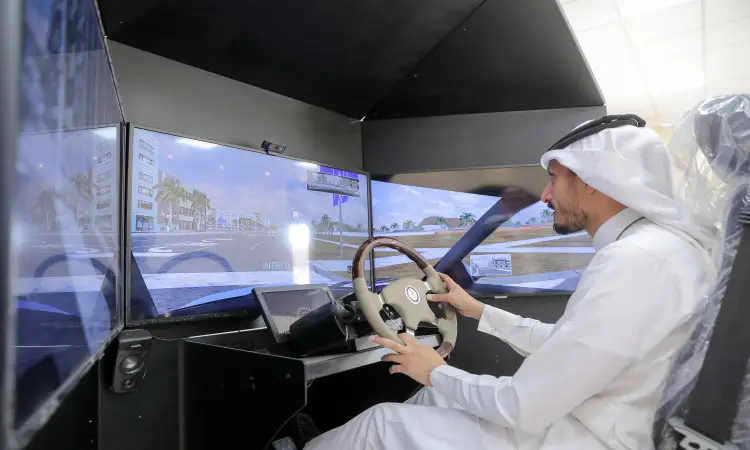
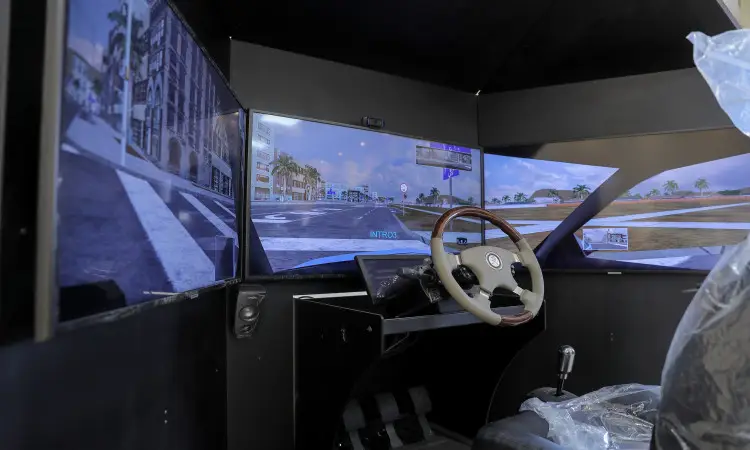
The university also provided the school with state-of-the-art driving simulators that mimic real-life driving. These simulators include all the components found inside a car, such as a driver's seat, steering wheel, control panel, ignition key, and seatbelt. The occupant is surrounded by screens that display an interactive virtual reality, simulating over 45 driving scenarios, including highway driving and off-road driving. They also simulate various weather and geographical conditions, such as rain or snow, that a driver might encounter. A key feature of the simulator is its ability to provide interactive instructions to the occupant, as well as to record, track, and evaluate the trainee's performance. This allows for a review and clarification of the mistakes the trainee made during their driving session.
Al-Anzi explained that global operating companies were contracted for several schools in North America. These companies developed and prepared preliminary tests to assess the candidates" suitability to become instructors and their ability to withstand work pressures. This was followed by the development of an intensive training program, accredited by the General Directorate of Traffic, aimed at developing competent driving instructors capable of delivering a driving curriculum in classrooms, simulators, and behind the wheel. The program included a wide range of topics, and 30 female instructors have been trained and qualified so far.


