 Official government website of the Government of the Kingdom of Saudi Arabia




4
4. Quality education

SDG 4: Quality education
Lifelong Learning Metrics
Does your university have a policy to ensure that access to these activities is available to everyone regardless of race, religion, disability, immigration status, or gender?
Qassim University’s Pursuit of SDG 4: Enhancing Quality Education in the Saudi Arabian Community
Sustainable Development Goal 4 (SDG 4) focuses on ensuring inclusive and equitable quality education and promoting lifelong learning opportunities for all. Qassim University, situated in Saudi Arabia, recognizes the significance of SDG 4 and has implemented comprehensive initiatives to enhance the quality of education within the local community and beyond.
Accessible Higher Education
Qassim University's commitment to the Fourth Goal is demonstrated through the provision of accessible higher education. The university offers a wide range of undergraduate and graduate programs that cater to different disciplines and fields of study. By providing accessible education, the university contributes to raising the level of knowledge and skills of community members.
Innovative teaching methods
The university pays great attention to innovative teaching methods that enhance the learning experience. Qassim University integrates technology, interactive tools, and hands-on training to enhance students' critical thinking skills and ensure that they receive a balanced education that prepares them to face the challenges of the modern era.
Faculty Development Programs
Qassim University is committed to improving the quality of education through continuous development programs for faculty members, providing them with opportunities to enhance their teaching skills, stay up-to-date with the latest teaching methods, and actively contribute to improving the educational experience.
Scientific research and curriculum development
The university's interest in the fourth goal extends to its focus on scientific research and curriculum development. Faculty members are involved in research projects that contribute to the development of knowledge in various fields, which enriches the curricula and ensures their compatibility with international academic standards.
Community outreach and educational counseling
Qassim University actively engages with the local community through its community outreach programs, offering workshops, seminars and training courses that help community members gain new skills and knowledge, promoting lifelong learning outside the traditional classroom.
Promoting lifelong learning
Qassim University recognizes the importance of continuous learning, and therefore offers training programs and courses for individuals of different ages, which contribute to personal and professional development and are in line with the principles of the fourth goal.
Supporting underrepresented groups
Qassim University seeks to provide equal educational opportunities for all, including underrepresented groups. It offers scholarships, financial aid, and support programs to ensure that individuals from diverse backgrounds have access to quality education, promoting inclusivity and equity.
Collaboration with educational institutions
The university cooperates with local and international educational institutions to exchange best practices and enhance the quality of education, which contributes to educational innovation and the development of academic partnerships that benefit the educational landscape locally and internationally.
Qassim University's commitment to Goal 4 is evident in its multiple efforts to enhance the quality of education in Saudi society. By providing accessible higher education, encouraging innovative teaching methods, developing faculty, supporting scientific research, engaging with the community, and promoting lifelong learning, the university plays a pivotal role in empowering individuals and supporting sustainable development.
UQU signs contracts with the Education and Training Evaluation Authority to carry out evaluation studies for the accreditation of 17 academic programs
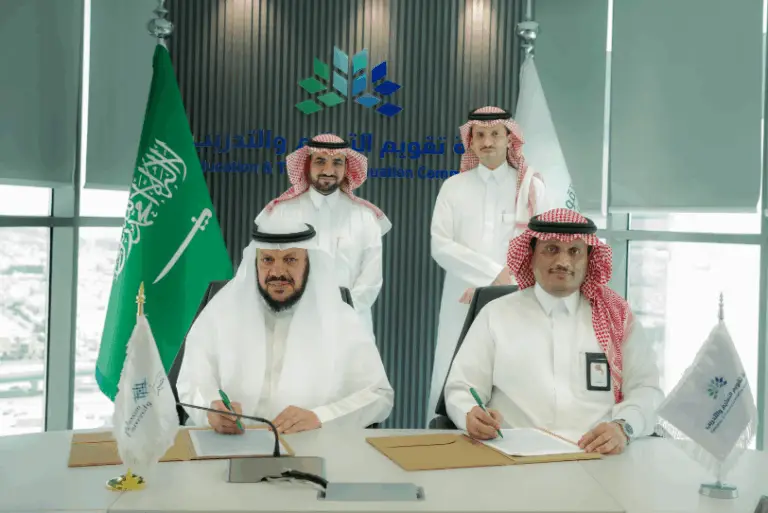
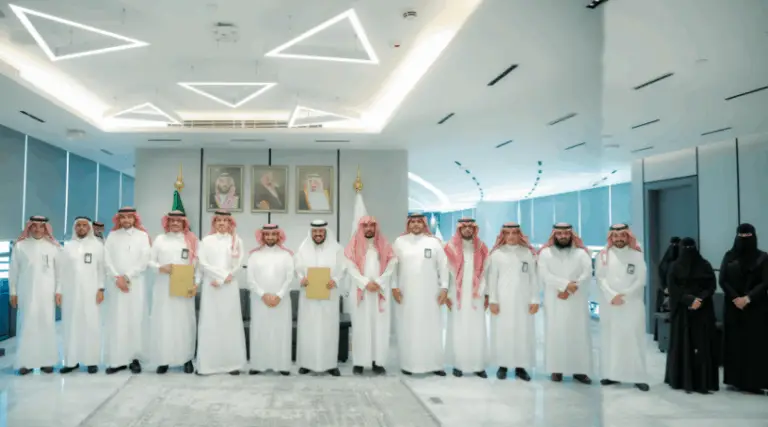
On Wednesday, October 9, 2024, His Excellency the President of the University, Prof. Dr. Mohammed bin Fahad Al-Sharekh, and His Excellency the President of the Education and Training Evaluation Commission, Dr. Walid bin Mohammed Al-Saleh, witnessed the signing of contracts for the implementation of evaluation studies for the accreditation of (17) academic programs of the university programs, within the framework agreement for the accreditation of 92 academic programs of the university, signed by the Executive Director of the National Center for Academic Accreditation (Etimad), Prof. Mohammed bin Saleh Bashmakh, and the Vice President for Educational Affairs, Dr. Fahad bin Sulaiman Al-Ahmad, in the presence of deans of the concerned colleges and representatives of Imdaad, as well as the university's representatives.
The programs signed by the College of Shari'ah are the following undergraduate programs: Bachelor of Readings, Bachelor of Shari'ah, Master of Regulations, and PhD programs: The College of Applied Medical Sciences has a Bachelor of Optometry program and a Public Health program, the College of Pharmacy has a Bachelor of Pharmacy program, the College of Computer Science has a Bachelor of Computer Engineering program, the Information Technology program, the Computer Science program, the Master of Science program, the Computer Science program, the Cyber Security program and the Information Technology program, and the College of Arts and Design has a Bachelor of Fashion Design program and a Master of Fashion Design program.
The university is one of the universities that received full institutional accreditation for the second time from the Education and Training Evaluation Commission's "Etimad" center, and the university has 68 program accreditations, including 53 programs accredited by the Commission and 15 internationally accredited academic programs.
The university works in cooperation with the Commission in accordance with its mission and objectives to contribute to raising the quality and efficiency of education and training to the highest international levels in order to contribute to achieving the goals of Saudi Vision 2030 and the objectives of the Human Capacity Development Program, which includes objectives related to the programmatic accreditation of universities.
Open Educational Resources
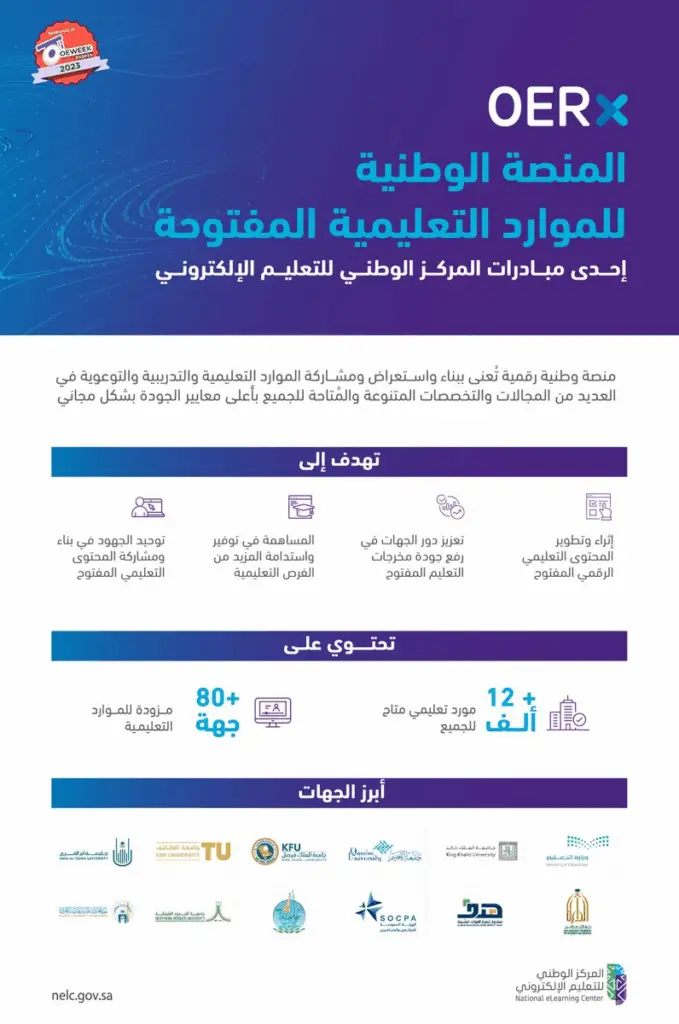
We are proud to be one of the leading providers of participatory content for a knowledgeable and inclusive world that promotes the values and principles of participatory content. #Open Educational Resources Via the National Open Educational Resources Platform #OERx that opens up possibilities to develop skills in various disciplines reliably and sustainably.
Access to the Lexicomp electronic medical database
General Directorate of Library Affairs at #Qassim University Access to the electronic medical information base (Lexicomp), as of April 2023, through the MyQU platform on the university's official website.
With the participation of more than 600 students from inside and outside the university The University organizes the "Ninth Internship Course" for medical students over 3 days
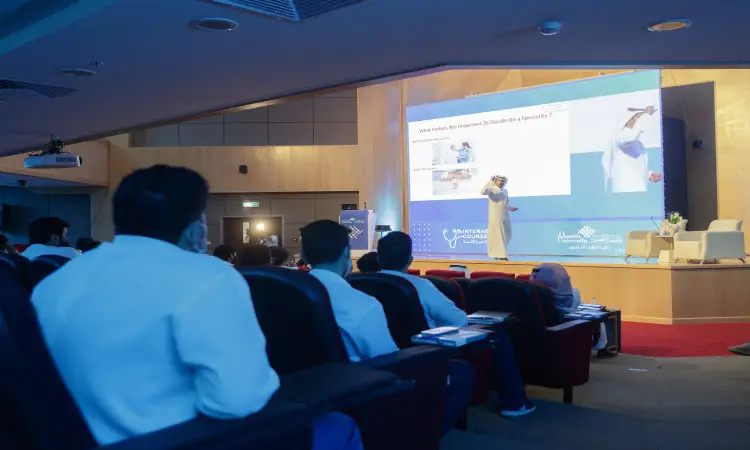
The university, represented by the College of Medicine, is organizing the ninth internship course for medical students, which started yesterday, Thursday, 30/7/1443 AH, and will continue for three days at the external clinics theater, in the presence of a group of doctors at the university, and more than 600 students from inside and outside the university who participate in attendance and remotely in the activities of the course.
This course aims to prepare medical students for the labor market environment, introduce them to the available specialties, help them choose a specialty, provide them with the professional skills needed to enter the health work environment, and enlighten them on the modern requirements of the Health Specialties Commission.
For his part, Dr. Faisal Al-Muhailab, Dean of the College of Medicine at Qassim University, explained that the college seeks to crystallize the Kingdom's vision based on combining originality and modernity by providing students with the scientific and cognitive foundation, scientific and practical skills related to medical sciences, spreading knowledge and spreading health awareness, by focusing on courses that allow graduates in medical specialties to clearly define their path, prepare them for the labor market and provide them with professional skills to enter the health environment, explaining that it is for this reason that such courses are held by the college in its ninth session.
He added that the College of Medicine at Qassim University is one of the leading and distinguished medical colleges in the field of medicine and medical education in the Kingdom of Saudi Arabia. Since the beginning of its medical career to this day, it is witnessing a dynamic movement to move towards the best in embodying the university strategy, building community partnership, building a comprehensive quality system, and achieving academic accreditation to reach excellence and global leadership, noting that the college seeks to develop the skills and abilities of its graduates to add to the labor market and the health field in the Kingdom of Saudi Arabia.
UQU President inaugurates "Wai2" exhibition to raise awareness of the harmful effects of drugs and ways to prevent them

His Excellency Prof. Abdulrahman bin Hamad Al-Dawood, President of the University, inaugurated today, Monday, 18/10/1444 A.H., the "Wai 2" exhibition to raise awareness of the harmful effects of drugs, organized by the Deanship of Student Affairs, for 3 days, in the presence of His Excellency the UQU Vice President, Dr. Muhammad bin Abdulrahman Al-Saawi, His Excellency the UQU Vice President for Educational Affairs, Dr. Muhammad bin Fahad Al-Sharekh, His Excellency the UQU Vice President for Planning, Development and Quality, Prof. Khaled bin Bani Al-Harbi, and several deans of faculties and deanships in the main hall of the University City.
UQU President toured the participating corners of the exhibition, which aims to familiarize students and visitors with the dangers of drugs, their harmful effects and the negative impact of their use, as well as ways to treat them and educate them on how to prevent them and avoid falling into their dangers.
The exhibition includes the participation of a number of organizations, namely: Division of Preventive Security of Psychotropic Substances at the Ministry of National Guard in Qassim, Qassim Health Cluster, Saudi Charitable Society for Poison Prevention, Erada Mental Health Hospital, in addition to the participation of a number of organizations within the university, namely: The University Medical City, the College of Pharmacy at the main headquarters, the College of Pharmacy in Onaiza, the Arshadni Program, the Department of Guidance and Counseling at the Deanship of Student Affairs, and the Student Health Volunteer Club.
The "Wai2" campaign also included student exhibitions, awareness campaigns, a number of workshops, in addition to various volunteer initiatives.
Umm Al-Qura University launches the activities of the fourth summer club virtually
The university, represented by the Deanship of Student Affairs, launched the programs and activities of the fourth summer club, which is held virtually, and continues for five weeks remotely with the participation of male and female students from all educational stages (primary, middle, secondary and university), as the club's activities aim to achieve maximum benefit for students and exploit the summer vacation time with useful and entertaining programs and increase digital learning.
The activities of the summer club vary and include six tracks, namely: The skills track, which aims to develop participants' skills in calligraphy, drawing, photography and some manual skills; the educational track, which aims to add educational experiences for participants; the technical track, which aims to provide participants with the basics of programming and making applications; the entertainment track, which includes recreational programs and games offered to the club's participants; the competitions track, such as the club's general competitions, the "Who is the Martyr" competition, and the major cultural competition; and the general programs track, which targets the club's participants and others.
For his part, the Dean of Student Affairs and Executive Director of the Summer Club, Dr. Mohammed Al-Ajlan, confirmed that the number of male and female students enrolled in the club is witnessing a significant increase day by day, adding that the work system within the club is divided into a number of groups, each group has a supervisor and trainer who move between several programs daily with the members, and at least three rooms through distance learning programs, where activities are divided between young men and women according to their ages.
Al-Ajlan explained that the university's belief in its societal role towards activating the energies of all youth groups, whether male or female students, has resulted in investing these energies during the summer vacation, wishing the club members success and that its activities and programs will benefit those enrolled in it from all stages of education.
The University Veterinary Hospital Organizes a Training Course in Cooperation with the Camel Club to "Detect Tampering"
In continuation of the fruitful cooperation between the two sides, the university, represented by the University Veterinary Hospital, in cooperation with the Camel Club, is organizing a training course to detect tampering in camels over a period of one month, starting from the first of Muharram 1443 AH, at the headquarters of the University Veterinary Hospital in order to raise the efficiency of veterinarians about the different methods in camels and methods of detecting them visually and using advanced clinical and laboratory equipment.
For his part, Dr. Abdullah Al-Hawas, Director of the Veterinary Hospital at the University, said that after completing this training program, the participants in this course are expected to acquire the ability to learn about the different methods used to tamper with camels and the different injection sites, and will have the ability to evaluate them and identify the infectious diseases that are similar to tampering and how to differentiate between them.
Al-Hawas added that the trainee will also learn about the negative effects of hormonal injections and how to detect them, as well as how ultrasound works and how to use it to examine healthy tissue and detect tampering in camels, in addition to learning about the work of the thermal camera, X-ray equipment, and laboratory equipment.
University participates in the Qassim Book Fair with a number of publications
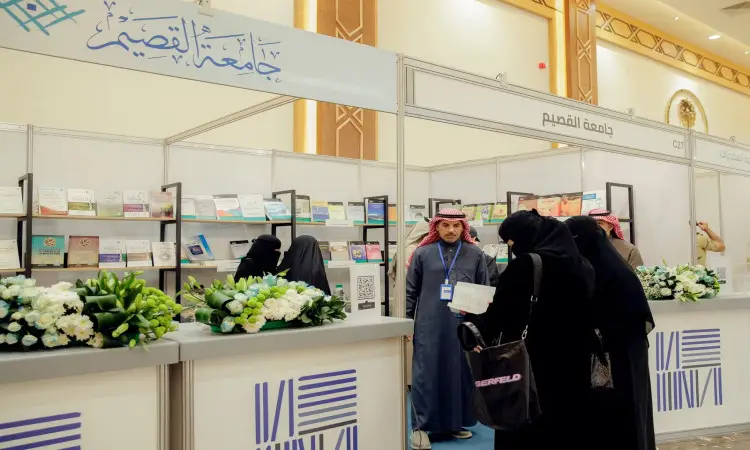
The University, represented by the Deanship of Library Affairs, is participating in the fourth edition of the Qassim Book Fair at the King Khalid Civilization Center in Buraydah, with a number of the university's scientific books and refereed journals, through 180 titles of scientific books and 9 titles of refereed journals.
The university pavilion welcomes visitors with samples of special books in various fields, which are displayed in 33 libraries distributed in the university's colleges, most notably the Prince Faisal bin Meshal bin Saud bin Abdulaziz Library, where Qassim University, represented by the Deanship of Library Affairs, preserves and cares for them and makes them available to male and female researchers.
These libraries cover cultural, literary and scientific figures and sources of knowledge in various sciences, arts and specialties, documenting the stages of development of the scientific and cultural movement at Qassim University from its founding to our modern era.
Folkloric performances from 20 countries at the People's Heritage Festival
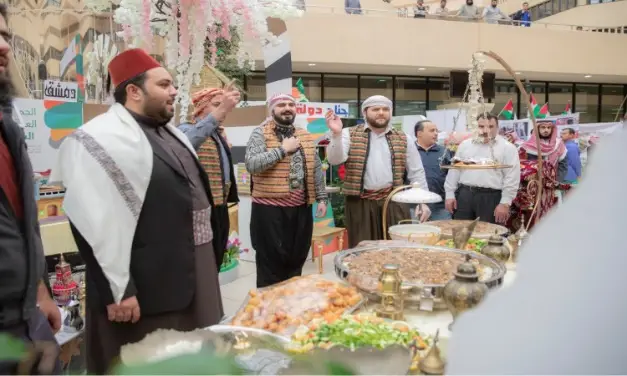
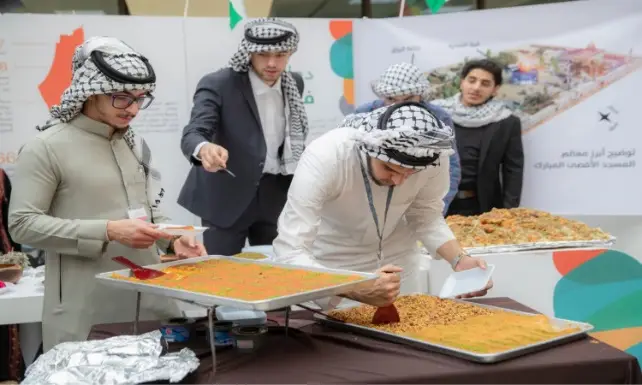
More than 330 Saudi students and scholarship students from several nationalities participated in the 40th Peoples' Heritage Festival in its fifth edition in the main hall of Al-Malidah University City for three days, where participating pavilions from more than 20 countries presented theatrical, folkloric, choral and entertainment performances throughout the festival period to learn about various forms of folklore and civilizations of the countries.
The most prominent of these presentations was Indonesia's, which included the national anthem, a play about the country's independence, self-defense and traditional games, Pakistan's pavilion sang the national anthem, Gambia presented a play and a famous dance and a play called Summoning the King of the Forest, while Bangladesh students sang the national anthem and presented a silent play and a number of their famous games, while Syria recited a poem, a traditional play and a mawwal, and Yemen presented folkloric performances. Bangladesh students sang the national anthem and presented a silent play and a number of their famous games, while Syria recited a poem, a traditional play and a mawal, Yemen presented folkloric performances, India sang its national anthem and Albania presented a play, and Chad presented a play on how to memorize the Quran and a bridegroom's zaffa event.
Students from Ghana presented a play to welcome the king, Palestine held a "Palestinian Heritage Words" competition, the Philippines presented a karate demonstration, Ivory Coast presented a dance performance, Sri Lanka presented traditional games, and Afghanistan presented a choral piece.
It is worth mentioning that the university organizes this festival with the aim of enriching the cultural and civilizational diversity represented by the university's scholarship students, who represent more than 75 nationalities from different continents of the world, where countries participate with special exhibitions that showcase the most important historical and cultural information of the country and the most important food, folklore and heritage inherited in those countries.
The main session of the Civilized Coexistence Conference at the University of Saudi Arabia reviews the Kingdom's efforts in spreading the values of moderation and coexistence
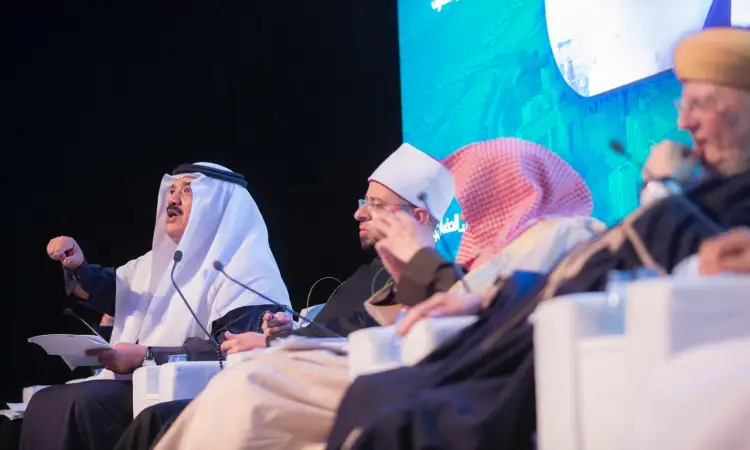

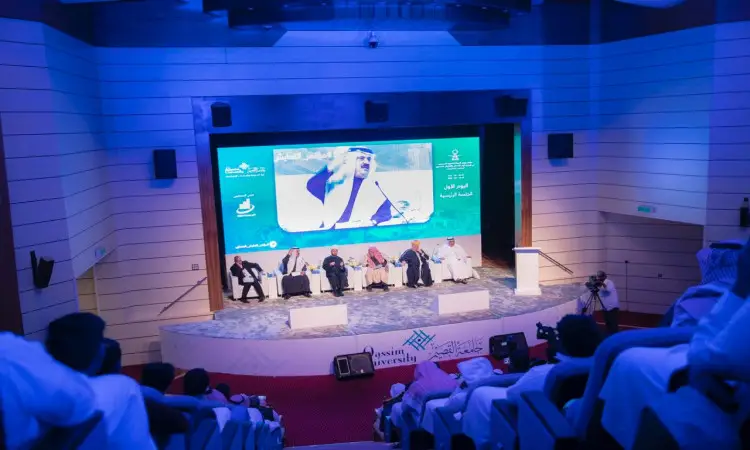
The main session of the conference "The Kingdom's Efforts in Consolidating the Values of Moderation and Civilized Coexistence: Under the patronage of His Royal Highness Prince Dr. Faisal bin Mishaal bin Saud bin Abdulaziz, Governor of Al-Qassim Region, the session was chaired by His Excellency Prof. Abdullah bin Abdul Mohsen Al-Turki, Advisor to the Custodian of the Two Holy Mosques and member of the Council of Senior Scholars, in the presence of a number of academics and scholars from several Muslim countries, on Tuesday morning, 24/6/1441 A.H.
At the beginning of the session, Al Turki spoke about the Kingdom's interest in consolidating the values of moderation and civilized coexistence, which is considered a very important matter, as it is known that the Kingdom in its policy and dealings with others and in all its actions is basically based on Islam, which is the state that was founded on the Book of God and the Sunnah of His Prophet, and applied Islamic law, and cared for Islam and the two Holy Mosques, in addition to Islamic centers and mosques in various countries of the world, most of which were built and supported by the Kingdom, noting that the Kingdom is aware that the message of Islam is a universal message to people, and the Kingdom follows this approach, a clear approach since its establishment from the first era." He pointed out that Saudi Arabia's
His Excellency Dr. Osama Al-Sayed Al-Azhari, Religious Advisor to the President of the Arab Republic of Egypt, then spoke about our institutes, universities and scientific colleges, stressing that they are most in need of reconsideration of educational curricula that rebuild the integrated world that establishes urbanization, establishes love for homelands, and emphasizes that the relationship between peoples and homelands is not conflict and clash, but is based on familiarity, as stipulated in the Holy Quran, where Muslims go out to the world with coexistence, moderation, science, prosperity and technology industry, and Muslims have a share in all sciences and arts that the world respects.
After that, Dr. Abdullah bin Mohammed Al-Fouzan, Secretary General of the King Abdulaziz Center for National Dialogue, addressed in his speech about the meeting, which is an innate instinct of the human being who cannot meet his needs by himself, because we need everyone in their various fields to interact together in managing our lives and achieving the rumors that we all need, pointing out that human gathering is the year of God in this universe with diversity, multiplicity and difference in understandings, convictions, visions and perceptions, so we must exchange interests and benefits between us as peoples, and this diversity if God wanted it to make it one type, but this diversity is the source of human creativity, stressing that this
For his part, Sheikh Mohamed Ibrahim Abdel-Baath Ghoneim, a member of the World Association of Al-Azhar Graduates, said that the Arab and Islamic nation has not suffered throughout its history from such divisions and conflicts that were the result of confusion of concepts in dealing with the wise text, since the great sedition of the Khawarij, who started on verses revealed to the polytheists and dropped them on Muslims, and this is the issue that resulted in what we see in our society from these differences, and there is no doubt that the approach of scholars and jurists is to present a reading of reality with its variables, and then proceed to the spaciousness of the text, as it finds in its diversity a room to deal with these variables, stressing on the fact that
Mr. Zayed Saeed Saif Al Shamsi, Chairman of the Board of Directors of the Emirates Lawyers Association, delivered a speech during the main session in which he spoke about tolerance and ensuring rights and duties in society, pointing out that tolerance in Islamic law came with three criteria to achieve it, namely equality, justice and acceptance of the other, and this meaning may lead us to understand that tolerance is the opposite of extremism and terrorism in particular, and the Arabs did not force anyone to enter their religions before Islam, and it is not reported that the people of Quraish forced anyone to enter their religions, and visiting Mecca was open to various sects, and throughout the existence of the Islamic state we found that all followers of divine religions, including
At the end of the session, Mr. Sheikh Mohamed Mokhtar, President of the Mauritanian Bar Association, stressed that the Kingdom is the center of Islam, its beating heart, and the source of true Islamic values, free from extremism and extremism, based on coexistence, tolerance and moderation, and far from the distorted images perpetuated by extremists and merchants of religion, pointing out that Mauritanians Mauritanians are best able to speak about the role that Saudi Arabia played in spreading the values of moderation and civilized coexistence, during the past century and still plays today, with the Chanakata scholars who were appreciated in this country and were respected by the rulers and the people, speaking about the mutual efforts between the two countries, the successive initiatives, and the firm stance towards combating extremism and terrorism.
References
[1] [Online]. Available: .https://twitter.com/QassimUniv1/status/1633431048506753026
[2] [Online]. Available: .https://twitter.com/QassimUniv1/status/1642600204049215488
[3] [Online]. Available: .https://www.qu.edu.sa/content/news/2710
[4] [Online]. Available: .https://www.qu.edu.sa/content/news/2941
[5] [Online]. Available: .https://www.qu.edu.sa/content/news/2575
[6] [Online]. Available: .https://www.qu.edu.sa/content/news/2592
[7] [Online]. Available: .https://www.qu.edu.sa/content/news/2868
[8] [Online]. Available: .https://qu.edu.sa/content/news/1139
[9] [Online]. Available: .https://qu.edu.sa/content/news/1739
Goal-related news
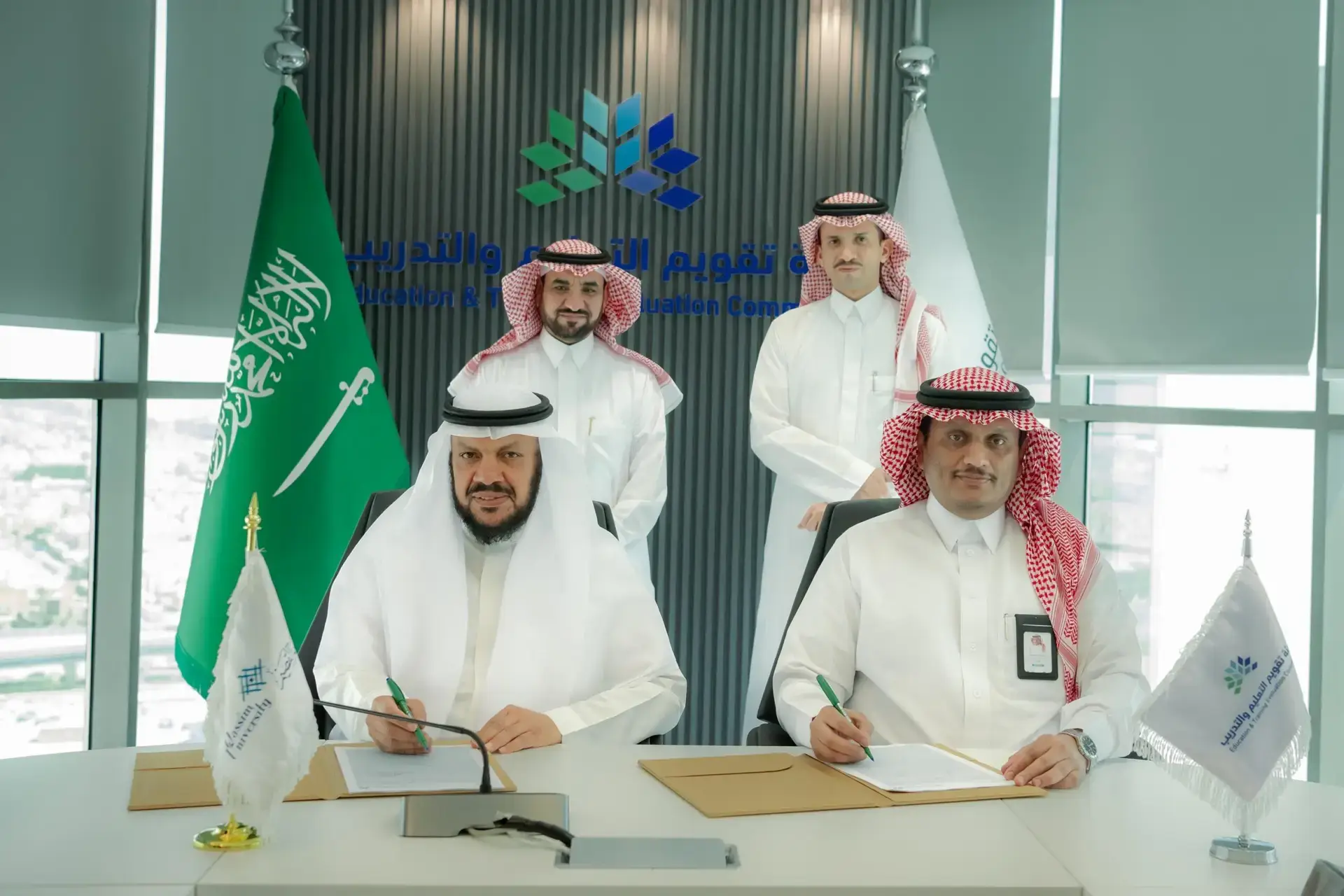
On Wednesday, October 9, 2024, His Excellency the President of the University, Prof. Dr. Mohammed bin Fahad Al-Sharekh, and His Excellency the President of the Education and Training Evaluation Authority, Dr. Walid bin Mohammed Al-Saleh, witnessed the signing of contracts for the implementation of evaluation studies for the accreditation of (17) academic programs of the university programs, as part of the framework agreement for programmatic accreditation of 92 academic programs, signed by the Executive Director of the Center [...]
2024-10-15
Goal-related tweets
To promote research, innovation, entrepreneurship, and international partnerships.
- Qassim University (@QassimUniv1) December 21, 2024
The International Association of Science Parks and Innovation Zones (IASP) awards #Qassim University Full membership, in recognition of its efforts in achieving the national aspirations and targets for the R&D and innovation sector. pic.twitter.com/Mw9mbMwC7q